Wednesday, March 22, 2017

Phantasies by George MacDonald

Citizen Journalism with a Better Flavor

ShadowTHYME
Volume XII, Issue XIV

Phantasies
By George MacDonald, Chapter 8

I am a part of the part, which at first was the whole."
~ Mephistopheles in Johann Wolfgang von Goethe's Faust.

My spirits rose as I went deeper; into the forest; but I could not regain my former elasticity of mind. I found cheerfulness to be like life itself--not to be created by any argument. Afterwards I learned, that the best way to manage some kinds of pain fill thoughts, is to dare them to do their worst; to let them lie and gnaw at your heart till they are tired; and you find you still have a residue of life they cannot kill. So, better and worse, I went on, till I came to a little clearing in the forest. In the middle of this clearing stood a long, low hut, built with one end against a single tall cypress, which rose like a spire to the building. A vague misgiving crossed my mind when I saw it; but I must needs go closer, and look through a little half-open door, near the opposite end from the cypress. Window I saw none. On peeping in, and looking towards the further end, I saw a lamp burning, with a dim, reddish flame, and the head of a woman, bent downwards, as if reading by its light. I could see nothing more for a few moments. At length, as my eyes got used to the dimness of the place, I saw that the part of the rude building near me was used for household purposes; for several rough utensils lay here and there, and a bed stood in the corner.

An irresistible attraction caused me to enter. The woman never raised her face, the upper part of which alone I could see distinctly; but, as soon as I stepped within the threshold, she began to read aloud, in a low and not altogether unpleasing voice, from an ancient little volume which she held open with one hand on the table upon which stood the lamp. What she read was something like this:

So, then, as darkness had no beginning, neither will it ever have an end. So, then, is it eternal. The negation of aught else, is its affirmation. Where the light cannot come, there abideth the darkness. The light doth but hollow a mine out of the infinite extension of the darkness. And ever upon the steps of the light treadeth the darkness; yea, springeth in fountains and wells amidst it, from the secret channels of its mighty sea. Truly, man is but a passing flame, moving unquietly amid the surrounding rest of night; without which he yet could not be, and whereof he is in part compounded."

As I drew nearer, and she read on, she moved a little to turn a leaf of the dark old volume, and I saw that her face was sallow and slightly forbidding. Her forehead was high, and her black eyes repressedly quiet. But she took no notice of me. This end of the cottage, if cottage it could be called, was destitute of furniture, except the table with the lamp, and the chair on which the woman sat. In one corner was a door, apparently of a cupboard in the wall, but which might lead to a room beyond. Still the irresistible desire which had made me enter the building urged me: I must open that door, and see what was beyond it. I approached, and laid my hand on the rude latch. Then the woman spoke, but without lifting her head or looking at me: "You had better not open that door." This was uttered quite quietly; and she went on with her reading, partly in silence, partly aloud; but both modes seemed equally intended for herself alone. The prohibition, however, only increased my desire to see; and as she took no further notice, I gently opened the door to its full width, and looked in. At first, I saw nothing worthy of attention. It seemed a common closet, with shelves on each hand, on which stood various little necessaries for the humble uses of a cottage. In one corner stood one or two brooms, in another a hatchet and other common tools; showing that it was in use every hour of the day for household purposes. But, as I looked, I saw that there were no shelves at the back, and that an empty space went in further; its termination appearing to be a faintly glimmering wall or curtain, somewhat less, however, than the width and height of the doorway where I stood. But, as I continued looking, for a few seconds, towards this faintly luminous limit, my eyes came into true relation with their object. All at once, with such a shiver as when one is suddenly conscious of the presence of another in a room where he has, for hours, considered himself alone, I saw that the seemingly luminous extremity was a sky, as of night, beheld through the long perspective of a narrow, dark passage, through what, or built of what, I could not tell. As I gazed, I clearly discerned two or three stars glimmering faintly in the distant blue. But, suddenly, and as if it had been running fast from a far distance for this very point, and had turned the corner without abating its swiftness, a dark figure sped into and along the passage from the blue opening at the remote end. I started back and shuddered, but kept looking, for I could not help it. On and on it came, with a speedy approach but delayed arrival; till, at last, through the many gradations of approach, it seemed to come within the sphere of myself, rushed up to me, and passed me into the cottage. All I could tell of its appearance was, that it seemed to be a dark human figure. Its motion was entirely noiseless, and might be called a gliding, were it not that it appeared that of a runner, but with ghostly feet. I had moved back yet a little to let him pass me, and looked round after him instantly. I could not see him.

Where is he?" I said, in some alarm, to the woman, who still sat reading.

There, on the floor, behind you," she said, pointing with her arm half-outstretched, but not lifting her eyes. I turned and looked, but saw nothing. Then with a feeling that there was yet something behind me, I looked round over my shoulder; and there, on the ground, lay a black shadow, the size of a man. It was so dark, that I could see it in the dim light of the lamp, which shone full upon it, apparently without thinning at all the intensity of its hue.

I told you," said the woman, "you had better not look into that closet."

What is it?" I said, with a growing sense of horror.

It is only your shadow that has found you," she replied. Everybody's shadow is ranging up and down looking for him. I believe you call it by a different name in your world: yours has found you, as every person's is almost certain to do who looks into that closet, especially after meeting one in the forest, whom I dare say you have met."

Here, for the first time, she lifted her head, and looked full at me: her mouth was full of long, white, shining teeth; and I knew that I was in the house of the ogre. I could not speak, but turned and left the house, with the shadow at my heels. "A nice sort of valet to have," I said to myself bitterly, as I stepped into the sunshine, and, looking over my shoulder, saw that it lay yet blacker in the full blaze of the sunlight. Indeed, only when I stood between it and the sun, was the blackness at all diminished. I was so bewildered--stunned--both by the event itself and its suddenness, that I could not at all realise to myself what it would be to have such a constant and strange attendance; but with a dim conviction that my present dislike would soon grow to loathing, I took my dreary way through the wood.
(to be continued)

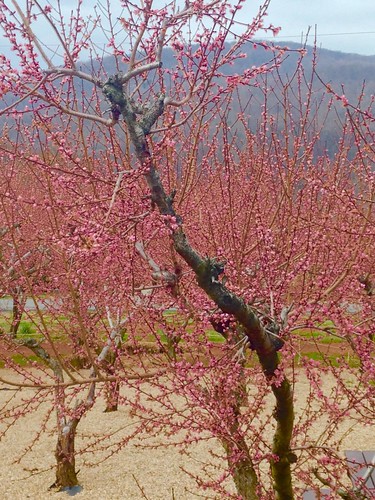
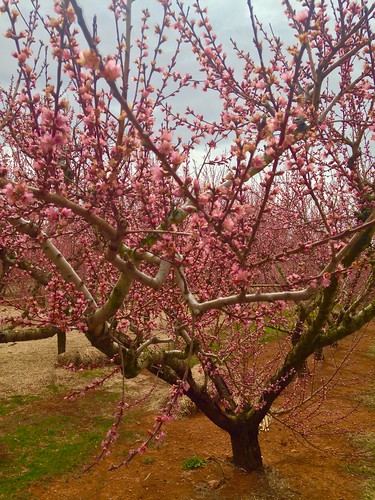
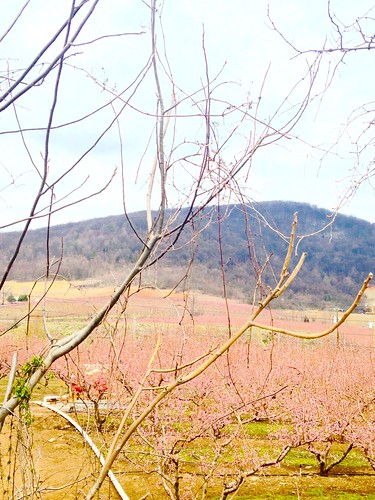
Peach Blossoms

IMG_9625a_web

Peach Blossoms

Peach Blossoms

Peach Blossoms

Peach Blossoms
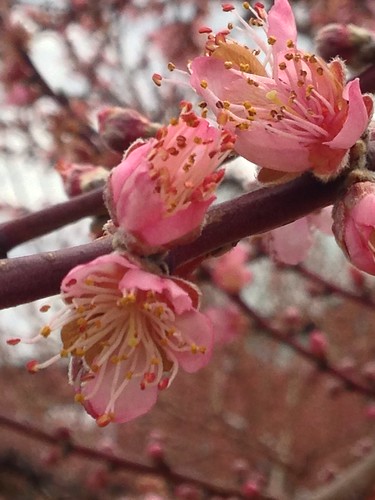
Peach Blossoms, Crozet, Virginia. Photos by Bob Kirchman

Building the Tallest Bridge in the World


The Millau Viaduct crossing the Tarn River Valley in Southern France is an amazing work of engineering and construction.
GiftHorse

The Gift Horse
Short Story by Bob Kirchman

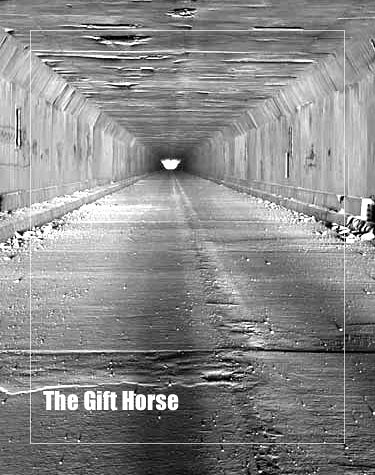
If there was anything that bothered Rupert Zimmerman, the driving force behind building the Bering Strait Bridge, it was 'impossibility' created solely by bureaucratic convolutions. When the family packed in the car during his youth to visit the extended family in Michigan, they were inevitably faced with the Breezewood Interchange on Interstate Seventy. On Summer road trips the mighty highway's brief diversion to the old Lincoln highway resulted in gargantuan traffic jams, boiling radiators and often as many boiling tempers. Zimmerman's father REFUSED to stop at the roadside businesses who's continual lobbying fended off many a reasonable attempt to build the connection.

The lack of a connection was originally a byproduct of the funding legislation that allowed the Interstate highways to be built. Highways without tolls received the 90% Federal funding and tolls were permitted in special circumstances if they were needed to retire the bonds the state issued to build the road, but the Pennsylvania Turnpike had been built depending on the toll revenue and the Turnpike Authority was going to use ongoing tolls to support operations and maintenance of the facility. Interstate Seventy from Maryland to the Turnpike had been built by using the standard funding formula but Federal funds for the connection to the turnpike would only be given if the Turnpike became a freeway atfer the bonds were retired.

Penndot would not commit the entire amount of funding to complete the interchange, so it languished as a grade intersection onto US Thirty for decades. Service businesses rose and fell, but all considered the 'permenant' detour of Interstate Seventy crucial to their continued viability. The Turnpike Authority relocated the road around the Sideling Hill Tunnel, which they abandoned. This created a rather awkward interchange where you crossed the road you WANTED to be on by an overpass on your way to US 30 where you would double back to take the road further.

The whole scenario seemed to be taken from the age of competing railroads in the Nineteenth Century where rival roads spurned each other at what engineers would consider logical connecting points. As Rupert Zimmerman connected continents in the later part of the Twenty-first Century, the roads in Breezewood remained separated. Indeed, one would have laughed at the notion that they EVER would be connected.

But now the continents were connected. Indeed it had taken some hard negotiations and the infusion of Zimmerman money to connect Hokkaido, Japan's Northernmost Island, to the Asian mainland. The Completion of the Pan-American Highway through guerilla infested Central America was a similar challenge. Elizabeth Zimmerman O'Malley became known for her skills as a negotiator as the world was brought together. As the Zimmerman clan cut the ribbon for the new Americas Connector and rode through the tunnel under the now somewhat antiquated Panama Canal, it seemed that there was no obstacle too great, no river too wide, no mountain to high... but then there was Breezewood!

Indeed, the task of joining continents and its successful completion left Rupert Zimmerman with time on his hands. In his complex at Wales, scores of young apprentices peered into computer screens seeking to smooth the world's traffic flow. Zimmerman silently chuckled at the thought, passed along to him that you were really old when your colleagues were young enough to be your children. "Hah!," the old man thought as he walked past the office of his granddaughter, who was running the great bridge's operation now. Rupert's mind wandered to the time when his little daughter Elizabeth sat at a little table beside his drawing ponies and princesses.

Working with young people kept you young. That was what Zimmerman's experience told him anyway. For centuries father and mother had taught the skills of life to their children, who in turn taught their children. In relatively modern times the task had been relegated to 'experts' residing in the great universities. Sadly, much of the world's distress could be traced to ideas such as Marxism that flourished in the halls of academia long after they had failed as actual methods of governance. Zimmerman's young friends, the Greenes were pioneering a new interaction of academy connected to the world; one that did not isolate itself in ivory towers.

But as Zimmerman walked through the 'Labyrinth of Exile,' as he called his complex at Wales, the thought washed over him that he really was unnecessary now. He walked to the stairs and proceeded to the roof of the complex's tallest tower. He thought of the Patriarch David, Israel's great warrior-king. His undoing had begun on a rooftop. Rupert needed to stay out of his daughter's way... and now he needed to stay out of the way of his granddaughter, but firmly convinced that: "The devil find's work for idle hands," that thought propelled his hasty retreat from the rooftop. He stopped at the office of a young engineer and asked him to pull up some map images. He was not at all surprised by the top entry that came up in unfinished highway connections. It had remained so for decades. Rupert Zimmerman set is mind on Breezewood!

*******
His reception in Panama had been far warmer, Zimmerman thought, than the one he received in Harrisburg, Pennsylvania. After several days of being pushed around through various offices of Penndot, Zimmerman had an audience with the Governor. Presenting her with a complete proposal of what Zimmerman Bridge and Highway would reconstruct the interchange for, he then handed her a cheque for the entire amount plus twenty per-cent for the inevitable overruns. The funds were clearly designated and the contract printed on the back of the cheque made it impossible for the funds to be diverted without a substantial penalty.

For years, a cartel of Breezewood businesses had successfully thwarted any effort to close the gap. Now they created a charge that Zimmerman was redistributing his own funds to line his own pockets! Even as the old man set up a trust to pay for 'substantial decreases in hospitality revenue,' Breezewood's lawyers lined their own pockets creating even more trumped-up charges to stall the project. Zimmerman rented a suite in one of Breezewood's hotels and made a show of having his breakfast at Perkin's or any number of Breezewood establishments. Though the old man graciously lobbied for his proposal, the local anger only intensified. There was an assassination attempt. After a bullet lodged in the wall of the pancake house behind the great builder, Pat and Elizabeth begged him to come home.

Panama and Nicaragua had been a breeze, compared to Breezewood," the old man thought. But after the assassination attempt, Penndot quickly and quietly awarded the contract for the Beezewood Connection to J. D. Eckman in Atglen, Pennsylvania. Slowly, the planning and construction began. Zimmerman admired the work of Eckman bescause they had pioneered some bridge jacking techniques. In decades past, the bridge carrying interstate 295 across the Christina River in Wilmington, Delaware had sunk on its pilings because of improperly stored sand piles at its pilings. Eckman brought in an innovative jacking system allowing the compromised pilings to be rebuilt. The bridge remained open even as its supporting structure was completely replaced.

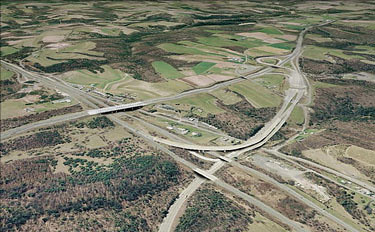
Now the firm installed a prefabricated flyover to connect the interchange on the old section of turnpike to Interstate Seventy. Prefabrication was necessary because the 'cartel' had lobbied into place a set of 'environmental' regulations that made on-site construction impossible. Six months after permits were finally pulled, drivers sped from the interstate onto the turnpike. In the months that followed, Zimmerman's accountants held their breath, expecting a slew of lost revenue claims on the trust fund. As it turned out, Breezewood revenues actually increased. The few attempts to 'prove' otherwise and tap the fund were pretty quickly found out and prosecuted.

Zimmerman himself did not attend the opening ceremonies. He was to those outside of his circle of family and friends, seen as quite a recluse now, though his children and grandchildren would beg to differ. He DID drive through the connector, months later, in a Toyota. Three generations of Zimmerman family rode with him in the car as they drove from Virginia to Michigan.
Breezewood_web
The rebuilt Breezewood Interchange.

Copyright © 2016, The Kirchman Studio, all rights reserved
Wilberforce_Web

Public Service as a Holy Calling
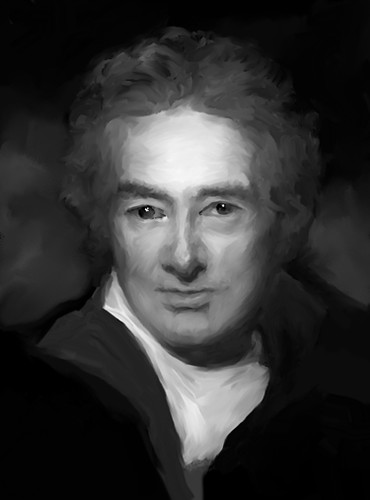
The Life of William Wilberforce

No one, however, has the right to do nothing. We all have a great eternal work that we are called to accomplish; eternity demands that we use this short and precarious life as well as we can. But aside from that, in a world as needy as ours, surely health and leisure and financial wealth should be able to find some ignorance to instruct, some wrong to redress, some want to supply, some misery to alleviate. Won’t ambition and greed ever go to sleep in our hearts? Will we ever run out of things to want? We are so quick to discover new things to desire, so eager to pursue them; why can’t we be as hungry to find use in our lives for a Christlike spirit of love?” – William Wilberforce

I recommend that the great, the wise, the learned, and the successful… make a habit of considering their superiority, whether it is derived from nature, study, or fortune, as an undeserved gift from God. This reflection will naturally tend to create a humbler disposition, one that is more useful to God and humanity, rather than the proud self-complacency such people usually tend to feel. If they turn their hearts to God, they will find themselves filled with great reverence, humility, and gratitude, delighting to be engaged in God’s praises and work. When we realize how much we have been given, we long to be employed in the loving service of this universal Gift-Giver.” – William Wilberforce

Lon Fendall’s book: To Live Free, William Wilberforce, Experiencing the Man, the Mission, and the Legacy is a great short introduction to the life of this important reformer. Most known for abolishing the British slave trade, Wilberforce labored hard in many areas to make his countrymen more humane, more upright and more honoring to the Kingdom of God. But he began life as an unlikely candidate for historical greatness. The son of a wealthy merchant, he was born August 24, 1759. His family’s wealth would have provided for him to life the life of the idle rich but early in his life, he tasted something better. As a youth in school he had heard the preaching of John Newton. He was drawn to relatives who were what were called ‘Enthusiasts,’ followers of John Wesley and George Whitfield, who taught of personal salvation through Faith in Christ. Though his Uncle William and Aunt Hannah were a great early influence toward faith, William’s father squelched the relationship. To him religion was more of a social duty and he distained the ‘Enthusiasts.’

Young William went on to study at St. John’s College, Cambridge, but mostly spent his time playing cards and preparing for a life of ease. But at 21 he was elected as a Member of Parliament from his town of Hull, beginning what would ultimately be a distinguished career spanning four decades. His ardent support for his friend William Pitt propelled his own career. Needing a companion for a journey to escort some of his female relatives to France, he sought out the company of one Isaac Milner, who opened the New Testament to Wilberforce. He became a believer and his life was truly transformed. He gave up his card playing and sought to live a life in service to the God who had saved him. Now he was ready for the great work of emancipation that the Divine would give him. Fendall’s little book adds depth to the story told in the movie: Amazing Grace. It is a story all of us should savor.
(to be continued)

Sherando Island
The Island in Sherando Lake, George Washington National Forest, Augusta County, Virginia. Photo by Bob kirchman.

SMITHBANNER

Wednesday, March 15, 2017

Phantasies by George MacDonald

Citizen Journalism with a Better Flavor

PhantasiesSEVEN
Volume XII, Issue XIII

Phantasies
By George MacDonald, Chapter 7

Fight on, my men, Sir Andrew sayes,
A little Ime hurt, but yett not slaine;
He but lye downe and bleede awhile,
And then Ile rise and fight againe."
~ from the "Ballad of Sir Andrew Barton".

But I could not remain where I was any longer, though the daylight was hateful to me, and the thought of the great, innocent, bold sunrise unendurable. Here there was no well to cool my face, smarting with the bitterness of my own tears. Nor would I have washed in the well of that grotto, had it flowed clear as the rivers of Paradise. I rose, and feebly left the sepulchral cave. I took my way I knew not whither, but still towards the sunrise. The birds were singing; but not for me. All the creatures spoke a language of their own, with which I had nothing to do, and to which I cared not to find the key any more.

I walked listlessly along. What distressed me most--more even than my own folly--was the perplexing question, How can beauty and ugliness dwell so near? Even with her altered complexion and her face of dislike; disenchanted of the belief that clung around her; known for a living, walking sepulchre, faithless, deluding, traitorous; I felt notwithstanding all this, that she was beautiful. Upon this I pondered with undiminished perplexity, though not without some gain. Then I began to make surmises as to the mode of my deliverance; and concluded that some hero, wandering in search of adventure, had heard how the forest was infested; and, knowing it was useless to attack the evil thing in person, had assailed with his battle-axe the body in which he dwelt, and on which he was dependent for his power of mischief in the wood. "Very likely," I thought, "the repentant-knight, who warned me of the evil which has befallen me, was busy retrieving his lost honour, while I was sinking into the same sorrow with himself; and, hearing of the dangerous and mysterious being, arrived at his tree in time to save me from being dragged to its roots, and buried like carrion, to nourish him for yet deeper insatiableness." I found afterwards that my conjecture was correct. I wondered how he had fared when his blows recalled the Ash himself, and that too I learned afterwards.

I walked on the whole day, with intervals of rest, but without food; for I could not have eaten, had any been offered me; till, in the afternoon, I seemed to approach the outskirts of the forest, and at length arrived at a farm-house. An unspeakable joy arose in my heart at beholding an abode of human beings once more, and I hastened up to the door, and knocked. A kind-looking, matronly woman, still handsome, made her appearance; who, as soon as she saw me, said kindly, "Ah, my poor boy, you have come from the wood! Were you in it last night?"

I should have ill endured, the day before, to be called boy; but now the motherly kindness of the word went to my heart; and, like a boy indeed, I burst into tears. She soothed me right gently; and, leading me into a room, made me lie down on a settle, while she went to find me some refreshment. She soon returned with food, but I could not eat. She almost compelled me to swallow some wine, when I revived sufficiently to be able to answer some of her questions. I told her the whole story.

It is just as I feared," she said; "but you are now for the night beyond the reach of any of these dreadful creatures. It is no wonder they could delude a child like you. But I must beg you, when my husband comes in, not to say a word about these things; for he thinks me even half crazy for believing anything of the sort. But I must believe my senses, as he cannot believe beyond his, which give him no intimations of this kind. I think he could spend the whole of Midsummer-eve in the wood and come back with the report that he saw nothing worse than himself. Indeed, good man, he would hardly find anything better than himself, if he had seven more senses given him."

But tell me how it is that she could be so beautiful without any heart at all--without any place even for a heart to live in."

I cannot quite tell," she said; "but I am sure she would not look so beautiful if she did not take means to make herself look more beautiful than she is. And then, you know, you began by being in love with her before you saw her beauty, mistaking her for the lady of the marble--another kind altogether, I should think. But the chief thing that makes her beautiful is this: that, although she loves no man, she loves the love of any man; and when she finds one in her power, her desire to bewitch him and gain his love (not for the sake of his love either, but that she may be conscious anew of her own beauty, through the admiration he manifests), makes her very lovely--with a self- destructive beauty, though; for it is that which is constantly wearing her away within, till, at last, the decay will reach her face, and her whole front, when all the lovely mask of nothing will fall to pieces, and she be vanished for ever. So a wise man, whom she met in the wood some years ago, and who, I think, for all his wisdom, fared no better than you, told me, when, like you, he spent the next night here, and recounted to me his adventures."

I thanked her very warmly for her solution, though it was but partial; wondering much that in her, as in woman I met on my first entering the forest, there should be such superiority to her apparent condition. Here she left me to take some rest; though, indeed, I was too much agitated to rest in any other way than by simply ceasing to move.

In half an hour, I heard a heavy step approach and enter the house. A jolly voice, whose slight huskiness appeared to proceed from overmuch laughter, called out "Betsy, the pigs' trough is quite empty, and that is a pity. Let them swill, lass! They're of no use but to get fat. Ha! ha! ha! Gluttony is not forbidden in their commandments. Ha! ha! ha!" The very voice, kind and jovial, seemed to disrobe the room of the strange look which all new places wear--to disenchant it out of the realm of the ideal into that of the actual. It began to look as if I had known every corner of it for twenty years; and when, soon after, the dame came and fetched me to partake of their early supper, the grasp of his great hand, and the harvest-moon of his benevolent face, which was needed to light up the rotundity of the globe beneath it, produced such a reaction in me, that, for a moment, I could hardly believe that there was a Fairy Land; and that all I had passed through since I left home, had not been the wandering dream of a diseased imagination, operating on a too mobile frame, not merely causing me indeed to travel, but peopling for me with vague phantoms the regions through which my actual steps had led me. But the next moment my eye fell upon a little girl who was sitting in the chimney-corner, with a little book open on her knee, from which she had apparently just looked up to fix great inquiring eyes upon me. I believed in Fairy Land again. She went on with her reading, as soon as she saw that I observed her looking at me. I went near, and peeping over her shoulder, saw that she was reading The History of Graciosa and Percinet."

Very improving book, sir," remarked the old farmer, with a good- humoured laugh. "We are in the very hottest corner of Fairy Land here. Ha! ha! Stormy night, last night, sir."

Was it, indeed?" I rejoined. "It was not so with me. A lovelier night I never saw." "Indeed! Where were you last night?"

I spent it in the forest. I had lost my way."

Ah! then, perhaps, you will be able to convince my good woman, that there is nothing very remarkable about the forest; for, to tell the truth, it bears but a bad name in these parts. I dare say you saw nothing worse than yourself there?"

I hope I did," was my inward reply; but, for an audible one, I contented myself with saying, "Why, I certainly did see some appearances I could hardly account for; but that is nothing to be wondered at in an unknown wild forest, and with the uncertain light of the moon alone to go by."

Very true! you speak like a sensible man, sir. We have but few sensible folks round about us. Now, you would hardly credit it, but my wife believes every fairy-tale that ever was written. I cannot account for it. She is a most sensible woman in everything else."

But should not that make you treat her belief with something of respect, though you cannot share in it yourself?"

Yes, that is all very well in theory; but when you come to live every day in the midst of absurdity, it is far less easy to behave respectfully to it. Why, my wife actually believes the story of the 'White Cat.' You know it, I dare say."

I read all these tales when a child, and know that one especially well."

But, father," interposed the little girl in the chimney-corner, "you know quite well that mother is descended from that very princess who was changed by the wicked fairy into a white cat. Mother has told me so a many times, and you ought to believe everything she says."

I can easily believe that," rejoined the farmer, with another fit of laughter; "for, the other night, a mouse came gnawing and scratching beneath the floor, and would not let us go to sleep. Your mother sprang out of bed, and going as near it as she could, mewed so infernally like a great cat, that the noise ceased instantly. I believe the poor mouse died of the fright, for we have never heard it again. Ha! ha! ha!"

The son, an ill-looking youth, who had entered during the conversation, joined in his father's laugh; but his laugh was very different from the old man's: it was polluted with a sneer. I watched him, and saw that, as soon as it was over, he looked scared, as if he dreaded some evil consequences to follow his presumption. The woman stood near, waiting till we should seat ourselves at the table, and listening to it all with an amused air, which had something in it of the look with which one listens to the sententious remarks of a pompous child. We sat down to supper, and I ate heartily. My bygone distresses began already to look far off.

In what direction are you going?" asked the old man.

Eastward," I replied; nor could I have given a more definite answer. "Does the forest extend much further in that direction?" "Oh! for miles and miles; I do not know how far. For although I have lived on the borders of it all my life, I have been too busy to make journeys of discovery into it. Nor do I see what I could discover. It is only trees and trees, till one is sick of them. By the way, if you follow the eastward track from here, you will pass close to what the children say is the very house of the ogre that Hop-o'-my-Thumb visited, and ate his little daughters with the crowns of gold." "Oh, father! ate his little daughters! No; he only changed their gold crowns for nightcaps; and the great long-toothed ogre killed them in mistake; but I do not think even he ate them, for you know they were his own little ogresses." "Well, well, child; you know all about it a great deal better than I do. However, the house has, of course, in such a foolish neighbourhood as this, a bad enough name; and I must confess there is a woman living in it, with teeth long enough, and white enough too, for the lineal descendant of the greatest ogre that ever was made. I think you had better not go near her." In such talk as this the night wore on. When supper was finished, which lasted some time, my hostess conducted me to my chamber. "If you had not had enough of it already," she said, "I would have put you in another room, which looks towards the forest; and where you would most likely have seen something more of its inhabitants. For they frequently pass the window, and even enter the room sometimes. Strange creatures spend whole nights in it, at certain seasons of the year. I am used to it, and do not mind it. No more does my little girl, who sleeps in it always. But this room looks southward towards the open country, and they never show themselves here; at least I never saw any." I was somewhat sorry not to gather any experience that I might have, of the inhabitants of Fairy Land; but the effect of the farmer's company, and of my own later adventures, was such, that I chose rather an undisturbed night in my more human quarters; which, with their clean white curtains and white linen, were very inviting to my weariness. In the morning I awoke refreshed, after a profound and dreamless sleep. The sun was high, when I looked out of the window, shining over a wide, undulating, cultivated country. Various garden-vegetables were growing beneath my window. Everything was radiant with clear sunlight. The dew-drops were sparkling their busiest; the cows in a near-by field were eating as if they had not been at it all day yesterday; the maids were singing at their work as they passed to and fro between the out-houses: I did not believe in Fairy Land. I went down, and found the family already at breakfast. But before I entered the room where they sat, the little girl came to me, and looked up in my face, as though she wanted to say something to me. I stooped towards her; she put her arms round my neck, and her mouth to my ear, and whispered--

A white lady has been flitting about the house all night."

No whispering behind doors!" cried the farmer; and we entered together. "Well, how have you slept? No bogies, eh?"

Not one, thank you; I slept uncommonly well."

I am glad to hear it. Come and breakfast."

After breakfast, the farmer and his son went out; and I was left alone with the mother and daughter.

When I looked out of the window this morning," I said, "I felt almost certain that Fairy Land was all a delusion of my brain; but whenever I come near you or your little daughter, I feel differently. Yet I could persuade myself, after my last adventures, to go back, and have nothing more to do with such strange beings."

How will you go back?" said the woman.

Nay, that I do not know."

Because I have heard, that, for those who enter Fairy Land, there is no way of going back. They must go on, and go through it. How, I do not in the least know."

That is quite the impression on my own mind. Something compels me to go on, as if my only path was onward, but I feel less inclined this morning to continue my adventures."

Will you come and see my little child's room? She sleeps in the one I told you of, looking towards the forest."

Willingly," I said.

So we went together, the little girl running before to open the door for us. It was a large room, full of old-fashioned furniture, that seemed to have once belonged to some great house.

The window was built with a low arch, and filled with lozenge-shaped panes. The wall was very thick, and built of solid stone. I could see that part of the house had been erected against the remains of some old castle or abbey, or other great building; the fallen stones of which had probably served to complete it. But as soon as I looked out of the window, a gush of wonderment and longing flowed over my soul like the tide of a great sea. Fairy Land lay before me, and drew me towards it with an irresistible attraction. The trees bathed their great heads in the waves of the morning, while their roots were planted deep in gloom; save where on the borders the sunshine broke against their stems, or swept in long streams through their avenues, washing with brighter hue all the leaves over which it flowed; revealing the rich brown of the decayed leaves and fallen pine-cones, and the delicate greens of the long grasses and tiny forests of moss that covered the channel over which it passed in motionless rivers of light. I turned hurriedly to bid my hostess farewell without further delay. She smiled at my haste, but with an anxious look.

You had better not go near the house of the ogre, I think. My son will show you into another path, which will join the first beyond it."

Not wishing to be headstrong or too confident any more, I agreed; and having taken leave of my kind entertainers, went into the wood, accompanied by the youth. He scarcely spoke as we went along; but he led me through the trees till we struck upon a path. He told me to follow it, and, with a muttered "good morning" left me.
(to be continued)

WildWoods
Photo by Bob Kirchman.

Learning from L'Engle
[click to read]

by Blake Atwood

Obedience is an unpopular word nowadays, but the artist must be obedient to the work, whether it be a symphony, a painting, or a story for a small child. I believe that each work of art, whether it is a work of great genius or something very small, comes to the artist and says ‘Here I am. Enflesh me. Give birth to me.’ And the artist either says ‘My soul doth magnify the Lord’ and willingly becomes the bearer of the work, or refuses; but the obedient response is not necessarily a conscious one, and not everyone has the humble, courageous obedience of Mary [the mother of Jesus].” -- Madeline L'Engle

Walking on Water is as old as I am, and I’m saddened to know that I could have read this book years ago, possibly even adding it to the currently empty list of Books I Have to Read Every Year. I may be reading the wrong books, but few have ever arrested me as quickly or as deeply as this work has. Maybe it’s more about fortuitous timing, where her words hesitantly written decades ago ring true to where I now find myself. Regardless, it’s a stunning work that I highly recommend for any Christian endeavoring to use their creative gifts for the greater good … and I’ve only read two chapters. (read more)

CarsonGifted
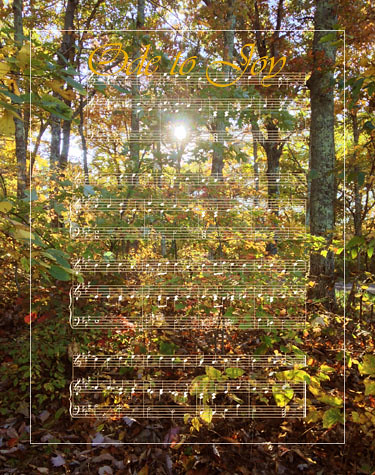
The final movement of Beethoven's 9th

The Final Movement

Discordant notes... 
...ruin the symphony.

Unless...

What if you embrace the discordant note?

And use it to start a new melody..."

A powerful short film by Jason Jones and  Eduardo Verástegui.


snowtrees003
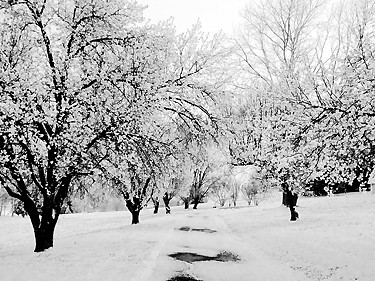
Bradford pear blossoms in snow. Photo by Bob Kirchman.

Art and the Gospel
Using Your Compass
[click to read]

To the real Christian, the Gospel’s unique truths are the center to which she gravitates – the very sun of her solar system, the soul of the world. They are the origin of all that is excellent and lovely, the source of light and life, motion and warmth. From them comes all creative energy. Our intellects would be cold and comfortless without their light and guidance.” – William Wilberforce

Not long ago The DaVinci Code came upon the literary scene and this work of fiction, based on Gnostic writings, became the center of much discussion about Faith in our day. One of the elders of our church conducted a very thorough study in which he pointed out what was based on Holy Writ, and what was based on these non-canonical sources. It was a very profitable investigation into what we believe and why. Naturally there are those who are unfamiliar with the Gospel who will read such a work at face value, not digging deeper to find that it has been sourced from works that are of varied integrity. Yes, this is dangerous, but perhaps there is also a benefit to be had by opening a discussion. (read more)

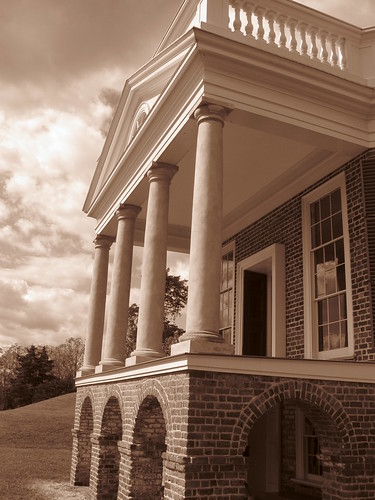
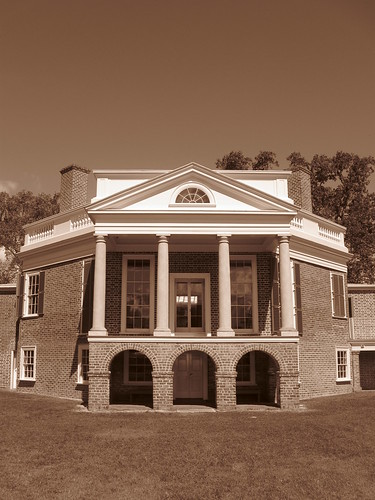
Thomas Jefferson's Poplar Forest
His Lesser Known Home Near Lynchburg
Photos by Bob Kirchman

IMG_3634
Photos by Bob Kirchman.

Legend has it that Thomas Jefferson, fleeing the British troops in June of 1781, retreated to a piece of property he had acquired through marrying Martha Wayles Skelton in 1773. Taking up residence with his family in the only small dwelling on the property -- a caretaker's house, he spent his time in the cramped quarters calculating how long it would take to repay the national debt!

Then, as now, the pressures of public life made a retreat desirable and Jefferson would return to the property and build 'Poplar Forest' over a period of almost two decades. Inspired by the villas of Renaissance architect, Andrea Palladio, he created the Neoclassical Octagon House. Construction began in 1806 and continued until 1823!

IMG_3615

IMG_3618

CS_Lewis_Banner

Wednesday, March 8, 2017

Phantasies by George MacDonald

Citizen Journalism with a Better Flavor

PhantasiesSTONE
Volume XII, Issue XI

Phantasies
By George MacDonald, Chapter 6

Ah, let a man beware, when his wishes, fulfilled, rain down
upon him, and his happiness is unbounded."

Thy red lips, like worms,
Travel over my cheek."
~ William Motherwell.

But as I crossed the space between the foot of the hill and the forest, a vision of another kind delayed my steps. Through an opening to the westward flowed, like a stream, the rays of the setting sun, and overflowed with a ruddy splendour the open space where I was. And riding as it were down this stream towards me, came a horseman in what appeared red armour. From frontlet to tail, the horse likewise shone red in the sunset. I felt as if I must have seen the knight before; but as he drew near, I could recall no feature of his countenance. Ere he came up to me, however, I remembered the legend of Sir Percival in the rusty armour, which I had left unfinished in the old book in the cottage: it was of Sir Percival that he reminded me. And no wonder; for when he came close up to me, I saw that, from crest to heel, the whole surface of his armour was covered with a light rust. The golden spurs shone, but the iron greaves glowed in the sunlight. The morning star, which hung from his wrist, glittered and glowed with its silver and bronze. His whole appearance was terrible; but his face did not answer to this appearance. It was sad, even to gloominess; and something of shame seemed to cover it. Yet it was noble and high, though thus beclouded; and the form looked lofty, although the head drooped, and the whole frame was bowed as with an inward grief. The horse seemed to share in his master's dejection, and walked spiritless and slow. I noticed, too, that the white plume on his helmet was discoloured and drooping. "He has fallen in a joust with spears," I said to myself; "yet it becomes not a noble knight to be conquered in spirit because his body hath fallen." He appeared not to observe me, for he was riding past without looking up, and started into a warlike attitude the moment the first sound of my voice reached him. Then a flush, as of shame, covered all of his face that the lifted beaver disclosed. He returned my greeting with distant courtesy, and passed on. But suddenly, he reined up, sat a moment still, and then turning his horse, rode back to where I stood looking after him.

I am ashamed," he said, "to appear a knight, and in such a guise; but it behoves me to tell you to take warning from me, lest the same evil, in his kind, overtake the singer that has befallen the knight. Hast thou ever read the story of Sir Percival and the"--(here he shuddered, that his armour rang)--"Maiden of the Alder-tree?"

In part, I have," said I; "for yesterday, at the entrance of this forest, I found in a cottage the volume wherein it is recorded." "Then take heed," he rejoined; "for, see my armour--I put it off; and as it befell to him, so has it befallen to me. I that was proud am humble now. Yet is she terribly beautiful--beware. Never," he added, raising his head, "shall this armour be furbished, but by the blows of knightly encounter, until the last speck has disappeared from every spot where the battle-axe and sword of evil-doers, or noble foes, might fall; when I shall again lift my head, and say to my squire, 'Do thy duty once more, and make this armour shine.'"

Before I could inquire further, he had struck spurs into his horse and galloped away, shrouded from my voice in the noise of his armour. For I called after him, anxious to know more about this fearful enchantress; but in vain--he heard me not. "Yet," I said to myself, "I have now been often warned; surely I shall be well on my guard; and I am fully resolved I shall not be ensnared by any beauty, however beautiful. Doubtless, some one man may escape, and I shall be he." So I went on into the wood, still hoping to find, in some one of its mysterious recesses, my lost lady of the marble. The sunny afternoon died into the loveliest twilight. Great bats began to flit about with their own noiseless flight, seemingly purposeless, because its objects are unseen. The monotonous music of the owl issued from all unexpected quarters in the half-darkness around me. The glow-worm was alight here and there, burning out into the great universe. The night-hawk heightened all the harmony and stillness with his oft-recurring, discordant jar. Numberless unknown sounds came out of the unknown dusk; but all were of twilight-kind, oppressing the heart as with a condensed atmosphere of dreamy undefined love and longing. The odours of night arose, and bathed me in that luxurious mournfulness peculiar to them, as if the plants whence they floated had been watered with bygone tears. Earth drew me towards her bosom; I felt as if I could fall down and kiss her. I forgot I was in Fairy Land, and seemed to be walking in a perfect night of our own old nursing earth. Great stems rose about me, uplifting a thick multitudinous roof above me of branches, and twigs, and leaves--the bird and insect world uplifted over mine, with its own landscapes, its own thickets, and paths, and glades, and dwellings; its own bird-ways and insect-delights. Great boughs crossed my path; great roots based the tree-columns, and mightily clasped the earth, strong to lift and strong to uphold. It seemed an old, old forest, perfect in forest ways and pleasures. And when, in the midst of this ecstacy, I remembered that under some close canopy of leaves, by some giant stem, or in some mossy cave, or beside some leafy well, sat the lady of the marble, whom my songs had called forth into the outer world, waiting (might it not be?) to meet and thank her deliverer in a twilight which would veil her confusion, the whole night became one dream-realm of joy, the central form of which was everywhere present, although unbeheld. Then, remembering how my songs seemed to have called her from the marble, piercing through the pearly shroud of alabaster--"Why," thought I, "should not my voice reach her now, through the ebon night that inwraps her." My voice burst into song so spontaneously that it seemed involuntarily.

Not a sound
But, echoing in me,
Vibrates all around
With a blind delight,
Till it breaks on Thee,
Queen of Night!

Every tree,
O'ershadowing with gloom,
Seems to cover thee
Secret, dark, love-still'd,
In a holy room
Silence-filled.

Let no moon
Creep up the heaven to-night;
I in darksome noon
Walking hopefully,
Seek my shrouded light--
Grope for thee!

Darker grow
The borders of the dark!
Through the branches glow,
From the roof above,
Star and diamond-sparks
Light for love."

Scarcely had the last sounds floated away from the hearing of my own ears, when I heard instead a low delicious laugh near me. It was not the laugh of one who would not be heard, but the laugh of one who has just received something long and patiently desired--a laugh that ends in a low musical moan. I started, and, turning sideways, saw a dim white figure seated beside an intertwining thicket of smaller trees and underwood.

It is my white lady!" I said, and flung myself on the ground beside her; striving, through the gathering darkness, to get a glimpse of the form which had broken its marble prison at my call.

It is your white lady!" said the sweetest voice, in reply, sending a thrill of speechless delight through a heart which all the love-charms of the preceding day and evening had been tempering for this culminating hour. Yet, if I would have confessed it, there was something either in the sound of the voice, although it seemed sweetness itself, or else in this yielding which awaited no gradation of gentle approaches, that did not vibrate harmoniously with the beat of my inward music. And likewise, when, taking her hand in mine, I drew closer to her, looking for the beauty of her face, which, indeed, I found too plenteously, a cold shiver ran through me; but "it is the marble," I said to myself, and heeded it not.

She withdrew her hand from mine, and after that would scarce allow me to touch her. It seemed strange, after the fulness of her first greeting, that she could not trust me to come close to her. Though her words were those of a lover, she kept herself withdrawn as if a mile of space interposed between us.

Why did you run away from me when you woke in the cave?" I said.

Did I?" she returned. "That was very unkind of me; but I did not know better."

I wish I could see you. The night is very dark."

So it is. Come to my grotto. There is light there."

Have you another cave, then?"

Come and see."

But she did not move until I rose first, and then she was on her feet before I could offer my hand to help her. She came close to my side, and conducted me through the wood. But once or twice, when, involuntarily almost, I was about to put my arm around her as we walked on through the warm gloom, she sprang away several paces, always keeping her face full towards me, and then stood looking at me, slightly stooping, in the attitude of one who fears some half-seen enemy. It was too dark to discern the expression of her face. Then she would return and walk close beside me again, as if nothing had happened. I thought this strange; but, besides that I had almost, as I said before, given up the attempt to account for appearances in Fairy Land, I judged that it would be very unfair to expect from one who had slept so long and had been so suddenly awakened, a behaviour correspondent to what I might unreflectingly look for. I knew not what she might have been dreaming about. Besides, it was possible that, while her words were free, her sense of touch might be exquisitely delicate.

At length, after walking a long way in the woods, we arrived at another thicket, through the intertexture of which was glimmering a pale rosy light.

Push aside the branches," she said, "and make room for us to enter."

I did as she told me.

Go in," she said; "I will follow you."

I did as she desired, and found myself in a little cave, not very unlike the marble cave. It was festooned and draperied with all kinds of green that cling to shady rocks. In the furthest corner, half-hidden in leaves, through which it glowed, mingling lovely shadows between them, burned a bright rosy flame on a little earthen lamp. The lady glided round by the wall from behind me, still keeping her face towards me, and seated herself in the furthest corner, with her back to the lamp, which she hid completely from my view. I then saw indeed a form of perfect loveliness before me. Almost it seemed as if the light of the rose-lamp shone through her (for it could not be reflected from her); such a delicate shade of pink seemed to shadow what in itself must be a marbly whiteness of hue. I discovered afterwards, however, that there was one thing in it I did not like; which was, that the white part of the eye was tinged with the same slight roseate hue as the rest of the form. It is strange that I cannot recall her features; but they, as well as her somewhat girlish figure, left on me simply and only the impression of intense loveliness. I lay down at her feet, and gazed up into her face as I lay. She began, and told me a strange tale, which, likewise, I cannot recollect; but which, at every turn and every pause, somehow or other fixed my eyes and thoughts upon her extreme beauty; seeming always to culminate in something that had a relation, revealed or hidden, but always operative, with her own loveliness. I lay entranced. It was a tale which brings back a feeling as of snows and tempests; torrents and water-sprites; lovers parted for long, and meeting at last; with a gorgeous summer night to close up the whole. I listened till she and I were blended with the tale; till she and I were the whole history. And we had met at last in this same cave of greenery, while the summer night hung round us heavy with love, and the odours that crept through the silence from the sleeping woods were the only signs of an outer world that invaded our solitude. What followed I cannot clearly remember. The succeeding horror almost obliterated it. I woke as a grey dawn stole into the cave. The damsel had disappeared; but in the shrubbery, at the mouth of the cave, stood a strange horrible object. It looked like an open coffin set up on one end; only that the part for the head and neck was defined from the shoulder-part. In fact, it was a rough representation of the human frame, only hollow, as if made of decaying bark torn from a tree.

It had arms, which were only slightly seamed, down from the shoulder-blade by the elbow, as if the bark had healed again from the cut of a knife. But the arms moved, and the hand and the fingers were tearing asunder a long silky tress of hair. The thing turned round--it had for a face and front those of my enchantress, but now of a pale greenish hue in the light of the morning, and with dead lustreless eyes. In the horror of the moment, another fear invaded me. I put my hand to my waist, and found indeed that my girdle of beech-leaves was gone. Hair again in her hands, she was tearing it fiercely. Once more, as she turned, she laughed a low laugh, but now full of scorn and derision; and then she said, as if to a companion with whom she had been talking while I slept, "There he is; you can take him now." I lay still, petrified with dismay and fear; for I now saw another figure beside her, which, although vague and indistinct, I yet recognised but too well. It was the Ash-tree. My beauty was the Maid of the Alder! and she was giving me, spoiled of my only availing defence, into the hands of bent his Gorgon-head, and entered the cave. I could not stir. He drew near me. His ghoul-eyes and his ghastly face fascinated me. He came stooping, with the hideous hand outstretched, like a beast of prey. I had given myself up to a death of unfathomable horror, when, suddenly, and just as he was on the point of seizing me, the dull, heavy blow of an axe echoed through the wood, followed by others in quick repetition. The Ash shuddered and groaned, withdrew the outstretched hand, retreated backwards to the mouth of the cave, then turned and disappeared amongst the trees. The other walking Death looked at me once, with a careless dislike on her beautifully moulded features; then, heedless any more to conceal her hollow deformity, turned her frightful back and likewise vanished amid the green obscurity without. I lay and wept. The Maid of the Alder-tree had befooled me--nearly slain me--in spite of all the warnings I had received from those who knew my danger.
(to be continued)

IMG_4930
Photo by Bob Kirchman.

Crocusflower
Crocus. Photo by Bob Kirchman.

Rudyard Kipling
When Earth's Last Picture Is Painted
1892

L'Envoi To "The Seven Seas"

When Earth's last picture is painted and the tubes are twisted and dried,
When the oldest colours have faded, and the youngest critic has died,
We shall rest, and, faith, we shall need it -- lie down for an aeon or two,
Till the Master of All Good Workmen shall put us to work anew.
And those that were good shall be happy; they shall sit in a golden chair;
They shall splash at a ten-league canvas with brushes of comets' hair.
They shall find real saints to draw from -- Magdalene, Peter, and Paul;
They shall work for an age at a sitting and never be tired at all!

And only The Master shall praise us, and only The Master shall blame;
And no one shall work for money, and no one shall work for fame,
But each for the joy of the working, and each, in his separate star,
Shall draw the Thing as he sees It for the G-d of Things as They are! 

Chronos and Kairos

Most of us are familiar with the fact that the Greek language contains multiple words for ‘Love,’ that in their specificity more adequately describe different types and commitments in love. But it is also true that the Greek language is similar in its handling of the concept of time. The Greek word chronos (χρόνος) describes the concept of time we are most familiar with… that which can be measured in minutes, hours, days and months… but there is another Greek word for time: Kairos (καιρός) which perhaps is best described as “the Divine Moment,” a link to Eternal time. Madeline L’Engle touches on this concept in her fiction. Does human history in fact contain ‘bridges’ to things eternal? Indeed Resurrection and Redemption occur here.

I ‘swerved’ (pun intended) into this concept when I set out to write a work of fiction myself., setting it upon the International Date Line at a place where one can literally “see into tomorrow.” The inspiration came as Kristina Elaine Greer and I were painting a mural of the New Heaven and the New Earth… “Journey to Jesus.” We broke the painting at a hallway at the line between Siberia and America and somehow the idea of “seeing into tomorrow” lodged itself in my mind. There has always been a popular writing about eschatology which concerns itself slavishly with chronology. Rapture, Armageddon, return of Christ have filled volumes, but in recent times a lot of people I knew seemed really preoccupied with Post-trib Rapture discussion. This led all to readily into discussions of survival food and solar generators. Now it must be said that I believe in keeping a well stocked pantry and retaining and passing on the old skills of planting and providing. But one must remember that Scripture says:

Therefore I say unto you, Take no thought for your life, what ye shall eat, or what ye shall drink; nor yet for your body, what ye shall put on. Is not the life more than meat, and the body than raiment?

Behold the fowls of the air: for they sow not, neither do they reap, nor gather into barns; yet your heavenly Father feedeth them. Are ye not much better than they?

Which of you by taking thought can add one cubit unto his stature?

And why take ye thought for raiment? Consider the lilies of the field, how they grow; they toil not, neither do they spin: And yet I say unto you, That even Solomon in all his glory was not arrayed like one of these. Wherefore, if God so clothe the grass of the field, which to day is, and to morrow is cast into the oven, shall he not much more clothe you, O ye of little faith?

Therefore take no thought, saying, What shall we eat? or, What shall we drink? or, Wherewithal shall we be clothed? (For after all these things do the Gentiles seek:) for your heavenly Father knoweth that ye have need of all these things. But seek ye first the kingdom of God, and his righteousness; and all these things shall be added unto you. Take therefore no thought for the morrow: for the morrow shall take thought for the things of itself. Sufficient unto the day is the evil thereof.” -- Matthew 6:26-34

Elsewhere in Scripture we are exhorted to work, to provide for our families and to even produce more so that we can give to others in need. Thus the words of Matthew must not be misconstrued so as to promote passivity. Rather they command us to never forget that connection we have to Eternity… the Kingdom of God, which should indeed be our primary destination in life.

Living a Kairos Life in a Chronos World
[click to read]

By David Rupert in The High Calling

Everything we do is marked by the steady march of time. Seconds lead to minutes to hours to days to weeks to years to decades to centuries.

The problem for all of us is that the clock is always running the wrong way, and we simply cannot stop its precipitous crawl toward the next tick. We lose moments to the past, out of our reach, never to be regained. (read more)

CS_Lewis_Banner

Wednesday, March 1, 2017

Phantasies by George MacDonald

Citizen Journalism with a Better Flavor

PhantasiesNEWTHYME
Volume XII, Issue X

Special Ash Wednesday Edition

Phantasies
By George MacDonald, Chapter 5

And she was smooth and full, as if one gush
Of life had washed her, or as if a sleep
Lay on her eyelid, easier to sweep
Than bee from daisy."
~ Thomas Lovell Beddoes' Pygmalion.

Sche was as whyt as lylye yn May,
Or snow that sneweth yn wynterys day."
~ from "Romance of Sir Launfal".

I walked on, in the fresh morning air, as if new-born. The only thing that damped my pleasure was a cloud of something between sorrow and delight that crossed my mind with the frequently returning thought of my last night's hostess. "But then," thought I, "if she is sorry, I could not help it; and she has all the pleasures she ever had. Such a day as this is surely a joy to her, as much at least as to me. And her life will perhaps be the richer, for holding now within it the memory of what came, but could not stay. And if ever she is a woman, who knows but we may meet somewhere? there is plenty of room for meeting in the universe." Comforting myself thus, yet with a vague compunction, as if I ought not to have left her, I went on. There was little to distinguish the woods to-day from those of my own land; except that all the wild things, rabbits, birds, squirrels, mice, and the numberless other inhabitants, were very tame; that is, they did not run away from me, but gazed at me as I passed, frequently coming nearer, as if to examine me more closely. Whether this came from utter ignorance, or from familiarity with the human appearance of beings who never hurt them, I could not tell. As I stood once, looking up to the splendid flower of a parasite, which hung from the branch of a tree over my head, a large white rabbit cantered slowly up, put one of its little feet on one of mine, and looked up at me with its red eyes, just as I had been looking up at the flower above me. I stooped and stroked it; but when I attempted to lift it, it banged the ground with its hind feet and scampered off at a great rate, turning, however, to look at me several times before I lost sight of it. Now and then, too, a dim human figure would appear and disappear, at some distance, amongst the trees, moving like a sleep-walker. But no one ever came near me.

This day I found plenty of food in the forest--strange nuts and fruits I had never seen before. I hesitated to eat them; but argued that, if I could live on the air of Fairy Land, I could live on its food also. I found my reasoning correct, and the result was better than I had hoped; for it not only satisfied my hunger, but operated in such a way upon my senses that I was brought into far more complete relationship with the things around me. The human forms appeared much more dense and defined; more tangibly visible, if I may say so. I seemed to know better which direction to choose when any doubt arose. I began to feel in some degree what the birds meant in their songs, though I could not express it in words, any more than you can some landscapes. At times, to my surprise, I found myself listening attentively, and as if it were no unusual thing with me, to a conversation between two squirrels or monkeys. The subjects were not very interesting, except as associated with the individual life and necessities of the little creatures: where the best nuts were to be found in the neighbourhood, and who could crack them best, or who had most laid up for the winter, and such like; only they never said where the store was. There was no great difference in kind between their talk and our ordinary human conversation. Some of the creatures I never heard speak at all, and believe they never do so, except under the impulse of some great excitement. The mice talked; but the hedgehogs seemed very phlegmatic; and though I met a couple of moles above ground several times, they never said a word to each other in my hearing. There were no wild beasts in the forest; at least, I did not see one larger than a wild cat. There were plenty of snakes, however, and I do not think they were all harmless; but none ever bit me.

Soon after mid-day I arrived at a bare rocky hill, of no great size, but very steep; and having no trees--scarcely even a bush-- upon it, entirely exposed to the heat of the sun. Over this my way seemed to lie, and I immediately began the ascent. On reaching the top, hot and weary, I looked around me, and saw that the forest still stretched as far as the sight could reach on every side of me. I observed that the trees, in the direction in which I was about to descend, did not come so near the foot of the hill as on the other side, and was especially regretting the unexpected postponement of shelter, because this side of the hill seemed more difficult to descend than the other had been to climb, when my eye caught the appearance of a natural path, winding down through broken rocks and along the course of a tiny stream, which I hoped would lead me more easily to the foot. I tried it, and found the descent not at all laborious; nevertheless, when I reached the bottom, I was very tired and exhausted with the heat. But just where the path seemed to end, rose a great rock, quite overgrown with shrubs and creeping plants, some of them in full and splendid blossom: these almost concealed an opening in the rock, into which the path appeared to lead. I entered, thirsting for the shade which it promised. What was my delight to find a rocky cell, all the angles rounded away with rich moss, and every ledge and projection crowded with lovely ferns, the variety of whose forms, and groupings, and shades wrought in me like a poem; for such a harmony could not exist, except they all consented to some one end! A little well of the clearest water filled a mossy hollow in one corner. I drank, and felt as if I knew what the elixir of life must be; then threw myself on a mossy mound that lay like a couch along the inner end. Here I lay in a delicious reverie for some time; during which all lovely forms, and colours, and sounds seemed to use my brain as a common hall, where they could come and go, unbidden and unexcused. I had never imagined that such capacity for simple happiness lay in me, as was now awakened by this assembly of forms and spiritual sensations, which yet were far too vague to admit of being translated into any shape common to my own and another mind. I had lain for an hour, I should suppose, though it may have been far longer, when, the harmonious tumult in my mind having somewhat relaxed, I became aware that my eyes were fixed on a strange, time-worn bas-relief on the rock opposite to me. This, after some pondering, I concluded to represent Pygmalion, as he awaited the quickening of his statue. The sculptor sat more rigid than the figure to which his eyes were turned. That seemed about to step from its pedestal and embrace the man, who waited rather than expected.

A lovely story," I said to myself. "This cave, now, with the bushes cut away from the entrance to let the light in, might be such a place as he would choose, withdrawn from the notice of men, to set up his block of marble, and mould into a visible body the thought already clothed with form in the unseen hall of the sculptor's brain. And, indeed, if I mistake not," I said, starting up, as a sudden ray of light arrived at that moment through a crevice in the roof, and lighted up a small portion of the rock, bare of vegetation, "this very rock is marble, white enough and delicate enough for any statue, even if destined to become an ideal woman in the arms of the sculptor."

I took my knife and removed the moss from a part of the block on which I had been lying; when, to my surprise, I found it more like alabaster than ordinary marble, and soft to the edge of the knife. In fact, it was alabaster. By an inexplicable, though by no means unusual kind of impulse, I went on removing the moss from the surface of the stone; and soon saw that it was polished, or at least smooth, throughout. I continued my labour; and after clearing a space of about a couple of square feet, I observed what caused me to prosecute the work with more interest and care than before. For the ray of sunlight had now reached the spot I had cleared, and under its lustre the alabaster revealed its usual slight transparency when polished, except where my knife had scratched the surface; and I observed that the transparency seemed to have a definite limit, and to end upon an opaque body like the more solid, white marble. I was careful to scratch no more. And first, a vague anticipation gave way to a startling sense of possibility; then, as I proceeded, one revelation after another produced the entrancing conviction, that under the crust of alabaster lay a dimly visible form in marble, but whether of man or woman I could not yet tell. I worked on as rapidly as the necessary care would permit; and when I had uncovered the whole mass, and rising from my knees, had retreated a little way, so that the effect of the whole might fall on me, I saw before me with sufficient plainness--though at the same time with considerable indistinctness, arising from the limited amount of light the place admitted, as well as from the nature of the object itself--a block of pure alabaster enclosing the form, apparently in marble, of a reposing woman. She lay on one side, with her hand under her cheek, and her face towards me; but her hair had fallen partly over her face, so that I could not see the expression of the whole. What I did see appeared to me perfectly lovely; more near the face that had been born with me in my soul, than anything I had seen before in nature or art. The actual outlines of the rest of the form were so indistinct, that the more than semi-opacity of the alabaster seemed insufficient to account for the fact; and I conjectured that a light robe added its obscurity. Numberless histories passed through my mind of change of substance from enchantment and other causes, and of imprisonments such as this before me. I thought of the Prince of the Enchanted City, half marble and half a man; of Ariel; of Niobe; of the Sleeping Beauty in the Wood; of the bleeding trees; and many other histories. Even my adventure of the preceding evening with the lady of the beech-tree contributed to arouse the wild hope, that by some means life might be given to this form also, and that, breaking from her alabaster tomb, she might glorify my eyes with her presence. "For," I argued, "who can tell but this cave may be the home of Marble, and this, essential Marble--that spirit of marble which, present throughout, makes it capable of being moulded into any form? Then if she should awake! But how to awake her? A kiss awoke the Sleeping Beauty! a kiss cannot reach her through the incrusting alabaster." I kneeled, however, and kissed the pale coffin; but she slept on. I bethought me of Orpheus, and the following stones--that trees should follow his music seemed nothing surprising now. Might not a song awake this form, that the glory of motion might for a time displace the loveliness of rest? Sweet sounds can go where kisses may not enter. I sat and thought. Now, although always delighting in music, I had never been gifted with the power of song, until I entered the fairy forest. I had a voice, and I had a true sense of sound; but when I tried to sing, the one would not content the other, and so I remained silent. This morning, however, I had found myself, ere I was aware, rejoicing in a song; but whether it was before or after I had eaten of the fruits of the forest, I could not satisfy myself. I concluded it was after, however; and that the increased impulse to sing I now felt, was in part owing to having drunk of the little well, which shone like a brilliant eye in a corner of the cave. It saw down on the ground by the "antenatal tomb," leaned upon it with my face towards the head of the figure within, and sang--the words and tones coming together, and inseparably connected, as if word and tone formed one thing; or, as if each word could be uttered only in that tone, and was incapable of distinction from it, except in idea, by an acute analysis. I sang something like this: but the words are only a dull representation of a state whose very elevation precluded the possibility of remembrance; and in which I presume the words really employed were as far above these, as that state transcended this wherein I recall it:

Marble woman, vainly sleeping
In the very death of dreams!
Wilt thou--slumber from thee sweeping,
All but what with vision teems--
Hear my voice come through the golden
Mist of memory and hope;
And with shadowy smile embolden
Me with primal Death to cope?

Thee the sculptors all pursuing,
Have embodied but their own;
Round their visions, form enduring,
Marble vestments thou hast thrown;
But thyself, in silence winding,
Thou hast kept eternally;
Thee they found not, many finding--
I have found thee: wake for me."

As I sang, I looked earnestly at the face so vaguely revealed before me. I fancied, yet believed it to be but fancy, that through the dim veil of the alabaster, I saw a motion of the head as if caused by a sinking sigh. I gazed more earnestly, and concluded that it was but fancy. Neverthless I could not help singing again--

Rest is now filled full of beauty,
And can give thee up, I ween;
Come thou forth, for other duty
Motion pineth for her queen.

Or, if needing years to wake thee
From thy slumbrous solitudes,
Come, sleep-walking, and betake thee
To the friendly, sleeping woods.

Sweeter dreams are in the forest,
Round thee storms would never rave;
And when need of rest is sorest,
Glide thou then into thy cave.

Or, if still thou choosest rather
Marble, be its spell on me;
Let thy slumber round me gather,
Let another dream with thee!"

Again I paused, and gazed through the stony shroud, as if, by very force of penetrative sight, I would clear every lineament of the lovely face. And now I thought the hand that had lain under the cheek, had slipped a little downward. But then I could not be sure that I had at first observed its position accurately. So I sang again; for the longing had grown into a passionate need of seeing her alive--

Or art thou Death, O woman? for since I
Have set me singing by thy side,
Life hath forsook the upper sky,
And all the outer world hath died.

Yea, I am dead; for thou hast drawn
My life all downward unto thee.
Dead moon of love! let twilight dawn:
Awake! and let the darkness flee.

Cold lady of the lovely stone!
Awake! or I shall perish here;
And thou be never more alone,
My form and I for ages near.

But words are vain; reject them all--
They utter but a feeble part:
Hear thou the depths from which they call,
The voiceless longing of my heart."

There arose a slightly crashing sound. Like a sudden apparition that comes and is gone, a white form, veiled in a light robe of whiteness, burst upwards from the stone, stood, glided forth, and gleamed away towards the woods. For I followed to the mouth of the cave, as soon as the amazement and concentration of delight permitted the nerves of motion again to act; and saw the white form amidst the trees, as it crossed a little glade on the edge of the forest where the sunlight fell full, seeming to gather with intenser radiance on the one object that floated rather than flitted through its lake of beams. I gazed after her in a kind of despair; found, freed, lost! It seemed useless to follow, yet follow I must. I marked the direction she took; and without once looking round to the forsaken cave, I hastened towards the forest.
(to be continued)

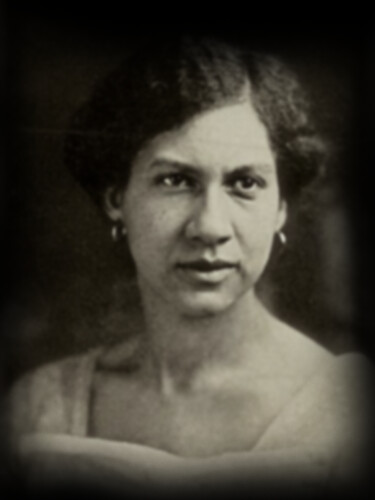
Meta Warrick Fuller
Sculptor and Visionary

metawarwickfuller
Meta Warrick Fuller envisioned a better world for African-Americans.

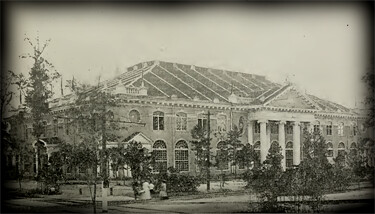
The year was 1907. The place was Jamestown, Virginia. Virginia's first (and only) World's Fair took place and featured a pavilion dedicated to the African-American people designed by Booker T. Washington's son-in-law: W. Sydney Pittman, a graduate of Tuskegee Institute who had gone on to study Architecture at Philadelphia's Drexel Institute. Meta Fuller was a sculptor who had studied in Philadelphia and Paris. She created a series of dioramas for the pavilion that examined the past and held out hope for the future.

Beginning with a depiction of the first twenty-four slaves arriving in Jamestown in 1619, Fuller depicted other history such as a fugitive slave's journey.

But then Fuller looked into the future. She envisioned a future where education and literacy created opportunity and her final diorama showed the modern black family enjoying the fruits of literacy and labor.

jamestownfair
The World's Fair Pavilion, complete with classical columns!

Stones of Remembrance
Remembering G-d's Mighty Works in Our Lives

AngusDei_web
Angus Dei (Lamb of G-d), by Kristina Elaine Greer. [1.]

One of the greatest challenges to our Faith is our forgetfulness. Scripture reminds us how the people were instructed to remember the great things G-d had done for them. G-d separated the Jordan, as He had the Red Sea, for the people to walk across and gave them the following command:

And it came to pass, when all the people were clean passed over Jordan, that the Lord spake unto Joshua, saying, Take you twelve men out of the people, out of every tribe a man, And command ye them, saying, Take you hence out of the midst of Jordan, out of the place where the priests' feet stood firm, twelve stones, and ye shall carry them over with you, and leave them in the lodging place, where ye shall lodge this night.

Then Joshua called the twelve men, whom he had prepared of the children of Israel, out of every tribe a man: And Joshua said unto them, Pass over before the ark of the Lord your G-d into the midst of Jordan, and take you up every man of you a stone upon his shoulder, according unto the number of the tribes of the children of Israel: That this may be a sign among you, that when your children ask their fathers in time to come, saying, What mean ye by these stones?

Then ye shall answer them, That the waters of Jordan were cut off before the ark of the covenant of the Lord; when it passed over Jordan, the waters of Jordan were cut off: and these stones shall be for a memorial unto the children of Israel for ever. And the children of Israel did so as Joshua commanded, and took up twelve stones out of the midst of Jordan, as the Lord spake unto Joshua, according to the number of the tribes of the children of Israel, and carried them over with them unto the place where they lodged, and laid them down there.

And Joshua set up twelve stones in the midst of Jordan, in the place where the feet of the priests which bare the ark of the covenant stood: and they are there unto this day." -- Joshua 4:1-9

The Passover meal had already been instituted as testimony to G-d's redemption, so that a child would ask: "Why is this Night Different from all Other Nights?" The story in a meal gave illustration to the miracle that had carried the people out of Egypt.

For the Christian, remembering deliverance from sin is the greatest miracle. In preparation for Easter, the Church observes Lent, reminding us of the deliverance Jesus brought us by way of the cross: 

Ash Wednesday emphasizes two themes: our sinfulness before G-d and our human mortality. The service focuses on both themes, helping us to realize that both have been triumphed through the death and resurrection of Jesus Christ.

During some Ash Wednesday services, the minister will lightly rub the sign of the cross with ashes onto the foreheads of worshipers. The use of ashes as a sign of mortality and repentance has a long history in Jewish and Christian worship. Historically, ashes signified purification and sorrow for sins."-- —Adapted from The United Methodist Book of Worship

So it is very important to tell our stories of redemption, using reminders that will stir our minds to recall times when we were vividly aware of the Divine reaching out to touch our lives. Pastor Seth showed us a little children's book he had saved from his first house... on closer examination you could see the tire print on the page, a reminder of how when a cart careened into his living room, it had narrowly missed hitting his wife and young child. Certainly G-d had protected his young family and that little book now told a much bigger story!

So now it is time to commit ourselves to the telling of the great stories, the ones that end in redemption and deliverance from our present condition. The Book of Judges follows the Book of Joshua and gives a sober warning: "And Joshua the son of Nun, the servant of the Lord, died, being an hundred and ten years old. And they buried him in the border of his inheritance in Timnathheres, in the mount of Ephraim, on the north side of the hill Gaash. And also all that generation were gathered unto their fathers: and there arose another generation after them, which knew not the Lord, nor yet the works which he had done for Israel." -- Judges 2:8-10

The importance of stories and their redemptive narrative cannot be emphasized enough. Passing the torch must always be a priority in every generation.

1. "I did this with a sheet of 8.5"x11" computer paper some ashes from my fire place and canola oil. I mixed up some of the oil and ashes similar to how they are mixed on Ash Wednesday and painted them on the paper in a cross then sprinkled the rest of the dry ashes on top. I then found one of the music compositions for "Agnus Dei," Latin for Lamb of G-d, on www.hymnary.org [click to read] and cut out strictly the music overlaying it and changing the opacity over the picture of my ash cross. Then I added the Latin words meaning, "Lamb of G-d, who takes away the sins of the world, have mercy upon us, grant us peace." This piece is to remind us that we are sinners made up of dust, but G-d loved us so much, he took mercy on us sending His son as a sacrificial lamb, to take away our sins. If we believe and accept his sacrifice we are granted this eternal peace and life with Him. May the Lord bless you all and lead you closer to Him during this season of Lent, looking forward to the promise of Easter. Amen." -- Kristina Elaine Greer

Thoughts About Ash Wednesday and Lent
A Time For Reflection and Redirection

sunset
Sunset in the Blue Ridge Mountains.

Guest Post by M. K. Hand

You might notice people walking around with cross-shaped smudges on their foreheads. There is no "mystical" attribute assigned to this practice. The ashes are a physical reminder of our need for repentance, and a symbol of the dependency of humans on G-d's mercy through Jesus Christ.

Why ashes? The Bible speaks of man returning to dust and ashes (from whence he came), and Job smeared himself with dust and ashes as a symbol of atonement. Also, in the Old Testament, animals were sacrificed to G-d for atonement, and they were burnt to ashes. When Jesus came as a living sacrifice, the Law was no longer applicable, and animal sacrifices were no longer needed for atonement. Jesus was the final sacrifice...He ushered us into a time of Grace through Faith, once and for all.

Lent, the season leading up to Easter, is a time of increased attention to charity (love), prayer, and fasting for Christians. It is a special time to reflect, repent and rejoice. It prepares our hearts to fully take in and celebrate the sacrifice, atonement, and grace made possible by Jesus' crucifixion, and the restoration of our relationship, broken by our sin, with the Father. Many people fast, give up something meaningful to them, or turn away from a sin that has taken hold of their life; fasting is also a way to identify with the sacrifice made by Jesus at Calvary. May this time leading up to Easter be a time of reflection, repentance, and rejoicing for you!

Therefore also now, saith the Lord, turn ye even to me with all your heart, and with fasting, and with weeping, and with mourning: And rend your heart, and not your garments, and turn unto the Lord your G-d: for he is gracious and merciful, slow to anger, and of great kindness, and repenteth him of the evil." ~ Joel 2:12-13

CS_Lewis_Banner