Showing posts with label Art. Show all posts

Saturday, April 16, 2022

ARTICLES IN AMERICAN ESSENCE MAGAZINE

Church
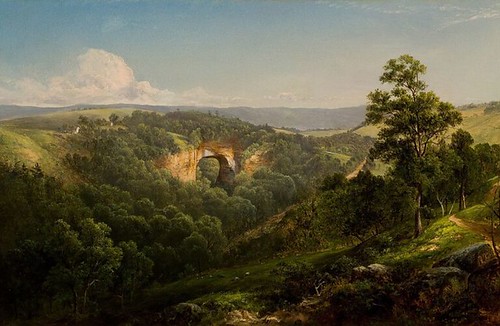
In 1852, Frederic Edwin Church painted Virginia's Natural Bridge

My Writing on Historical Architecture
IMG-2249

The ‘Most Sublime of Nature’s Works’
[click to read]

One of Virginia’s most amazing architectural treasures wasn't formed by the hand of man at all. (read more)

Church-1-1200x752

19th Century Painter Frederic Edwin Church
[click to read]

The story is told of a moment in the North Carolina mansion of Richard Joshua Reynolds, American businessman and founder of the R.J. Reynolds Tobacco Company. One of the family’s small children was staring intently at an extremely large canvas in the family parlor. His mother asked him what he was admiring in the painting. He responded: “I’m looking at the church.” Indeed, he was staring at “The Andes of Ecuador,” a painting by the great artist Frederic Edwin Church. Thinking the child had become aware of the great artist at such a tender age, she joined him in examining the artwork—only to discover the red-tile-roofed chapel that was a tiny detail in the vast painting. That was the “church” the child was drawn to. Frederic Church’s epic paintings ended up in the grand homes of wealthy patrons, who probably missed much of the detail in the paintings they had purchased. The sheer volume of subtly rendered detail probably required “a little child [to] lead them” (Isaiah 11:6). Truthfully, Church was a very spiritual person, and his work reflected a sense of the unseen hand behind the scenery he so beautifully rendered. (read more)

1997A22_702_HR.jpg

Olana, Frederic Edwin Church's Final Masterpiece
[click to read]

On a ridge overlooking the Hudson River, artist Frederic Church composed his last, and perhaps grandest, work: a home and grounds for his family. He purchased the land above his first home, “Cosy Cottage,” before his trip to the Middle East and Europe. “I have just purchased the woodlot on the top of the hill. I want to secure if possible before I leave every rood [measure] of ground that I shall ever require to make my farm perfect.” (read more)
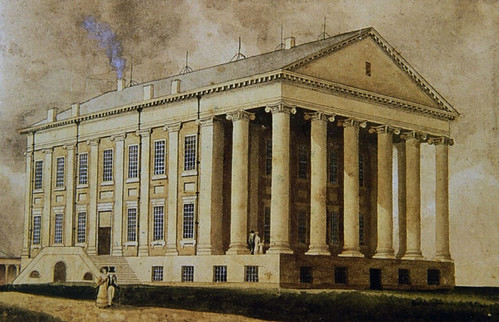
Virginia State Capitol, Richmond. 1830 watercolor by William Goodacre

American Classicism and the ‘Gentleman Architect’ Thomas Jefferson
[click to read]

In 1784 Thomas Jefferson found himself in France as our first ambassador. (read more)

IMG-2251

An ‘Academical Village’ as a Model for a New Republic
[click to read]

If you had traveled with the Marquis de Lafayette to the Piedmont region of Virginia in 1824... (read more)

View,Of,Washington,D.c.,In,The,Usa,At,Sunrise,As

The Inspiration for Washington DC
[click to read]

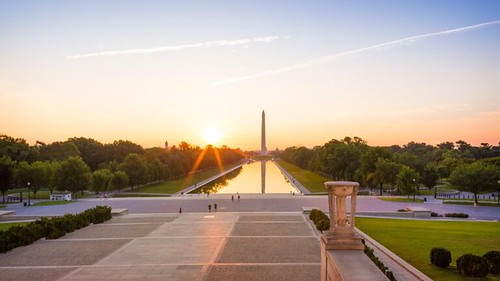
When the United States of America was young, the established cities of New York and then Philadelphia served as seats for the country’s government. (read more)

520406780

Designing the Capital City
[click to read]

The Capitol ought to be upon a scale far superior to anything in this Country.” —George Washington to Thomas Jefferson in 1792

James Hoban was born in 1762, in Callan, Ireland. As a boy, he was an apprentice to a carpenter and a wheelwright. He later trained in the neoclassical style of architecture at the Dublin Society School. Just after the Revolutionary War, Hoban immigrated to South Carolina. There, he designed the old state Capitol building in Columbia. (read more)
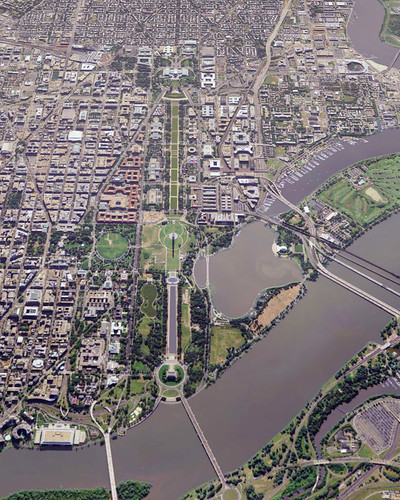
National Mall

IMG-2252

Romantic Aspirations, Vision, and Viaducts
[click to read]

Charles Carroll of Carrollton might well have been the Elon Musk of his day. (read more)
WIKI_NYP_LOC5-1450x2048

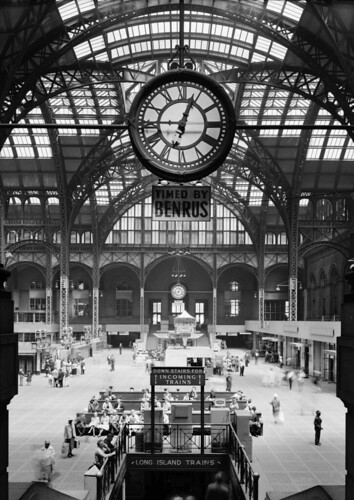
Temples of Transportation
[click to read]

In 1862, arguably one of the darkest and most uncertain years for our republic, President Abraham Lincoln pressed Congress to pass the Pacific Railway Act. As North and South were being ripped apart, Lincoln, a former railroad attorney, sought to use the rails to tie East and West together. America was still involved in the process of recovering from her terrible civil war, when on May 10, 1869, the Transcontinental Railroad was celebrated as complete. The railroad had been constructed in a mad dash, as the two competing lines, Union Pacific and Central Pacific, raced to complete as much track as possible. The prize, 6,400 acres of land and $16,000 for every mile of track completed, led to a spirited competition. Union Pacific’s Thomas Durant and Central Pacific’s Leland Stanford pushed their crews on. When they met in Utah, they kept on pushing right past each other. (read more)
IMG_3840

A Shining City on a Lakefront
[click to read]

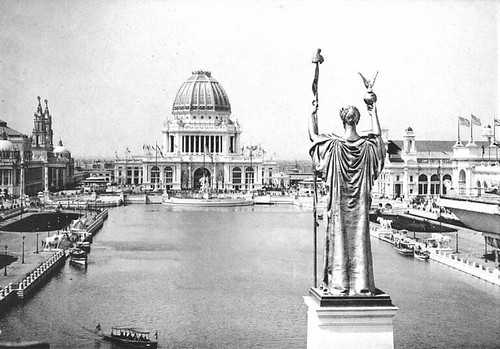
Truesdale Marshall, in Henry Blake Fuller’s 1895 novel, “With the Procession,” had this to say about Chicago: A “hideous monster, a piteous, floundering monster too. It almost called for tears. Nowhere a more tireless activity, yet nowhere a result so pitifully grotesque, gruesome, appalling.” This was the assessment of the great city that had risen so rapidly in the plains of America’s Midwest. The young nation had barely survived its civil war just decades before. Chicago was still recovering from its great fire. Railroads rushed to cross and crisscross the fruited plain, building quickly. There was no time for building beautiful arched bridges. Wooden trestles were thrown up in a matter of weeks. Track was measured in miles laid per day. “Hell on Wheels” was the order of the day. Midwestern cities were ugly, smelly, and chaotic.

But then, in the summer of 1893, a gleaming city appeared on the shores of Lake Michigan, something that didn’t seem to belong to this boisterous time. It only stood for a brief season, but it would change the course of a nation’s development. (read more)
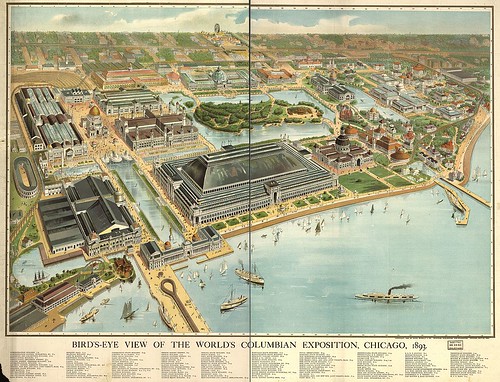
1893_Birds_Eye_view_of_Chicago_Worlds_Columbian_Exposition
A Bird's Eye View of the 1893 Chicago World's Fair.
Reaper

An Afternoon at Walnut Grove
[click to read]

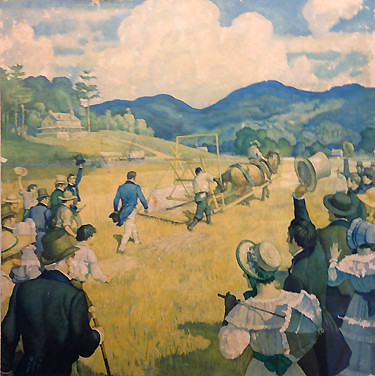
Indomitable perseverance in a business, properly understood, always ensures ultimate success.”Cyrus McCormick, inventor and industrialist. (read more)
IMG-5834

Alva Vanderbilt's Petit Château
[click to read]

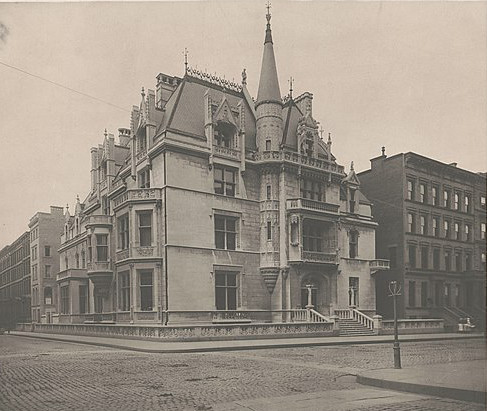
In 1843, young Richard Morris Hunt and family traveled from America to Europe, where he gained his formal education. Initially, Hunt pursued training in art, but at the encouragement of his family, he took up architecture. Hunt studied under Geneva architect Samuel Darier and later joined the Paris studio of architect Hector Lefuel. In Paris, he studied for the entrance examinations of the École des Beaux-Arts and became the first American to be admitted to the prestigious school. (read more)
IMG-5835

Biltmore House
[click to read]

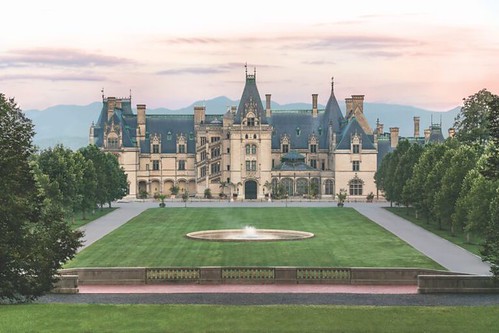
George Washington Vanderbilt II, the youngest child of William Henry Vanderbilt, first visited the mountains of North Carolina at the age of 25. He fell in love with the highlands near Asheville and returned the following year, with his mother Maria Louisa Vanderbilt, to begin purchasing land for a country home. Maria Vanderbilt was seeking a place with a mild climate and healing mountain springs, and George was looking for a “place in the country.” When most people think of a country home, they think of a modest dwelling that requires minimal upkeep. When you are the son of the richest man in America, and the grandson of one of America’s most prominent entrepreneurs, you might have grander visions. (read more)
92A29CD0-A519-4733-B6BA-B6003B355BDD-1200x800

The Saving of Mount Vernon
[click to read]

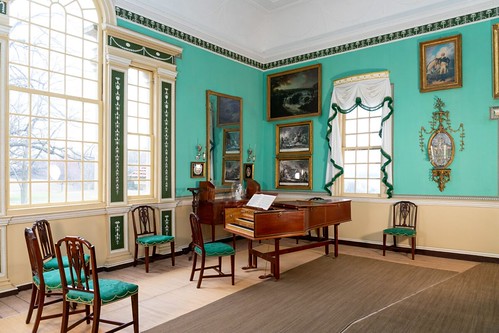
I was painfully distressed at the ruin and desolation of the home of Washington, and the thought passed through my mind: Why was it that the women of his country did not try to keep it in repair, if the men could not do it? It does seem such a blot on our country.”—Louisa Bird Cunningham (read more)

Monticello

The Mind of Monticello
[click to read]

Opened to the public in 1924, Thomas Jefferson’s beloved home of Monticello in Albemarle County, Virginia, is one of the most recognized buildings of early America. Its unique façade is reproduced on our nickel. Monticello (Italian for “Little Mountain”) is still a favorite destination for adults and youth, as all are treated to a look into the amazing gifts of America’s third president. (read more)

IMG-7007

Teaching the Next Generation to Farm
[click to read]

No occupation is so delightful to me as the culture of the earth.” —Thomas Jefferson

Polyface Farm lies gently among the rolling hills of the Shenandoah Valley of Virginia, near Little North Mountain and Elliott Knob, in Augusta County. (read more)

IMG-2253

A Conversation With Charles Marohn: ‘Honor the Struggle!’
[click to read]

Walking six blocks to work each morning gives Charles Marohn a unique insight into the vitality of his town. (read more)

Robinson House

Celebrating Bonds That Reunited America
[click to read]

The History Behind the Robinson House

To-day gladdens the hearts of all true Americans, the spectacle of a re-united country, knit together in real brotherhood of its citizens and in the bonds of an honorable, cordial and lasting pacification—and not least, the spectacle of veterans of the Army of the Potomac joining hands with veterans of [the] Army of Northern Virginia, to establish, as we here to-day establish, this “Lee Camp Soldiers’ Home.” — Colonel Archer Anderson, Address on the opening of Lee Camp Soldiers’ Home, May 20, 1885 (read more)
View,Of,Washington,D.c.,In,The,Usa,At,Sunrise,As

Designing a Nation's Capital
[click to read]

When the United States of America was young, the established cities of New York and Philadelphia, respectively, served as seats for the country’s government. While Alexander Hamilton and many northerners were content with that, Thomas Jefferson and a lot of southerners were not, and so a seat for the federal government was established in what was then a central location. In Federalist Number 43, James Madison expressed the need for a “federal district,” subject to Congress's exclusive jurisdiction and separate from the territory, and authority, of any single state or municipality. (read more)
Electricty.,Westinghouse,Belt-driven,Exciters,And,Alternators.,Michigan,Lake,Superior,Power

George Westinghouse
[click to read]

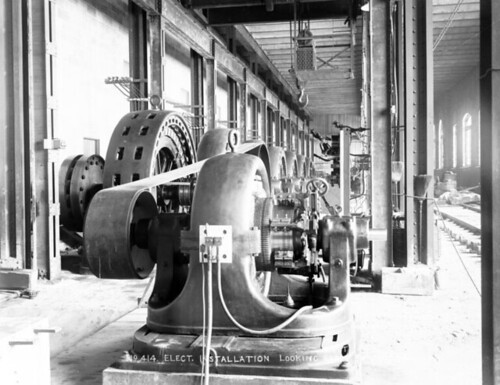
When the 1893 Columbian Exposition opened on the shores of Lake Michigan, visitors to the fair were treated to a glimpse of the future. Chicago, the great classical “White City” by day, at night became a magically illuminated world of colored lights. (read more)

Tw0o-Children-Praying-circa-1954-1536x851

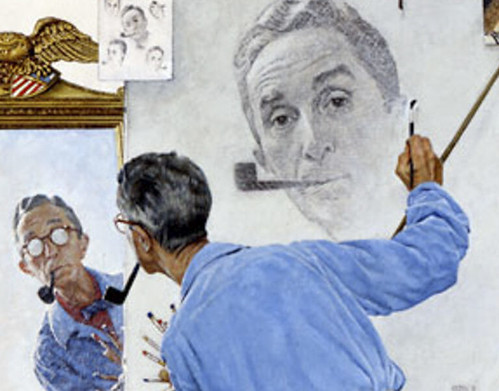
Norman Rockwell’s America
[click to read]

I was showing the America I knew and observed to others who might not have noticed.”Norman Rockwell (read more)

As seen in American Essence Magazine
IMG-2255

(click for more stories)

BannerAE

PontifusBANNER

Monday, February 7, 2022

A FRESH LOOK AT SIR WINSTON CHURCHILL

0000000000000000000
February, 2022

A Fresh Look at Sir Winston Churchill


IMG-3034
Sir Winston Churchill was a prolific painter. Here is his self-portrait.

Church
In 1852, Frederic Edwin Church painted Virginia's Natural Bridge

My Writing on Historical Architecture

IMG-2249

The ‘Most Sublime of Nature’s Works’
[click to read]

One of Virginia’s most amazing architectural treasures wasn't formed by the hand of man at all. (read more)

Virginia State Capitol, Richmond. 1830 watercolor by William Goodacre

American Classicism and the ‘Gentleman Architect’ Thomas Jefferson
[click to read]

In 1784 Thomas Jefferson found himself in France as our first ambassador. (read more)

IMG-2251

An ‘Academical Village’ as a Model for a New Republic
[click to read]

If you had traveled with the Marquis de Lafayette to the Piedmont region of Virginia in 1824... (read more)

IMG-2252

Romantic Aspirations, Vision, and Viaducts
[click to read]

Charles Carroll of Carrollton might well have been the Elon Musk of his day. (read more)

IMG-2253

A Conversation With Charles Marohn: ‘Honor the Struggle!’
[click to read]

Walking six blocks to work each morning gives Charles Marohn a unique insight into the vitality of his town. (read more)

Robinson House

Celebrating Bonds That Reunited America
[click to read]

The History Behind the Robinson House

To-day gladdens the hearts of all true Americans, the spectacle of a re-united country, knit together in real brotherhood of its citizens and in the bonds of an honorable, cordial and lasting pacification—and not least, the spectacle of veterans of the Army of the Potomac joining hands with veterans of [the] Army of Northern Virginia, to establish, as we here to-day establish, this “Lee Camp Soldiers’ Home.” — Colonel Archer Anderson, Address on the opening of Lee Camp Soldiers’ Home, May 20, 1885 (read more)

IMG-2255

Norman Rockwell’s America
[click to read]

I was showing the America I knew and observed to others who might not have noticed.”Norman Rockwell (read more)

As seen in American Essence Magazine

THYME Commentary Has a New Home
[click to read]

Here are links to articles and publications we're reading. (read more)

PontifusBANNER

Tuesday, December 8, 2020

“Elites and Intellectuals,” C. S. Lewis, Crozet

FAITH2
Volume XIX, Issue XIXa: “Elites and Intellectuals,” C. S. Lewis

The Vacuum at the Top

There was a time when the "elite" truly seemed to be better than most people. For example, Leonardo da Vinci was an architect, cartographer, engineer, painter, sculptor, writer and legendary inventor among other things. Socrates was a superb stonecutter, soldier, politician and philosopher. Galileo studied medicine, mathematics, physics and has been referred to as "the father of modern science." For much of human history even the lesser "elites" from noble families had a tremendous advantage over the average man in a time when an education was hard to come by and their wealth and position in society provided them with opportunities to acquire skills that the general populace couldn't." writes John Hawkins. In an article entitled: Elites Are No Longer Elite [click to read], Hawkins explores the reason this is so. Essentially, Hawkins says that there are no more Renaissance men and women, as people tend to become highly proficient in one area of expertise while remaining woefully ignorant of the world outside of their area of expertise. That was not always so.

There was a time when brilliant people like Claudius Crozet and Isambard Kingdom Brunel needed to know a broader range of knowledge in order to do the works they were able to accomplish. They needed to know more than engineering tables. They needed to understand commerce and markets. These men built railroads, but their work ultimately built communities as they provided avenues of commerce and prosperity. Crozet and Brunel seem far closer in stature to da Vinci than their modern counterparts. Hawkins continues: "Today, in a world where there is a nearly infinite supply of news sources, there are far fewer shared activities than there used to be; college educations are commonplace and people can become extraordinarily wealthy based on a terribly narrow skillset." Indeed, my own experience often included such exercises as drawing for architects who couldn't draw and sometimes in the presentation process, creating design for designers who couldn't. Indeed, I was sometimes amazed that by simply stepping back and taking in a larger picture, the resulting contribution to a work would be better than imagined.

The Académie des Beaux-Arts taught through the process of drawing. The advent of computer drafting led to a whole era of designers who's drawings, though they guided the mouse, where essentially drawn by someone else! The art once deemed so essential to design remains as a brief portion of the course, but it is no longer something a designer immerses oneself in every moment. One feels at times, watching the process, as if the designer is connecting lines and templates. The window manufacturer provides the cuts which are pasted into the drawing on screen. To be sure, the computer has opened up new vistas for the exploration of complex forms, but the buildings we live our everyday lives in do not require complex forms. Before the Second World War, in the early Twentieth Century, there existed a beautiful Classicism that made small houses noble. There was a sense of scale and proportion. There was a sense of shadow and texture. I learned much copying the styles of the renderers of those days.

On a far larger scale, Hawkins observes that our leaders often emerge having shown little or no expertise beyond their small sphere. Virginia boasts an 'elite' Senator who's 'expertise' consists of making a fortune by buying cell phone licenses. His good fortune in acquiring wealth is his credential. He does not know what it is like to struggle for years, paying your employee but not yourself to build a business. That might not be such an issue but for his stated derision of those who do: ""you’re going to see a coalition that has just about completely taken over the Republican Party in this state and if they have their way, it’s going to take over state government. It’s made up of the Christian Coalition, it’s made up of the right to lifers, it’s made up of the NRA, it’s made up of the homeschoolers, it’s made up of a whole coalition of people that have all sorts of different views that I think most of us in this room would find threatening to what it means to be an American." -- Mark Warner [1.]

There was a time when Beauty, Truth, Virtue and Nobleness were seen to spring from a Divine origin. The problem with Senator Warner's statement is that he summarily dismisses a whole group of people who embrace that. The Right to Life springs from the concept of IMAGO DEI, that belief that mankind is created in the Image of G-d. The Second Amendment acknowledges the belief that government serves the people and that power remains with the people. The ability to engage in self-defense is simply an expression of that greater principle. Homeschoolers simply acknowledge that the parent is the first one responsible for training up a child. They extend that responsibility in providing instruction in a broader body of knowledge than early language. Here Hawkins swerves into a greater truth. Modern relativism has rendered obsolete the concept that there is an ultimate source of Wisdom and Truth. The Academy, believing this, no longer teaches it.

Until recent times the Divine underpinning was foundational to learning. By its very nature it invited exploration of a broader world. Design had its inspiration in nature. Flawed human nature was continually challenged by a Divine benchmark. Relativism states that "all truths are equally valid," resulting in a diminished sense of the need to pursue absolute truth. Indeed, there is NO need to pursue absolute truth, for it doesn't exist in their thinking. This immediately serves to narrow one's experience. The celebration of 'Diversity' does NOT serve to broaden because it rails against the notion that there is an absolute. One steps up to the human experience like a consumer of a buffet, sampling interesting dishes but learning nothing about the creation of a meal! Indeed, Hawkins notes that one phenomenon inherent in this mindset is that now we have people who are famous simply for being famous. They need not present a resume of accomplishment. Hawkins cites the example of our 44th President, who was elected despite the conspicuous absence of a resume of accomplishment.

As his election was sealed and his inauguration began, news anchors remarked: "We know VERY LITTLE about him!" A colleague of mine lamented the general lack of investigative journalism in our day, remarking that they must not have the resources for it. NO!, all you needed to do was READ HIS BOOK and you would come away with a strong sense of his Anticolonialist Socialist sentiments. But such is the Modern Age, that we can style the blank canvas of a Presidential candidate to be whatever we want him to be. Because many in our day are unfamiliar with true accomplishment, we fail to look for it!

That is why this publication has recently presented a series of stories of great accomplishment. Neil Armstrong and President Kennedy show us something of it. They showed us how to lift our eyes to the horizon. Kennedy, though a flawed man like most of us, did heroic things in the Pacific War and wrote a book called Profiles in Courage. I read it in Middle School... not as an assignment, mind you, but because it sat on Dad's voluminous bookshelves. Those people assigned to find counterfeit money do not spend a lot of time studying counterfeit money. Instead, they study real money in GREAT DETAIL. By doing so they develop a sense for what the true currency looks like. Even when presented with a very skillful counterfeit they can "feel" it. That is why THYME Magazine has become, if you will, Profiles in Faith! Indeed, there is a real vacuum of true stories of accomplishment that, if we knew them, would inspire us to set our vision higher.

Da Vinci was in fact the illegitimate son of a peasant woman. Nobles in Eighteenth Century England were often useless "idle rich," yet there is a greater nobility that is recurring in the human experience. The First Earl of Mansfield, William Murray, might never have understood fully the depravity of slavery without the presence of his great-niece, Dido Elizabeth Belle in his life! She was an illegitimate child of a slave but because of her father's love, she was accorded the status of a noblewoman. Like Esther of old, she became in a way a representative for the humanity of her people. George Gist was derided by his neighbors, but he created a language for his people. Such is the true nobility that a free society is able to nurture in its people. America has been such an incubator for human brilliance for over two centuries! Those who would cast her aside in the pursuit of their Socialist solutions would do well to reconsider!

The Magician's Twin
C. S. Lewis and the Case Against Scientism


C. S. Lewis explores the modern tendency to elevate science to the status of religion.

C. S. Lewis and Evolution


C.S. Lewis and Intelligent Design


Why Christians Should Paint,
[click to read]

Dance, Quilt, Act, Compose Music, Write Stories,
Decorate Cookies, and participate in the Arts
by Mark Altrogge

When I was little my aunt said she loved how I sang all the time. In grade school my teachers let me spend extra time in the library drawing. My parents got me my first oil painting lesson when I was 12. And when I was 14 the Beatles invaded America and I had to get a guitar and get in a band. In college I majored in art ed and got a Masters in painting.

But when Jesus saved me in my early 20s, I began to wonder if art was a waste of time. I could be evangelizing or praying or doing something spiritual instead of dabbing oil paint on a canvas. And besides that, everything is going to burn up anyway at the end, so what’s the use of creating things? Or if I do paint a painting does it have to be a Christian theme? Does it have to have a cross in it or be a scene from the Gospels?

Here are a few reasons why Christians should play banjo and decorate cakes, knit sweaters and make movies, do photography and write poems: (read more)

The America I Love

IMG-3320
Claudius Crozet's 4237 foot long Blue Ridge Tunnel was the longest in the world when it was completed in 1858.

Cornerstone_web
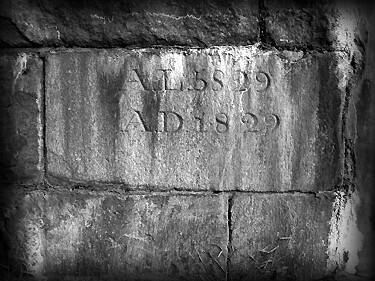
The cornerstone of the Baltimore and Ohio Railroad bridge across Main Street and the Tiber River in Ellicott City. This is not the cornerstone of the railroad, which was laid by the last surviving signer of the Declaration of Independence, Charles Carroll, on July 4, 1828. That historic cornerstone resides in the Baltimore and Ohio Museum in Baltimore.

B and O Station
The Baltimore and Ohio Railroad station in Ellicott City, Maryland.

B and O to Lexington
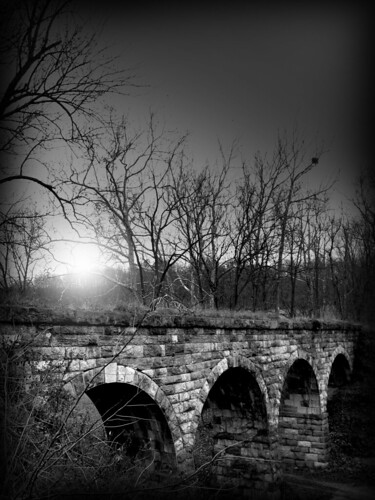
In the late Nineteenth Century, the Baltimore and Ohio Railroad ran as far as Lexington, Virginia over this fine stone bridge.

PONTIFUS_Banner

Tuesday, August 4, 2020

The Gospel Dignifies the Work of Craftsmen

JesusParents
Volume XIX, Issue II: The Gospel Dignifies the Work of Craftsmen

The Gospel Dignifies the Work of Craftsmen

Let thy work appear unto thy servants, and thy glory unto their children. And let the beauty of the Lord our God be upon us: and establish thou the work of our hands upon us; yea, the work of our hands establish thou it..” – PSALM 90:16-17

IMG_1117

This is Sir John Everett Millais's first important religious subject, showing a scene from the boyhood of Christ. When it was exhibited at the Royal Academy in 1850 it was given no title, but accompanied by a biblical quotation: 'And one shall say unto him, What are those wounds in thine hands? Then he shall answer, Those with which I was wounded in the house of my friends.' (Zech. 13:6)

Christian symbolism figures prominently in the picture. The carpenter's triangle on the wall, above Christ's head, symbolises the Holy Trinity. The wood and nails prefigure the crucifixion, as does the blood on the young Christ's hand, which he has cut on a nail, and which drips onto his foot. The young St John is shown fetching a bowl of water with which to bathe the wound. This clearly identifies him as the Baptist, and the image is extended by the white dove perched on the ladder, symbol of the Holy Spirit, which descended from Heaven at the baptism of Christ.

Following the Pre-Raphaelite credo of truth to nature, Millais painted the scene in meticulous detail and based the setting on a real carpenter's shop in Oxford Street. The sheep in the background, intended to represent the Christian flock, were drawn from two sheep's heads obtained from a local butcher. He avoided using professional models, and relied instead on friends and family. Joseph's head was a portrait of Millais's own father, but the body was based on a real carpenter, with his rough hands, sinewy arms and prominent veins. The Virgin Mary was his sister-in-law Mary Hodgkinson, who also appears in Millais's Isabella (1848-9, Walker Art Gallery, Liverpool); John the Baptist was posed by a young adopted cousin, Edwin Everett; and Nöel Humphreys, the son of an artist friend, sat for the young Christ.

The public reaction to the picture was one of horror and Millais was viciously attacked by the press. The Times described the painting as 'revolting' and objected to the way in which the artist had dared to depict the Holy Family as ordinary, lowly people in a humble carpenter's shop 'with no conceivable omission of misery, of dirt, of even disease, all finished with the same loathsome minuteness'. Charles Dickens was one of the most vehement critics, describing the young Christ as 'a hideous, wry-necked, blubbering, red-headed boy, in a bed gown' (Household Words, 15 June 1850).

Further reading:

Leslie Parris (ed.), The Pre-Raphaelites, exhibition catalogue, Tate Gallery, London 1984, reprinted 1994, pp.77-79, reproduced p.79, in colour. Elizabeth Prettjohn, The Art of the Pre-Raphaelites, London 2000, pp.189-91, reproduced pp.46-7, in colour. Malcolm Warner, The Victorians - British Painting 1837-1901, exhibition catalogue, National Gallery of Art, Washington, 1997, pp.65-66, reproduced pl.17, in colour.

Frances Fowle
December 2000, Tate Modern

The Chosen, Real Life with Jesus
[click to read]

137508_w_760_384

The Chosen takes the accounts of the Gospels and vividly brings them to life. It looks and sounds like 1st Century Israel. It doesn’t stop there, though. It is so well done that it feels like it takes us, the viewers, back in time. It feels like we are there with the disciples watching the works of Jesus play out before our eyes. I cried as I watched the healing of Mary Magdalene. I laughed as Jesus playfully interacts with children, and the disciples begin to learn their calling. I wanted to shout “Hallelujah” as Jesus heals His first of many lepers. I felt like I was there for each of these events and more from the Gospels. Jesus is so much more than a preacher or solemn man of God. He is fully God and fully man and this comes through each episode. (read more)

waynesboro
Factory stacks in Waynesboro, Virginia. Photo by Bob Kirchman.

Something to Think About
[click to read]

Hate Didn’t Elect Donald Trump; People Did
By Victoria Sanders

Over the summer, my little sister had a soccer tournament at Bloomsburg University, located in central Pennsylvania. The drive there was about three hours and many of the towns we drove through shocked me. The conditions of these towns were terrible. Houses were falling apart. Bars and restaurants were boarded up. Scrap metal was thrown across front lawns. White, plastic lawn chairs were out on the drooping front porches. There were no malls. No outlets. Most of these small towns did not have a Walmart, only a dollar store and a few run down thrift stores. In almost every town, there was an abandoned factory.

My father, who was driving the car, turned to me and pointed out a Trump sign stuck in a front yard, surrounded by weeds and dead grass. “This is Trump country, Tori,” He said. “These people are desperate, trapped for life in these small towns with no escape. These people are the ones voting for Trump.”

My father understood Trump’s key to success, even though it would leave the media and half of America baffled and terrified on November 9th.

My father understood Trump’s key to success, even though it would leave the media and half of America baffled and terrified on November 9th. Trump’s presidency has sparked nationwide outrage, disbelief and fear.

And, while I commend the passion many of my fellow millennials feels towards minorities and the fervency they oppose the rhetoric they find dangerous, I do find many of their fears unfounded. I don’t find their fears unfounded because I negate the potency of racism. Or the potency of oppression. Or the potency of hate.

I find these fears unfounded because these people groups have an army fighting for them. This army is full of celebrities, politicians, billionaires, students, journalists and passionate activists. Trust me, minorities will be fine with an army like this defending them.

And, I would argue, that these minorities aren’t the only ones who need our help. The results of Tuesday night did not expose a red shout of racism but a red shout for help.

Journalists are now reporting that Trump won because rural America voted for him in droves. I see a lot of journalists reporting about the what, the who, and the how of this election, but not many are tackling the why. I do not at all feel qualified enough to discuss the why of this, but I don’t see anybody bringing up the astounding poverty found in rural America and that the desperation found in these areas is what prompted the rise of Donald Trump. Perhaps this will inspire more intelligent people than I to look into this more deeply.

It’s easy to point to these small, impoverished towns and name racism, the second amendment or plain stupidity as the only reasons why these people would ever vote for a man like Donald Trump. I find this to be highly intellectually dishonest, though. To write this off as simple racism is to ignore the very real and very heartbreaking struggles small town America faces.

The majority of rhetoric going around says that if you’re white, you have an inherent advantage in life. I would argue that, at least for the members of these small impoverished communities, their whiteness only harms them as it keeps their immense struggles out of the public eye.

Rural Americans suffer from a poverty rate that is 3 points higher than the poverty rate found in urban America. In Southern regions, like Appalachia, the poverty rate jumps to 8 points higher than those found in cities. One fifth of the children living in poverty live rural areas. The children in this “forgotten fifth” are more likely to live in extreme poverty and live in poverty longer than their urban counterparts. 57% of these children are white.

Education, particularly college, is less attainable to those living in rural areas. 64% of young people in rural areas attend college, compared to the 70% of students who attend universities in metro areas. 47% of these small town students who end up attending college only go for a two-year degree, while only 38% of urban students attain only a two-year degree. And, when these students do fight the odds and attend a university, they don’t come back to their place of origin due to the lack of jobs.

Rural Americans also suffer from a lower life expectancy. Those living in Appalachia regions, in particular, have a life expectancy that is declining at a rate that is worse than anywhere else in the USA. Those living in rural America are more likely to suffer from depression. Alcohol and substance abuse is prevalent in rural America and 25.9% of those entering rehab for addictions are between the ages of 12-17. The chronic pain that comes from vocations such as mining has caused the heroin epidemic sweeping small towns. (read more)

IMG_6320
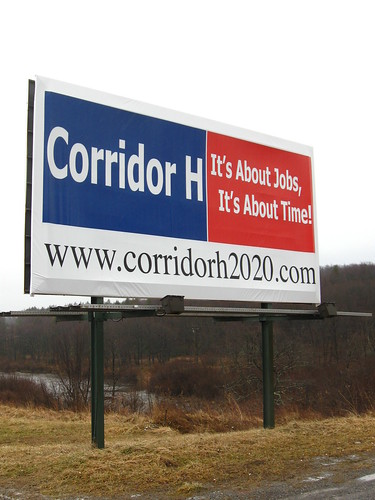
Corridor H, U. S. 48 through the mountains of West Virginia, promises to bring commerce and jobs to the region. Photo by Bob Kirchman.

gotfaith
A billboard between the towns of Thomas and Davis in West Virginia asks: "Got Faith?" Photo by Bob Kirchman.

My Brother's Livelihood Matters
[click to read]

The Current Crisis Requires an Outpouring of Love

The need is great, and looking for ways to help can be daunting. Angelique McNaughton, a regional representative of GoFundMe, has provided a list of Minneapolis businesses affected by the recent riots and/or loss of income due to the COVID-19 crisis. Use care in vetting them and feel free to pass it on across your social networks. “Little by little, a little becomes a lot.” – Tanzanian Proverb (click to help)

PontifusBANNER