Volume XIV, Issue XXII
Divine Design, Mary Jackson
How NASA Got its First Black Female Engineer
Watching the movie Hidden Figures, there was a place where I found myself clapping and crying, it is the scene where Paul, a colleague of Katherine Johnson, serves her coffee! If you have not seen the film yet, I recommend it highly. It follows the careers of three women in NASA's Langly Research Center's West Computing Division... a group of genius mathematicians who because of their skills found themselves in a highly important part of the space race with incredible responsibility.
That in itself would be a great and wonderful story but it gets even better. In the height of segregation in mid-Twentieth Century Virginia, in the 1950's, the brilliant minds of the West Computing Division were all women and they were African-American! Women were actually not strangers to engineering departments. My MOTHER had done similar work in aircraft design for the Martin Company in Baltimore. In fact, she is responsible for my FAVORITE part of the Kirchman Studio's Employee Handbook (if there is such a thing).
When Mom started at the Martin Company's Engineering Department, some old guy snarled: "Get me some coffee deary." Big mistake! Mom rose to her full almost five foot frame and snapped back: "I am here to do your calculations, and assist in design, but I will NOT fetch your coffee!" Dad, who worked in the same department, married her!
The Fay Kirchman Rule is how I honor her memory. Simply stated: "Female Colleagues are NOT required to make or fetch the coffee of their male counterparts, regardless of rank." My former assistant Kristina will attest to it. I always made the coffee and handed her a cup when she came in... and always fondly remembered Mom! The studio operated on Biblical Principle: HE-brews! So when Paul hands Katherine a cup of coffee, I remember Mom!
Mom had studied Mathematics and Physics before becoming a school teacher in Manassas, Virginia. Her career path was very similar to Mary Jackson's in that regard. Mom was doing graduate work at John's Hopkins when she was tapped to work for an engineering team at Martin. While she had to go against resistance to women in the sciences, she never had to contend with Jim Crow Laws. One of her Mentors in College was Dr. Robert Edward Loving, who taught Physics at Richmond College (before it and Westhampton were merged to become the University of Richmond). She would remember snippets of Dr. Loving's lectures in conversation with us children: "Can my little dog Garfield shake a bridge?" he would ask in a dialogue still strongly influenced by the black children who were his childhood playmates.
Mary Jackson graduated from Hampton Institute in 1942 with a dual degree in Math and Physical Sciences, and accepted a job as a math teacher at a black school in Calvert County, Maryland. Like Mom, the great war opened up the opportunity for her to go further. Langley was an important center for aeronautical research then, but it was not until 1951 that Mary joined the West Computing Division at Langley.
Margot Lee Shetterly writes: "After two years in the computing pool, Mary Jackson received an offer to work for engineer Kazimierz Czarnecki in the 4-foot by 4-foot Supersonic Pressure Tunnel, a 60,000 horsepower wind tunnel capable of blasting models with winds approaching twice the speed of sound. Czarnecki offered Mary hands-on experience conducting experiments in the facility, and eventually suggested that she enter a training program that would allow her to earn a promotion from mathematician to engineer. Trainees had to take graduate level math and physics in after-work courses managed by the University of Virginia. Because the classes were held at then-segregated Hampton High School, however, Mary needed special permission from the City of Hampton to join her white peers in the classroom. Never one to flinch in the face of a challenge, Mary completed the courses, earned the promotion, and in 1958 became NASA’s first black female engineer. That same year, she co-authored her first report, Effects of Nose Angle and Mach Number on Transition on Cones at Supersonic Speeds." [1.] Her journey to becoming an engineer is chronicled in Hidden Figures.
She worked for two decades as an engineer and authored over a dozen papers on air flow around aircraft. She became a mentor to young people, helping students build a wind tunnel at a Hampton Community Center. Thanks to the Movie Hidden Figures her story will inspire new generations of young scientists to do great things!
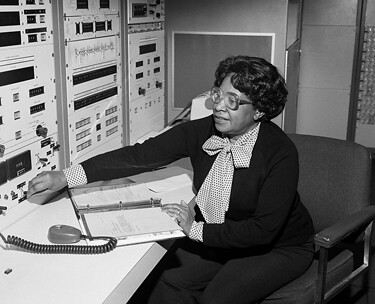
Mary Jackson. NASA Langley Research Center Photo.
Seeing Things in 'Living Color'
In the Vietnam era, American prisoners confined in the infamous 'Hanoi Hilton' developed some unique strategies for keeping their sanity in an environment that was designed to break them. One man, a musician, carefully drew a keyboard on a piece of scrap wood. He hid it in his cell and although it was not capable of producing sound, the man would 'sit' at it and composed pieces of music which he later was able to play. Another prisoner was a golfer. Every day he would 'play' an imaginary round in his head. Upon his release and subsequent physical rehabilitation, he went out to the golf course. His initial score was pretty low considering the years he had spent unable to play.
In the 1960's, as man raced to the moon, engineers had to develop procedures that were up to the time unheard of. My Father was an aeronautical structural engineer and in his work he tackled the problem of getting sensitive instruments and equipment into space on top of a rapidly accelerating missile. In that day the success rate for launches was pretty abysmal, something like a 50% success rate, so Dad and his team went to work imagining the forces that would assault an ascending rocket.
They developed a machine they called the Launch Phase Simulator. It was an enormous centrifuge to simulate the increased g forces of launch. A vibrator simulated the shock and vibration a spacecraft was likely to experience as it went up. The subject was mounted in a vacuum chamber and the atmospheric pressure was decreased to simulate flying into space. Finally, a system of heating and cooling apparatus simultaneously baked and cooled respective sides of the subject craft.
By imagining and simulating the possible combinations of forces assaulting an ascending spacecraft, engineers were able to make remarkable improvements in the success rate of launches.
(to be continued)
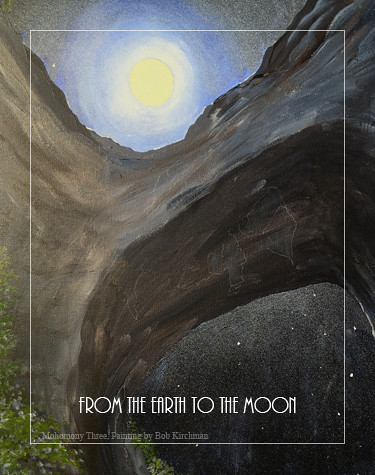
From the Earth to the Moon
By Jules Verne
CHAPTER XVIII, THE PASSENGER OF THE ATLANTA
If this astounding news, instead of flying through the electric wires, had simply arrived by post in the ordinary sealed envelope, Barbicane would not have hesitated a moment. He would have held his tongue about it, both as a measure of prudence, and in order not to have to reconsider his plans. This telegram might be a cover for some jest, especially as it came from a Frenchman. What human being would ever have conceived the idea of such a journey? and, if such a person really existed, he must be an idiot, whom one would shut up in a lunatic ward, rather than within the walls of the projectile.
The contents of the dispatch, however, speedily became known; for the telegraphic officials possessed but little discretion, and Michel Ardan's proposition ran at once throughout the several States of the Union. Barbicane, had, therefore, no further motives for keeping silence. Consequently, he called together such of his colleagues as were at the moment in Tampa Town, and without any expression of his own opinions simply read to them the laconic text itself. It was received with every possible variety of expressions of doubt, incredulity, and derision from every one, with the exception of J. T. Maston, who exclaimed, "It is a grand idea, however!"
When Barbicane originally proposed to send a shot to the moon every one looked upon the enterprise as simple and practicable enough-- a mere question of gunnery; but when a person, professing to be a reasonable being, offered to take passage within the projectile, the whole thing became a farce, or, in plainer language a humbug.
One question, however, remained. Did such a being exist? This telegram flashed across the depths of the Atlantic, the designation of the vessel on board which he was to take his passage, the date assigned for his speedy arrival, all combined to impart a certain character of reality to the proposal. They must get some clearer notion of the matter. Scattered groups of inquirers at length condensed themselves into a compact crowd, which made straight for the residence of President Barbicane. That worthy individual was keeping quiet with the intention of watching events as they arose.
But he had forgotten to take into account the public impatience; and it was with no pleasant countenance that he watched the population of Tampa Town gathering under his windows. The murmurs and vociferations below presently obliged him to appear. He came forward, therefore, and on silence being procured, a citizen put point-blank to him the following question: "Is the person mentioned in the telegram, under the name of Michel Ardan, on his way here? Yes or no."
Gentlemen," replied Barbicane, "I know no more than you do."
We must know," roared the impatient voices.
Time will show," calmly replied the president.
Time has no business to keep a whole country in suspense," replied the orator. "Have you altered the plans of the projectile according to the request of the telegram?"
Not yet, gentlemen; but you are right! we must have better information to go by. The telegraph must complete its information."
To the telegraph!" roared the crowd.
Barbicane descended; and heading the immense assemblage, led the way to the telegraph office. A few minutes later a telegram was dispatched to the secretary of the underwriters at Liverpool, requesting answers to the following queries:
About the ship Atlanta-- when did she leave Europe? Had she on board a Frenchman named Michel Ardan?"
Two hours afterward Barbicane received information too exact to leave room for the smallest remaining doubt.
The steamer Atlanta from Liverpool put to sea on the 2nd of October, bound for Tampa Town, having on board a Frenchman borne on the list of passengers by the name of Michel Ardan."
That very evening he wrote to the house of Breadwill and Co., requesting them to suspend the casting of the projectile until the receipt of further orders. On the 10th of October, at nine A.M., the semaphores of the Bahama Canal signaled a thick smoke on the horizon. Two hours later a large steamer exchanged signals with them. the name of the Atlanta flew at once over Tampa Town. At four o'clock the English vessel entered the Bay of Espiritu Santo. At five it crossed the passage of Hillisborough Bay at full steam. At six she cast anchor at Port Tampa. The anchor had scarcely caught the sandy bottom when five hundred boats surrounded the Atlanta, and the steamer was taken by assault. Barbicane was the first to set foot on deck, and in a voice of which he vainly tried to conceal the emotion, called "Michel Ardan."
Here!" replied an individual perched on the poop.
Barbicane, with arms crossed, looked fixedly at the passenger of the Atlanta.
He was a man of about forty-two years of age, of large build, but slightly round-shouldered. His massive head momentarily shook a shock of reddish hair, which resembled a lion's mane. His face was short with a broad forehead, and furnished with a moustache as bristly as a cat's, and little patches of yellowish whiskers upon full cheeks. Round, wildish eyes, slightly near-sighted, completed a physiognomy essentially feline. His nose was firmly shaped, his mouth particularly sweet in expression, high forehead, intelligent and furrowed with wrinkles like a newly-plowed field. The body was powerfully developed and firmly fixed upon long legs. Muscular arms, and a general air of decision gave him the appearance of a hardy, jolly, companion. He was dressed in a suit of ample dimensions, loose neckerchief, open shirtcollar, disclosing a robust neck; his cuffs were invariably unbuttoned, through which appeared a pair of red hands.
On the bridge of the steamer, in the midst of the crowd, he bustled to and fro, never still for a moment, "dragging his anchors," as the sailors say, gesticulating, making free with everybody, biting his nails with nervous avidity. He was one of those originals which nature sometimes invents in the freak of a moment, and of which she then breaks the mould.
Among other peculiarities, this curiosity gave himself out for a sublime ignoramus, "like Shakespeare," and professed supreme contempt for all scientific men.
Those "fellows," as he called them, "are only fit to mark the points, while we play the game." He was, in fact, a thorough Bohemian, adventurous, but not an adventurer; a hare-brained fellow, a kind of Icarus, only possessing relays of wings. For the rest, he was ever in scrapes, ending invariably by falling on his feet, like those little figures which they sell for children's toys. In a few words, his motto was "I have my opinions," and the love of the impossible constituted his ruling passion.
Such was the passenger of the Atlanta, always excitable, as if boiling under the action of some internal fire by the character of his physical organization. If ever two individuals offered a striking contrast to each other, these were certainly Michel Ardan and the Yankee Barbicane; both, moreover, being equally enterprising and daring, each in his own way.
The scrutiny which the president of the Gun Club had instituted regarding this new rival was quickly interrupted by the shouts and hurrahs of the crowd. The cries became at last so uproarious, and the popular enthusiasm assumed so personal a form, that Michel Ardan, after having shaken hands some thousands of times, at the imminent risk of leaving his fingers behind him, was fain at last to make a bolt for his cabin.
Barbicane followed him without uttering a word.
You are Barbicane, I suppose?" said Michel Ardan, in a tone of voice in which he would have addressed a friend of twenty years' standing.
Yes," replied the president of the Gun Club.
All right! how d'ye do, Barbicane? how are you getting on-- pretty well? that's right."
So," said Barbicane without further preliminary, "you are quite determined to go."
Quite decided."
Nothing will stop you?"
Nothing. Have you modified your projectile according to my telegram?"
I waited for your arrival. But," asked Barbicane again, "have you carefully reflected?"
Reflected? have I any time to spare? I find an opportunity of making a tour in the moon, and I mean to profit by it. There is the whole gist of the matter."
Barbicane looked hard at this man who spoke so lightly of his project with such complete absence of anxiety. "But, at least," said he, "you have some plans, some means of carrying your project into execution?"
Excellent, my dear Barbicane; only permit me to offer one remark: My wish is to tell my story once for all, to everybody, and then have done with it; then there will be no need for recapitulation. So, if you have no objection, assemble your friends, colleagues, the whole town, all Florida, all America if you like, and to-morrow I shall be ready to explain my plans and answer any objections whatever that may be advanced. You may rest assured I shall wait without stirring. Will that suit you?" .
All right," replied Barbicane.
So saying, the president left the cabin and informed the crowd of the proposal of Michel Ardan. His words were received with clappings of hands and shouts of joy. They had removed all difficulties. To-morrow every one would contemplate at his ease this European hero. However, some of the spectators, more infatuated than the rest, would not leave the deck of the Atlanta. They passed the night on board. Among others J. T. Maston got his hook fixed in the combing of the poop, and it pretty nearly required the capstan to get it out again.
He is a hero! a hero!" he cried, a theme of which he was never tired of ringing the changes; "and we are only like weak, silly women, compared with this European!"
As to the president, after having suggested to the visitors it was time to retire, he re-entered the passenger's cabin, and remained there till the bell of the steamer made it midnight.
But then the two rivals in popularity shook hands heartily and parted on terms of intimate friendship.
CHAPTER XIX, A MONSTER MEETING.
On the following day Barbicane, fearing that indiscreet questions might be put to Michel Ardan, was desirous of reducing the number of the audience to a few of the initiated, his own colleagues for instance. .
He might as well have tried to check the Falls of Niagara! he was compelled, therefore, to give up the idea, and let his new friend run the chances of a public conference. The place chosen for this monster meeting was a vast plain situated in the rear of the town. In a few hours, thanks to the help of the shipping in port, an immense roofing of canvas was stretched over the parched prairie, and protected it from the burning rays of the sun. There three hundred thousand people braved for many hours the stifling heat while awaiting the arrival of the Frenchman. Of this crowd of spectators a first set could both see and hear; a second set saw badly and heard nothing at all; and as for the third, it could neither see nor hear anything at all. At three o'clock Michel Ardan made his appearance, accompanied by the principal members of the Gun Club. He was supported on his right by President Barbicane, and on his left by J. T. Maston, more radiant than the midday sun, and nearly as ruddy. Ardan mounted a platform, from the top of which his view extended over a sea of black hats. .
He exhibited not the slightest embarrassment; he was just as gay, familiar, and pleasant as if he were at home. To the hurrahs which greeted him he replied by a graceful bow; then, waving his hands to request silence, he spoke in perfectly correct English as follows:
Gentlemen, despite the very hot weather I request your patience for a short time while I offer some explanations regarding the projects which seem to have so interested you. I am neither an orator nor a man of science, and I had no idea of addressing you in public; but my friend Barbicane has told me that you would like to hear me, and I am quite at your service. Listen to me, therefore, with your six hundred thousand ears, and please excuse the faults of the speaker. Now pray do not forget that you see before you a perfect ignoramus whose ignorance goes so far that he cannot even understand the difficulties! It seemed to him that it was a matter quite simple, natural, and easy to take one's place in a projectile and start for the moon! That journey must be undertaken sooner or later; and, as for the mode of locomotion adopted, it follows simply the law of progress. Man began by walking on all-fours; then, one fine day, on two feet; then in a carriage; then in a stage-coach; and lastly by railway. Well, the projectile is the vehicle of the future, and the planets themselves are nothing else! Now some of you, gentlemen, may imagine that the velocity we propose to impart to it is extravagant. It is nothing of the kind. All the stars exceed it in rapidity, and the earth herself is at this moment carrying us round the sun at three times as rapid a rate, and yet she is a mere lounger on the way compared with many others of the planets! And her velocity is constantly decreasing. Is it not evident, then, I ask you, that there will some day appear velocities far greater than these, of which light or electricity will probably be the mechanical agent?
Yes, gentlemen," continued the orator, "in spite of the opinions of certain narrow-minded people, who would shut up the human race upon this globe, as within some magic circle which it must never outstep, we shall one day travel to the moon, the planets, and the stars, with the same facility, rapidity, and certainty as we now make the voyage from Liverpool to New York! Distance is but a relative expression, and must end by being reduced to zero."
The assembly, strongly predisposed as they were in favor of the French hero, were slightly staggered at this bold theory. Michel Ardan perceived the fact.
Gentlemen," he continued with a pleasant smile, "you do not seem quite convinced. Very good! Let us reason the matter out. Do you know how long it would take for an express train to reach the moon? Three hundred days; no more! And what is that? The distance is no more than nine times the circumference of the earth; and there are no sailors or travelers, of even moderate activity, who have not made longer journeys than that in their lifetime.
And now consider that I shall be only ninety- seven hours on my journey. Ah! I see you are reckoning that the moon is a long way off from the earth, and that one must think twice before making the experiment. What would you say, then, if we were talking of going to Neptune, which revolves at a distance of more than two thousand seven hundred and twenty millions of miles from the sun! And yet what is that compared with the distance of the fixed stars, some of which, such as Arcturus, are billions of miles distant from us? And then you talk of the distance which separates the planets from the sun! And there are people who affirm that such a thing as distance exists. Absurdity, folly, idiotic nonsense! Would you know what I think of our own solar universe? Shall I tell you my theory? It is very simple! In my opinion the solar system is a solid homogeneous body; the planets which compose it are in actual contact with each other; and whatever space exists between them is nothing more than the space which separates the molecules of the densest metal, such as silver, iron, or platinum! I have the right, therefore, to affirm, and I repeat, with the conviction which must penetrate all your minds, `Distance is but an empty name; distance does not really exist!'"
Hurrah!" cried one voice (need it be said it was that of J. T. Maston). "Distance does not exist!" And overcome by the energy of his movements, he nearly fell from the platform to the ground. He just escaped a severe fall, which would have proved to him that distance was by no means an empty name. "Gentlemen," resumed the orator, "I repeat that the distance between the earth and her satellite is a mere trifle, and undeserving of serious consideration. I am convinced that before twenty years are over one-half of our earth will have paid a visit to the moon. Now, my worthy friends, if you have any question to put to me, you will, I fear, sadly embarrass a poor man like myself; still I will do my best to answer you." Up to this point the president of the Gun Club had been satisfied with the turn which the discussion had assumed. It became now, however, desirable to divert Ardan from questions of a practical nature, with which he was doubtless far less conversant. Barbicane, therefore, hastened to get in a word, and began by asking his new friend whether he thought that the moon and the planets were inhabited. "You put before me a great problem, my worthy president," replied the orator, smiling. "Still, men of great intelligence, such as Plutarch, Swedenborg, Bernardin de St. Pierre, and others have, if I mistake not, pronounced in the affirmative. Looking at the question from the natural philosopher's point of view, I should say that nothing useless existed in the world; and, replying to your question by another, I should venture to assert, that if these worlds are habitable, they either are, have been, or will be inhabited."
No one could answer more logically or fairly," replied the president. "The question then reverts to this: Are these worlds habitable? For my own part I believe they are."
For myself, I feel certain of it," said Michel Ardan.
Nevertheless," retorted one of the audience, "there are many arguments against the habitability of the worlds. The conditions of life must evidently be greatly modified upon the majority of them. To mention only the planets, we should be either broiled alive in some, or frozen to death in others, according as they are more or less removed from the sun."
I regret," replied Michel Ardan, "that I have not the honor of personally knowing my contradictor, for I would have attempted to answer him. His objection has its merits, I admit; but I think we may successfully combat it, as well as all others which affect the habitability of other worlds. If I were a natural philosopher, I would tell him that if less of caloric were set in motion upon the planets which are nearest to the sun, and more, on the contrary, upon those which are farthest removed from it, this simple fact would alone suffice to equalize the heat, and to render the temperature of those worlds supportable by beings organized like ourselves.
If I were a naturalist, I would tell him that, according to some illustrious men of science, nature has furnished us with instances upon the earth of animals existing under very varying conditions of life; that fish respire in a medium fatal to other animals; that amphibious creatures possess a double existence very difficult of explanation; that certain denizens of the seas maintain life at enormous depths, and there support a pressure equal to that of fifty or sixty atmospheres without being crushed; that several aquatic insects, insensible to temperature, are met with equally among boiling springs and in the frozen plains of the Polar Sea; in fine, that we cannot help recognizing in nature a diversity of means of operation oftentimes incomprehensible, but not the less real. If I were a chemist, I would tell him that the aerolites, bodies evidently formed exteriorly of our terrestrial globe, have, upon analysis, revealed indisputable traces of carbon, a substance which owes its origin solely to organized beings, and which, according to the experiments of Reichenbach, must necessarily itself have been endued with animation. And lastly, were I a theologian, I would tell him that the scheme of the Divine Redemption, according to St. Paul, seems to be applicable, not merely to the earth, but to all the celestial worlds. But, unfortunately, I am neither theologian, nor chemist, nor naturalist, nor philosopher; therefore, in my absolute ignorance of the great laws which govern the universe, I confine myself to saying in reply, `I do not know whether the worlds are inhabited or not: and since I do not know, I am going to see!'"
Whether Michel Ardan's antagonist hazarded any further arguments or not it is impossible to say, for the uproarious shouts of the crowd would not allow any expression of opinion to gain a hearing. On silence being restored, the triumphant orator contented himself with adding the following remarks: .
Gentlemen, you will observe that I have but slightly touched upon this great question. There is another altogether different line of argument in favor of the habitability of the stars, which I omit for the present. I only desire to call attention to one point. To those who maintain that the planets are not inhabited one may reply: You might be perfectly in the right, if you could only show that the earth is the best possible world, in spite of what Voltaire has said. She has but one satellite, while Jupiter, Uranus, Saturn, Neptune have each several, an advantage by no means to be despised. But that which renders our own globe so uncomfortable is the inclination of its axis to the plane of its orbit. Hence the inequality of days and nights; hence the disagreeable diversity of the seasons. On the surface of our unhappy spheroid we are always either too hot or too cold; we are frozen in winter, broiled in summer; it is the planet of rheumatism, coughs, bronchitis; while on the surface of Jupiter, for example, where the axis is but slightly inclined, the inhabitants may enjoy uniform temperatures. It possesses zones of perpetual springs, summers, autumns, and winters; every Jovian may choose for himself what climate he likes, and there spend the whole of his life in security from all variations of temperature. You will, I am sure, readily admit this superiority of Jupiter over our own planet, to say nothing of his years, which each equal twelve of ours! Under such auspices and such marvelous conditions of existence, it appears to me that the inhabitants of so fortunate a world must be in every respect superior to ourselves. All we require, in order to attain such perfection, is the mere trifle of having an axis of rotation less inclined to the plane of its orbit!"
Hurrah!" roared an energetic voice, "let us unite our efforts, invent the necessary machines, and rectify the earth's axis!"
A thunder of applause followed this proposal, the author of which was, of course, no other than J. T. Maston. And, in all probability, if the truth must be told, if the Yankees could only have found a point of application for it, they would have constructed a lever capable of raising the earth and rectifying its axis. It was just this deficiency which baffled these daring mechanicians.
(to be continued)
The Brookwood Designs
The Kirchman Studio's Own Neighborhood
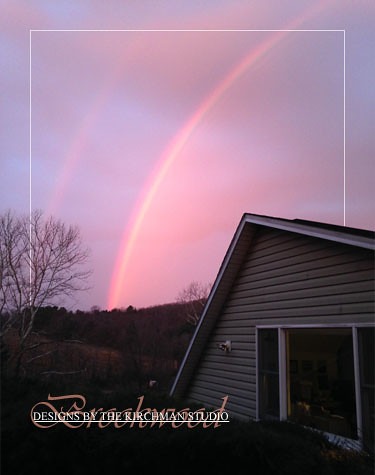
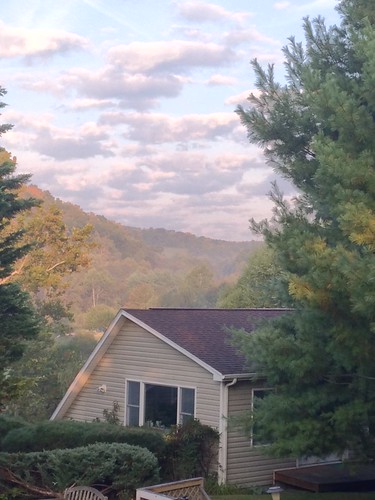
Double Rainbow over the studio window.
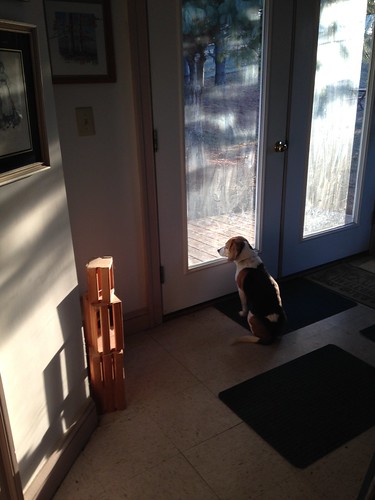
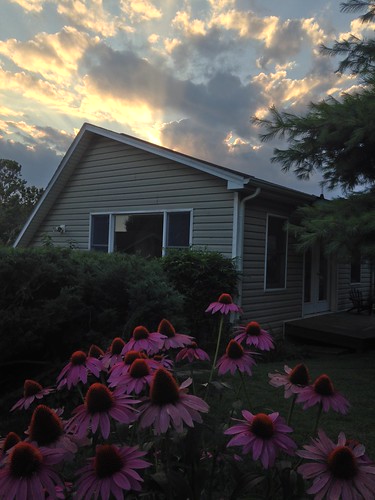
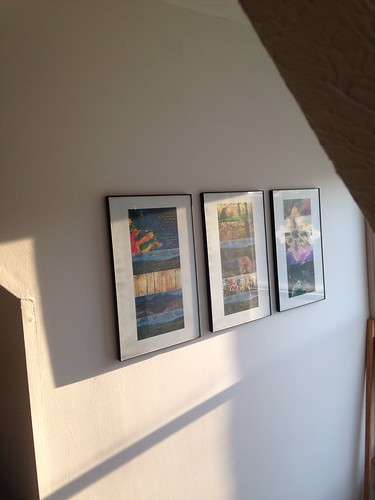
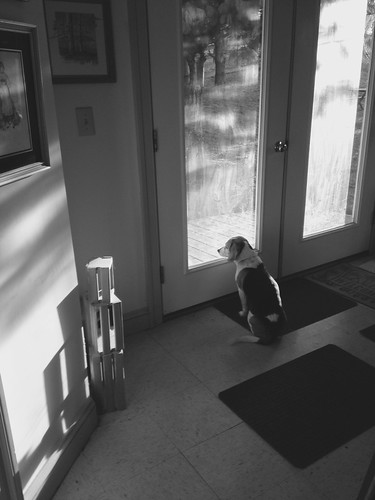
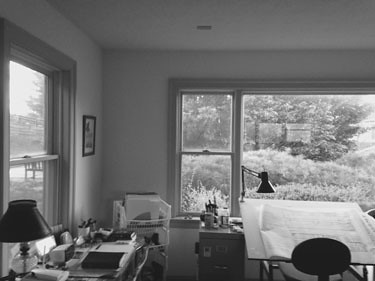
In the studio, Mr. Kirchman sought to create an environment that was conducive to inspiration.
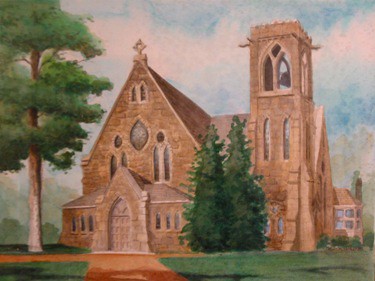
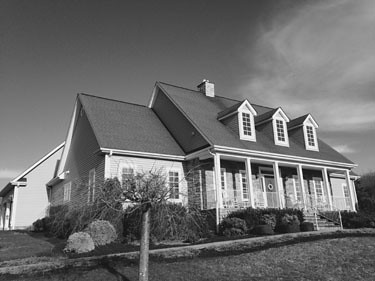
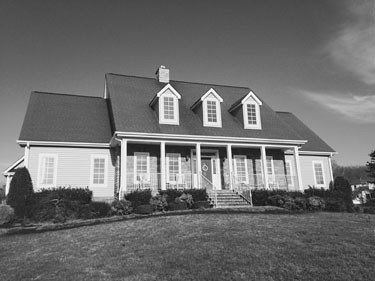
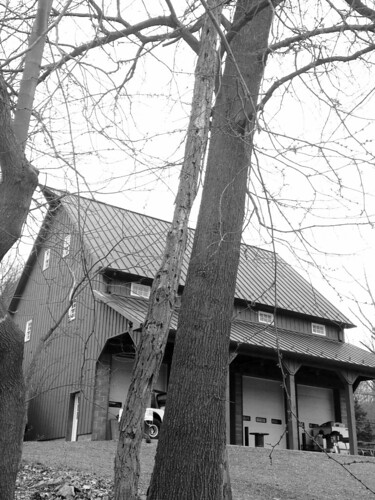
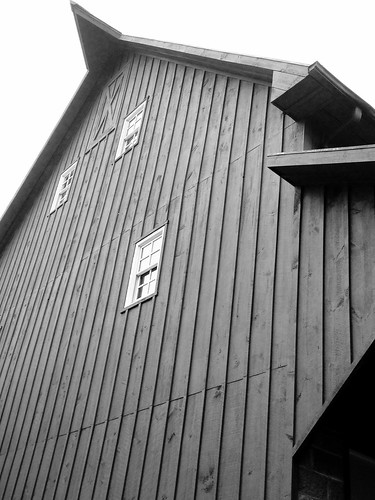
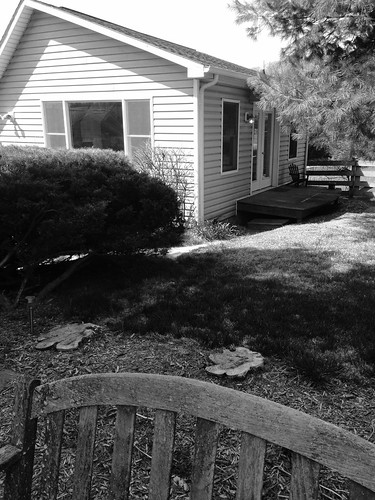
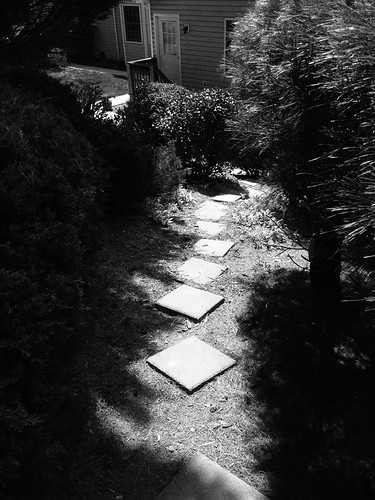
The Kirchman Studio Brookwood Designs are of note because they are projects in the vicinity of and including the studio space. In addition to renovations to the existing house for aging in place, Mr. Kirchman designed the studio, a residence next door and a shop/work-van garage in the form of a barn. The designs are of note because they attempt to honor the region's agricultural heritage and a very nice stone church by the firm of T. J. Collins, visible from the neighborhood. The residence draws from the simplicity of German stone architecture. The stonework itself is by mason: Lewis Wright.
The Patterson Residence

The Barn (Shop and Garage)
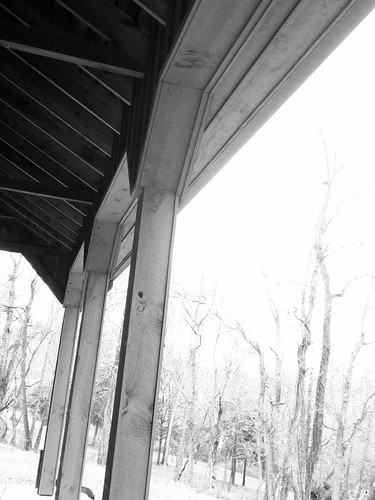
The Studio
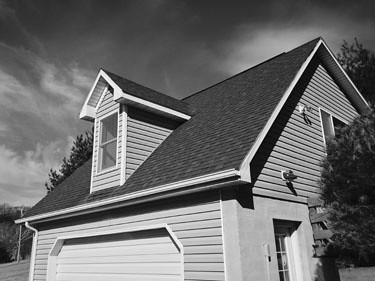

House in a House
Here the garage is converted into a small house within a house with its own discreet separate entrance. It also has its own kitchenette. The perfect solution for multi-generational living.
Barbour Colonnade
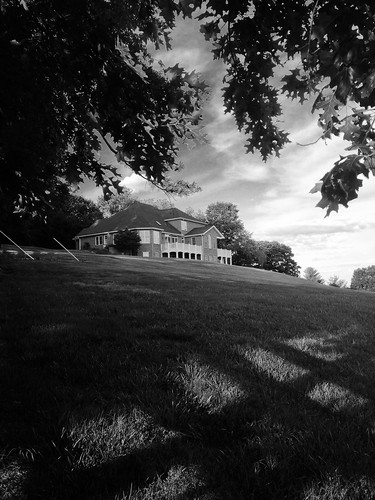
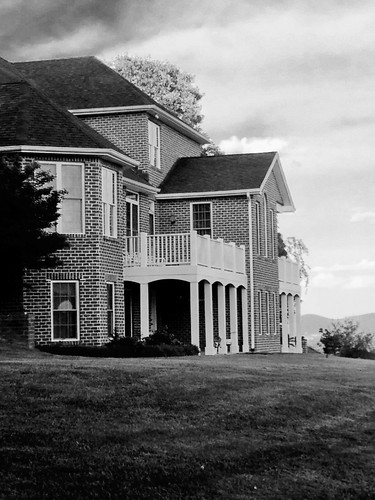

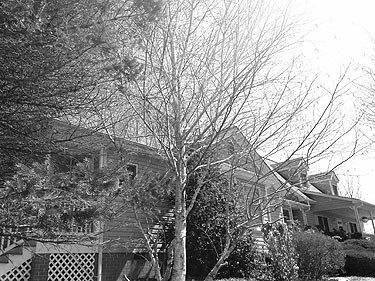
This was a planbook house built on the highest point in Brookwood. The builder turned the house so that the 'back' faced the road and the deck was sitting on skinny 4" x 4" posts. This is my design to add presence to the elevation facing the neighborhood.
________________________________________
Residences in Albemarle County
Greenwood Residence
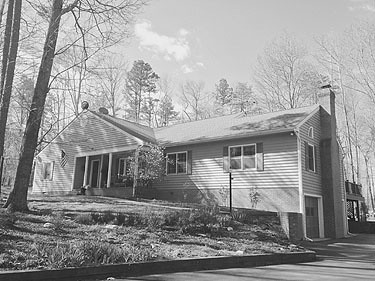
This was also developed as a house within a house concept to house the client's elderly mother.
Crozet Addition
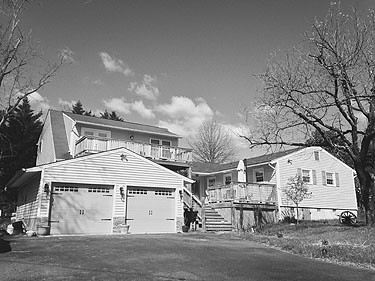
Substantial space and a garage are added to a small house. The massing is hidden in the trees and invisible from the front of the original house.
________________________________________
Staunton, Virginia Commercial Work
Enterprise Centre
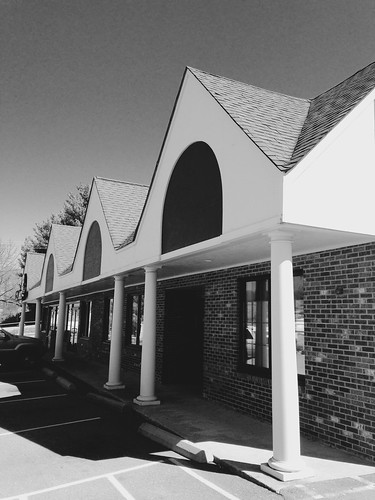

Here an old strip shopping center was given a new parapet and a new trussed roof. The original flat roof was not salvageable so it was trussed over.
Law Offices from Gas Station
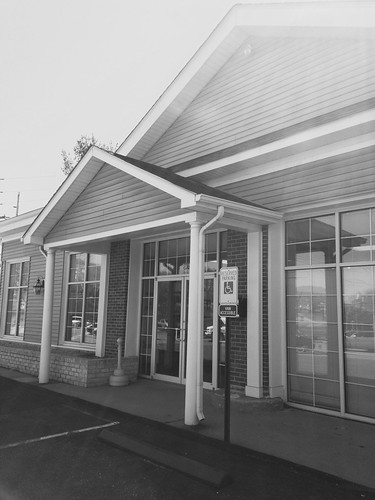
An old 'box' style gas station at the corner of Greenville Avenue and Richmond Road received a new facade and an office wing added to the rear.
________________________________________
Creating Connection with History
A Sense of Place

Stonework on the facade creates a sense of connection...
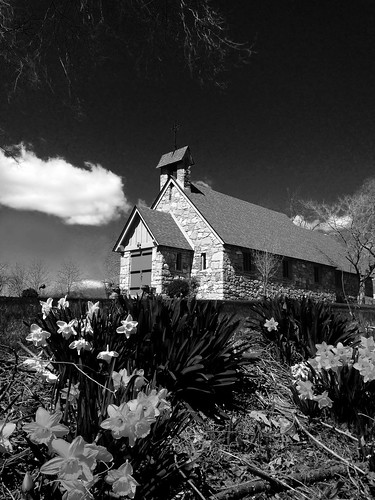
...with the historic architecture of Good Shepherd Episcopal Church by the firm of T. J. Collins.
Copyright © 2017, The Kirchman Studio, all rights reserved.
In Defense of Summer Vacation
The 'other' Weekly News Magazine [click to read] once argued that Summer Vacation is over romanticized and merely stands in the way of the kids retaining all that book-learning they'll need so they can work for the Chinese some day. OK, I'll give you the point that a certain amount of knowledge is 'lost' as kids pursue other activities... but as one who's life and career was shaped by Summers of 'other activities' I'll raise a clear protest: "Not so fast!"
I spent my Summers drawing, building things, going to camp and playing for hours in the woods. I was Lewis and Clark when I set off to explore the woods surrounding Triadelphia Reservoir... with no Sacajawea to help with directions. Mom got a big bell to ring when it was time to come in for dinner. Sometimes I actually heard it. More often than not my appetite finally brought me back to a plate of cold food. Now I loved my groceries as much as any young boy, but didn't Simon Kenton eat cold biscuits while he was exporing the Ohio Valley?
When my younger siblings were old enough, Dad loaded us in Mom's VW Microbus [Mom was there first when it came to the minivan] and we took road trips. Man, I loved road trips. We'd go to places like Gettysburg and crawl into sniper's nests. We'd imagine what it must have been like rushing up the hill in Pickett's Charge. Then we'd go to Antietem and wonder some more. When I turned sixteen, Dad actually let me drive on the trips. Oh the white-knuckle thrill of the Capital Beltway! The endless perspective of NC Route 12 heading to Hatteras and the rollercoaster ride down US 29 to Grandma's. Life was good in the Summer. I hired myself out to the local farmers to bale hay and other jobs. Hot, nasty work is good for the teenaged soul.
One farmer had a wife who'd make us grape juice and lemonade. I've never found sweeter refreshment in all my life.
One Summer Dad decided I needed to build a greenhouse. He let me draw up the plans and he took them to the county... I was thirteen at the time. He gave me a budget and set me loose. I learned to lay block, build walls, buy old storm windows and pretty much whatever it took. The guys at Talbott's Lumber Yard in Ellicott City gave me lots of free advice. They pretty much convinced me I could do it. I wonder how much Dad was paying them?
I was not a licensed electrician... that presented a problem for hooking up the power. Dad said it wasn't a problem. He had a buddy who was licensed and came out and did the whole job in exchange for a bottle of Jack Daniels [Black Label] that Dad cheerfully 'donated' to the building fund. In addition to the electric heater, we got the brilliant idea that it would benefit the plants with both heat and moisture if we ran the dryer vent in there.
What to do about lint? Well, here's where it got really interesting. When we discovered that a discarded nylon stocking fit over the vent and caught the lint while allowing air to flow, we had our problem solved. Dad enjoyed the 'conversation piece' that resulted too.
The greenhouse, built of redwood, served our family for many years. Finally it succombed to termites after I was gone and married. It's lessons are still with me today.
The Royal Wedding Preachers
Bishop Michael Curry and Archbishop Justin Welby