Showing posts with label Jesus. Show all posts

Saturday, March 27, 2021

Special Palm Sunday Issue: How to Cure Conflict

THYME0515
Volume XX, Issue XIIa

How to Cure Conflict

For unto us a child is born, unto us a son is given: and the government shall be upon his shoulder: and his name shall be called Wonderful, Counsellor, The mighty G-d, The everlasting Father, The Prince of Peace." -- Isaiah 9:6

The world is a dangerous place today. As an American President faces a resolute Vladimir Putin, who is intent on reinvigorating the Soviet Empire, and Israel's Binyamin Netanyahu deals with hostilities on multiple borders, the problem of human conflict is on our minds. Indeed it seems like peace is beyond our grasp. Thousands of years of human history are filled with wars and strife.

This coming Sunday Christians remember the time when the Prince of Peace [1.] (Isaiah 9:6) rode into Jerusalem on a donkey! The people lined the way spreading their cloaks and palm branches, expecting the return of the King in an earthly manifestation of the Heavenly Kingdom. [2.] Jesus, however, had greater plans in mind.

Jesus rode into town as the lambs were being brought into the homes in preparation for Passover, the remembrance of G-d's deliverance from Pharaoh centuries before. [3.] Instead of establishing an earthly kingdom, He would be tried by both religious and civil authorities. Although there was no crime committed on His part, He would be sentenced to die a most horrible death by crucifixion.

He ate the Passover meal with His disciples, one of whom betrayed Him. The Roman ruler Pilate could find no fault in Him, yet the religious leaders stirred up a mob to demand His death. He died on a cross on a hill called Golgotha, flanked by two thieves. Hardly the way to begin a movement to transform the world, but that is what history tells us.

His death conquered sin and death. [4.] "The day Jesus was crucified was the day of the Passover celebration and the day that the Passover lamb was to be sacrificed. For the previous 1,200 years, the priest would blow the shophar (ram's horn) at 3:00 p.m. - the moment the lamb was sacrificed, and all the people would pause to contemplate the sacrifice for sins on behalf of the people of Israel. At 3:00, when Jesus was being crucified, He said, "It is finished" - at the moment that the Passover lamb was sacrificed and the shophar was blown from the Temple. The sacrifice of the lamb of God was fulfilled at the hour that the symbolic animal sacrifice usually took place. At the same time, the veil of the Temple (a three-inch thick, several story high cloth that demarked the Holy of Holies) tore from top to bottom - representing a removal of the separation between G-d and man. Fifty days later, on the anniversary of the giving of the law (Pentecost), G-d left the earthly temple to inhabit those who call on the name of Jesus through His Holy Spirit." -- How the Passover Reveals Jesus Christ by Rich Deem [click to read].

But the story does not end there. In Revelation 21 Christians look to a New Heaven and a New Earth where a Heavenly Jerusalem descends to join the Earth. Here is a Kingdom that needs no temple, needs no sun to light it, for G-d Himself is the force that illuminates it! [5.]

And I saw a new Heaven and a new earth: for the first Heaven and the first earth were passed away; and there was no more sea. And I John saw the holy city, new Jerusalem, coming down from G-d out of heaven, prepared as a bride adorned for her husband. And I heard a great voice out of heaven saying, Behold, the tabernacle of G-d is with men, and he will dwell with them, and they shall be his people, and God himself shall be with them, and be their G-d." -- Revelation 21:1-3

West_web East_web
Journey to Jesus, a mural depicting the nations coming to Jesus in the New Heaven and New Earth described in Revelation 21. Mural by Kristina Elaine Greer and Bob Kirchman

Journey to Jesus [click to view larger images].

IMG_3253
The Journey is complete when you reach the kind face of Jesus!
"I judge all things only by the price they shall gain in eternity." —John Wesley

Miracles from Heaven Movie

This film is based on the true story of the Beam family. In these days the 'Supernatural' is often dismissed, even as there continue to be events that cannot be fully explained in the 'Natural.' This film recounts one such event. In the classic Miracles, [6.] C.S. Lewis, the most important Christian writer of the 20th century, argues that a Christian must not only accept but rejoice in miracles as a testimony of the unique personal involvement of G-d in his creation.




advert

Wednesday, December 16, 2020

He is THYME Magazine's Person for All TIME

thyme0254 
SPECIAL REPORT: Person for All Time

A Person for All Time

Since 1927, TIME Magazine has chosen a man, woman, or idea that for better or worse, has most influenced events in the preceding year. Charles Linbergh was the first person to be so honored.

In 1938 Adolph Hitler was named. FDR received the honor three times. Osama Bin Laden was considered for recognition early in this decade.

TIME declared Albert Einstein the most influential person of the century. I don't believe they have ever tried to name the most influential person in all of human history.

THYME Magazine, looking back on thousands of years of history, breaks with the modern trend to honor media creators and celebrities. Gutenberg, in our minds, is far more of an innovator than Zuckerberg.

When Samuel Morse invented the telegraph, he sent the first 'Instant Message:' "What hath G-d Wrought?" Morse was on to something. There is always a back story of inspiration in every innovation.

So THYME today wants to single out those who have yet to show accomplishment at all. Our choice for 'Person for All Time' will no doubt place us in controversial territory. Still,we invite you to examine history for yourself. Alvin Schmidt's "Under the Infuence" [click to read] could be considered your essential guide as you meet THYME's 'Person for All Time.' 

One Solitary Life

Here is a man who was born in an obscure village, the child of a peasant woman. He grew up in another village. He worked in a carpenter shop until He was thirty. Then for three years He was an itinerant preacher.

He never owned a home. He never wrote a book. He never held an office. He never had a family. He never went to college. He never put His foot inside a big city. He never traveled two hundred miles from the place He was born. He never did one of the things that usually accompany greatness. He had no credentials but Himself... While still a young man, the tide of popular opinion turned against him. His friends ran away. One of them denied Him. He was turned over to His enemies. He went through the mockery of a trial. He was nailed upon a cross between two thieves. 

While He was dying His executioners gambled for the only piece of property He had on earth – His coat. When He was dead, He was laid in a borrowed grave through the pity of a friend. Nineteen long centuries have come and gone, and today He is a centerpiece of the human race and leader of the column of progress. I am far within the mark when I say that all the armies that ever marched, all the navies that were ever built; all the parliaments that ever sat and all the kings that ever reigned, put together, have not affected the life of man upon this earth as powerfully as has that one solitary life."

This widely distributed essay was origially adapted from a sermon by Dr James Allan Francis in “The Real Jesus and Other Sermons” © 1926 bythe Judson Press of Philadelphia (pp 123-124 titled “Arise Sir Knight!”). He never set foot in Rome, the seat of Empire, yet Alvin Schmidt and others have documented how this simple man from Galilee changed the human epic.

For many it was the 'righteous gentiles'... Christians who risked their own lives and safety to hide their Jewish neighbors and sneak them out of Nazi occupied parts of Europe. For the mentally ill it was Dorothea Dix, a Christian woman who worked to provide more humane treatment.

Christianity is often blamed for many of the world's ills when in fact you can look to it in its pure form and see the exact opposite. Yes, much evil has been done by men who claim to do it 'in the name of G-d,' but look at the lives of those who actually dare to live by Christ's teaching and you will see a clear departure from culture's corruption.

William Wilberforce and John Newton are prime examples of this. Newton was a slaver. When he came to faith he was repulsed by his involvement in this trade in human misery. When his friend Wilberforce, a rising member of the British government, came to faith, he was going to step away from government to devote his life to G-d. Newton urged Wilberforce to remain in public service and his legacy became the end of slavery in every land under British rule.

Cover Art: Detail of a mural by Kristina Elaine Greer and Bob Kirchman

IMG-3687
Photo by Michael Anderson.

NewBanner

Sunday, May 5, 2019

Mars Ain't the Kind of Place to Raise Your Kids

Imaginative
Volume XVI, Issue XVIII

Imaginative Apologetics After Jesus
The Parable of the Mustard Seed

And he said, Whereunto shall we liken the kingdom of God? or with what comparison shall we compare it? It is like a grain of mustard seed, which, when it is sown in the earth, is less than all the seeds that be in the earth: But when it is sown, it groweth up, and becometh greater than all herbs, and shooteth out great branches; so that the fowls of the air may lodge under the shadow of it. And with many such parables spake he the word unto them, as they were able to hear it. But without a parable spake he not unto them: and when they were alone, he expounded all things to his disciples.” – Mark 4:30-34

Last week we featured a talk by Alison Millbank on ‘Imaginitive Apologetics.’ She spoke of using imagination and wonder to lead us to the great truths of the Gospel. At the end of her talk, someone asked “How do we do it?” A fair question, since Western man tends to want to present information – lots of it – and out of that preponderance of evidence it is expected that one will make the ‘right’ decision, but that is not necessarily the outcome.

If a storyteller appears on the street corner, people gather round. Aren’t we all intrigued by a good story? We get woven into the spell of a good imaginative presentation. If someone were to stand on the same street corner and read off statistics – not so much. It is the story that captivates the imagination and leads us to consider Truth, not the other way around.

For years I looked at this parable and Jesus’ use of parables wrong. Somehow it seemed that Jesus was ‘holding out’ on the crowds. The great truths were reserved for the disciples – the ‘chosen.’ The crowds were somehow being excluded. But yesterday, as a group of us were looking at this passage again, it came to us that Jesus was not excluding the crowds at all. He was doing exactly what Alison Millbank was saying we should do. He was weaving a mystery for us to solve. A parable is an invitation to ponder. Jesus’ life was all about the Kingdom of Heaven and yet even his disciples were still continually stuck on the level of thinking that the ‘Kingdom’ was about restoring political Israel only.

The seed of the black mustard is tiny. It is not the mustard we plant in our gardens here and indeed this tiny seed produces a respectable tree! So it is with the Kingdom of God. You have to see the tiny seed as actually producing something much bigger. The Kingdom transcends anything we can imagine on our own, and yet imagination is how we shall perceive it! And yes, imagination will pique our curiosity, leading us to discipleship. It is in discipleship that we want to know more, we want to dig deeper. Perhaps that is why the saints of old referred to shamrocks and sunflowers. A picture really is worth a thousand words.

Our faith may be compared to this flower, since its gaze is ever fixed above, and turned towards the glorious sun of divine truth.” – Attributed to Catherine of Siena

JOSIAHbiosphere
Volume XVI, Issue XVIIIa

Josiah
By Bob Kirchman
Copyright © 2018, The Kirchman Studio, all rights reserved

Chapter 4: Mars Ain't the Kind of Place to Raise Your Kids

At Mission Control Commander West listened and watched intently. The whole conversation was being recorded and Josiah began: “Hello Earth! I suppose you are wondering what we are doing here?”

West asked Josiah to tell his story.

Let us start with that moment so long ago when our distress signal missile was fired at the starship Great Northern. I am sure you want to know what transpired here on Mars. As you know, APOLLONIUS had his ‘inner circle’ on this mission and they had smuggled aboard a number of Iranian nuclear devices. As near as we can tell, they planned to demonstrate what they had and hold Earth hostage. As you probably know, the missile was aborted and a ‘return command’ initiated, basically the quickest way to save the starship involved bringing the missile back where it came from in a ‘hard turn’ maneuver.”

So,” West asked, “Who aborted the missile?”

I did, sir,” said Josiah. He related the story of how he and his colleague had remained after their shift and noticed unusual activity. Upon investigation they saw the launch of the missile from the blockhouse and though at the time they thought it was a malfunction, they stepped in to stop it.

They expected it to fall to Mars without much trouble. When the world was rocked by an explosion and everything went dark, Josiah and Allison knew it was something worse. They had initially signed on to the voyage because they were political/ideological prisoners and had lost everything. They thought the Mars colony would offer them a new life. Soon, however, it was clear that APOLLONIUS was creating a dark kingdom. The colonists were required to forsake their names for numbers and APOLLONIUS expected unquestioned loyalty. Josiah and Allison simply played along and kept their suspicions to themselves.

How many survivors are there then?” West asked.

Initially there were thirty-seven.” Josiah said. “Four of those died from injuries and other causes in the time that followed.”

The colony was destroyed. How did you all make it?” Exclaimed West.

That’s the really strange part.” Returned Josiah, “You see, we normally would have been in the colony proper at the time but in an odd sort of way, many hands became needed in one of the more remote greenhouses. Even stranger, those greenhouses were in an area sheltered by this interesting rock ridge you see behind me. After the radiation subsided, Allison and I made our way over to the surviving greenhouses. It was just a hunch, but we thought those greenhouses might still be functioning if the blast had been stopped by the intervening ridge. We were not at all surprised to find the greenhouses intact, but we were happily surprised to find so many of our fellow settlers still alive!”

West interrupted, “So, I have to ask you, as a matter of necessity, what is your colony’s stance toward those of us on Earth?”

Personally, Allison and I have no animus toward AAR or Israel. I have to say that I cannot speak for the ones who were more loyal to APOLLONIUS. For decades we simply haven’t thought about it. We determined that you were above us scanning for survivors but could detect none. When we no longer saw the ship in the sky, we assumed you had given up and the Great Northern had returned to Earth. Our communications were totally destroyed so there was no way for us to tell you otherwise.

I assumed command of the colony because no one knew what to do. We managed to create a village in the remaining greenhouses where we live today. They are pretty much simple mud houses but they serve us well. We grow our own food and have been able to hold on for some time now.”

West asked, “So, there are thirty-three of you still on Mars?” He did the math. It would be impossible to evacuate thirty-three souls from Mars in the single lander. He awaited Josiah’s answer.

Oh no, there are now 122 of us.” Came back the answer from Josiah
(to be continued)

The Martian Chronicles
By Ray Bradbury


It is good to renew one’s WONDER” said the philosopher, “Space travel has made children of us all.” – Ray Bradbury

Ray Bradbury wrote The Martian Chronicles as a series of short stories, exploring such themes as “what would Martians think of ‘invading’ Earth men?” When he approached a publisher in New York he was told “We don’t buy short stories. Do you have a novel?” He went back to his hotel and looked over his short stories – outlining them into what would become The Martian Chronicles. The next day he pitched the outline to the publisher, making his first sale at $500! In this audio production Ray Bradbury reads from the novel and explains how he wrote it.

Henry of Ofterdingen: A Romance by Novalis
[click to read]

Probably some of the readers of this volume will feel an interest in the author's life. Although there are but few works, in which the mind of the author is more clearly and purely reflected than in this; yet it is natural that the reader should feel some interest in the outward circumstances of one, who has become dear to him; and those friends of Novalis, who have never known him personally, will be glad to hear all that we can bring to light concerning him. (read more)

Can Art Amend History?
Titus Kaphar


Mohomony Morning
Photos by Bob Kirchman

Mohomony Morning

Mohomony Morning

Mohomony Morning

Mohomony Morning

Mohomony Morning

Mohomony Morning

Mohomony Morning

Mohomony Morning

Mohomony Morning

Mohomony Morning

Mohomony Morning

Mohomony Morning

Mohomony Morning

Mohomony Morning

Mohomony Morning
Morning light greets visitors to Virginia's Natural Bridge.

The Mohomony Paintings
Paintings by Bob Kirchman

Mohomony Print 1
Mohomony One.

Mohomony Print 3
Mohomony Two.

Mohomony Print 2
Mohomony Three.

Mohomony Print 4
Mohomony Four

Mohomony Print 5
Mohomony Five.

Mohomony Snow
Photos by Bob Kirchman

Mohomony Snow
Mohomony Snow One.

Mohomony Snow
Mohomony Snow Two.

Mohomony Snow
Mohomony Snow Three.

PontifusBANNER

Sunday, March 27, 2016

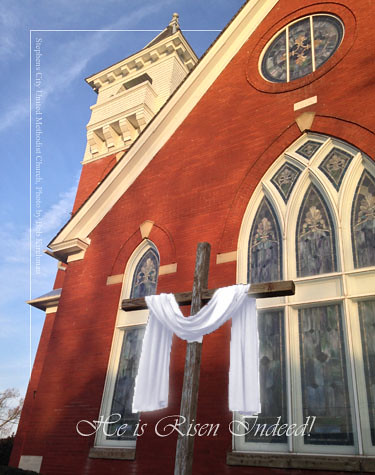
"He is Risen!"

Citizen Journalism with a Better Flavor

THYMEResurrectionIII
Volume IX, Issue XIVaa

The Meaning of the Miraculous

For many Centuries man has acknowledged  the miraculous. In the weeks to come the Jewish community celebrates their deliverance from Egypt and the beginning of their journey to the Promised Land. [1.] A dialogue set in a meals has all generations together consider the preservation of their people that could only be seen as a work of G-d. Previous generations always saw G-d, or some miraculous force as Creator. The Patriarchs saw Him as Provider and Deliverer! The relatively recent concept of Evolution (Charles Darwin in the Nineteenth Century) has created a philosophy of Naturalism that either outright rejects or quietly diminishes the Theistic explanation.

I once attended an Easter service at a large church in Richmond. The minister asserted that the Resurrection was not important! I don't remember anything else he said. I was astonished because Christ's Resurrection would seem to be a cornerstone of Christianity. Many voices today denounce Faith. They may not directly denounce it, but in the academy it is the subject of "open discourse" such as that experienced by Ryan Rotella at FAU [click to read]. Rotella was asked to leave a class. His "offense" was refusing to participate in an excercise where students were required to "stamp on Jesus." Dennis Prager [click to read] has more details. Though the school ultimately apologized to Rotella, it justified its so-called "open discourse" in doing so.

Running from the Resurrection

In fact, among many in academia today you are likely to hear some variation of the following: "There are other reasons why I consider Christianity to be an ill-chosen creed, such as the morals actually taught in the Bible, many of which are abhorrent to a compassionate and just man, or other details of its theology which run counter to observable facts." writes atheist Richard Carrier in introduction to his argument against Jesus' resurrection from the dead.

Here in his introduction, Carrier gives what I believe is his real reason for being uncomfortable with a physical resurrection. A G-d who can so control the laws of nature can ask 'unreasonable' things of us as well. A 'Compassionate and Just Man,' in Carrier's world can support abortion on demand because it is not 'abhorrent' to his viewpoint that abortion is a kind response to the needs of women with unplanned pregnancies. The beating heart of the unborn child need not be seen here as an 'observable fact.' Likewise, the 'restrictive' definition of marriage as a relationship defined by Scripture in specific terms may be viewed as archaic and discriminatory.If G-d didn't design it, He cannot write the specifications.

The elimination of Christianity as an authoritative source allows us to personalize moral decisions. In a culture that elevates self-actualization, this is virtue. It spares us the heavy lifting required to weigh moral absolutes with human frailty.

Jesus, meeting a Samaritan woman at a well, is a prime example of what I mean by this heavy lifting. Balancing compassion for the woman with his observation that she has not been a faithful wife, Jesus creates a constructive dialogue. He does not condemn her, nor does He overlook the complexity she has created in her relationships. He speaks truth and ultimately the dialogue that results sets her free. Here Absolute Love and Absolute Truth are in no way mutually exclusive. In the end her search for 'Living Water' trumps her desire to live as she pleases. [2.]

A G-d who can part the Red Sea, Create worlds and has power over death is pretty much to be respected. A G-d who changes human lives in intimate communion with his Creation is amazing.

Before Jesus appeared, the concept of Resurrection is found in Scripture. Sometimes it is very clear and other times it is a logical assumption consistent with the text.

Resurrection Foretold

And he made his grave with the wicked, and with the rich in his death; because he had done no violence, neither was any deceit in his mouth. Yet it pleased the Lord to bruise him; he hath put him to grief: when thou shalt make his soul an offering for sin, he shall see his seed, he shall prolong his days, and the pleasure of the Lord shall prosper in his hand. He shall see of the travail of his soul, and shall be satisfied: by his knowledge shall my righteous servant justify many; for he shall bear their iniquities. Therefore will I divide him a portion with the great, and he shall divide the spoil with the strong; because he hath poured out his soul unto death: and he was numbered with the transgressors; and he bare the sin of many, and made intercession for the transgressors." -- Isaiah 53:9-12

The famous Messianic text above talks of triumph after death. Other texts that may be seen as prophetic of Resurrection are: Genesis 3:15, Psalm 2:7, Psalm 16:9-11, Psalm 22:14-25, Psalm 30:29, Psalm 40:13, Psalm 110:1, Psalm 118:21-24, Hosea 5:15-6:3, Zechariah 12:10.

Resurrection Documented and Verified

I know of no one fact in the history of mankind which is proved by better, fuller evidence of every sort, to the understanding of a fair inquirer, than the great sign which God hath given us that Christ died, and rose again from the dead." says Dr. Thomas Arnold, formerly Professor of History at Rugby and Oxford Universities. Simon Greenleaf, one of the most skilled legal minds ever produced in this nation, top authority on the question of what constitutes sound evidence, developer of the Harvard Law School, after a thorough evaluation of the four Gospel accounts from the point of view of their validity as objective testimonial evidence, concluded:

It was therefore impossible that they could have persisted in affirming the truths they had narrated, had not Jesus actually risen from the dead, and had they not known this fact as certainly as they knew any other fact." [3.] Dr. Henry M. Morris PhD writes more on The Importance of the Resurrection [click to read]. His point is that the foundational truth of the Christian faith has plenty of evidence to support it.

A G-d who can part the Red Sea, Create worlds and has power over death is pretty much to be respected. A G-d who changes human lives in intimate communion with his Creation is amazing.

Butterfly_icon
A Caterpillar becomes a butterfly. Nature itself suggests the possibility of miraculous transformation and new life! Rice Paper Butterfly, or Paper Kite Butterfly, Idea leuconoe.
Illustration © 2016, by Kristina Elaine Greer for HOPE Publications, Pvt. ltd.

Jesus

Saturday, March 19, 2016

How to Cure Conflict

Citizen Journalism with a Better Flavor

THYME0515
Volume XI, Issue XIIa

How to Cure Conflict

For unto us a child is born, unto us a son is given: and the government shall be upon his shoulder: and his name shall be called Wonderful, Counsellor, The mighty G-d, The everlasting Father, The Prince of Peace." -- Isaiah 9:6

The world is a dangerous place today. As an American President faces a resolute Vladimir Putin, who is intent on reinvigorating the Soviet Empire, and Israel's Binyamin Netanyahu deals with hostilities on multiple borders, the problem of human conflict is on our minds. Indeed it seems like peace is beyond our grasp. Thousands of years of human history are filled with wars and strife.

This coming Sunday Christians remember the time when the Prince of Peace [1.] (Isaiah 9:6) rode into Jerusalem on a donkey! The people lined the way spreading their cloaks and palm branches, expecting the return of the King in an earthly manifestation of the Heavenly Kingdom. [2.] Jesus, however, had greater plans in mind.

Jesus rode into town as the lambs were being brought into the homes in preparation for Passover, the remembrance of G-d's deliverance from Pharaoh centuries before. [3.] Instead of establishing an earthly kingdom, He would be tried by both religious and civil authorities. Although there was no crime committed on His part, He would be sentenced to die a most horrible death by crucifixion.

He ate the Passover meal with His disciples, one of whom betrayed Him. The Roman ruler Pilate could find no fault in Him, yet the religious leaders stirred up a mob to demand His death. He died on a cross on a hill called Golgotha, flanked by two thieves. Hardly the way to begin a movement to transform the world, but that is what history tells us.

His death conquered sin and death. [4.] "The day Jesus was crucified was the day of the Passover celebration and the day that the Passover lamb was to be sacrificed. For the previous 1,200 years, the priest would blow the shophar (ram's horn) at 3:00 p.m. - the moment the lamb was sacrificed, and all the people would pause to contemplate the sacrifice for sins on behalf of the people of Israel. At 3:00, when Jesus was being crucified, He said, "It is finished" - at the moment that the Passover lamb was sacrificed and the shophar was blown from the Temple. The sacrifice of the lamb of God was fulfilled at the hour that the symbolic animal sacrifice usually took place. At the same time, the veil of the Temple (a three-inch thick, several story high cloth that demarked the Holy of Holies) tore from top to bottom - representing a removal of the separation between G-d and man. Fifty days later, on the anniversary of the giving of the law (Pentecost), G-d left the earthly temple to inhabit those who call on the name of Jesus through His Holy Spirit." -- How the Passover Reveals Jesus Christ by Rich Deem [click to read].

But the story does not end there. In Revelation 21 Christians look to a New Heaven and a New Earth where a Heavenly Jerusalem descends to join the Earth. Here is a Kingdom that needs no temple, needs no sun to light it, for G-d Himself is the force that illuminates it! [5.]

And I saw a new Heaven and a new earth: for the first Heaven and the first earth were passed away; and there was no more sea. And I John saw the holy city, new Jerusalem, coming down from G-d out of heaven, prepared as a bride adorned for her husband. And I heard a great voice out of heaven saying, Behold, the tabernacle of G-d is with men, and he will dwell with them, and they shall be his people, and God himself shall be with them, and be their G-d." -- Revelation 21:1-3

West_web East_web
Journey to Jesus, a mural depicting the nations coming to Jesus in the New Heaven and New Earth described in Revelation 21. Mural by Kristina Elaine Greer and Bob Kirchman

Journey to Jesus [click to view larger images].

IMG_3253
The Journey is complete when you reach the kind face of Jesus!
"I judge all things only by the price they shall gain in eternity." —John Wesley

Miracles from Heaven Movie

This film is based on the true story of the Beam family. In these days the 'Supernatural' is often dismissed, even as there continue to be events that cannot be fully explained in the 'Natural.' This film recounts one such event. In the classic Miracles, [6.] C.S. Lewis, the most important Christian writer of the 20th century, argues that a Christian must not only accept but rejoice in miracles as a testimony of the unique personal involvement of G-d in his creation.


advert