 Volume XVI, Issue XXI
Josiah
By Bob Kirchman
Copyright © 2018, The Kirchman Studio, all rights reserved
Chapter 7: Generations
H
Volume XVI, Issue XXI
Josiah
By Bob Kirchman
Copyright © 2018, The Kirchman Studio, all rights reserved
Chapter 7: Generations
Having quite likely spared the colonists the agony of the Pilgrims’ first year, Josiah and Allison divided the greenhouses into plots. They encouraged the building of mud houses on one’s own section and the mere expediency of being on the land gave each settler a sense of purpose when he or she awoke in the morning. There even developed a bit of healthy competition in keeping one’s rows straighter than that of her neighbor. The result was, of course, a better yield than the original collective method might have produced.
The artisans who ran machines that wove cloth, the repairers of pressure suits, the makers of fired pottery and plates all collected in houses close to one another and although this was to have been a cashless society, a simple accounting and currency system emerged nonetheless. Eventually a little cookhouse developed into a tavern. The owners fermented a bit of grain for ‘personal use’ at first but as the years passed, they made enough to share and then sell. Their skill in preparing food did not go unnoticed and soon they were a regular stop for the settlers. There much discussion and business would be transacted.
There were no movies. There was no radio. All of the really high technology had been destroyed in the explosion, but somehow the noisy engines of agriculture and production had been relegated to the fringe… and that is why they survived. Evenings were quiet and the settlers eventually produced children. Although APOLLONIUS was originally planning to raise them in collective nurseries, the simple life of the settlers made it more logical for small family groups to raise their own children. In the decades that followed, those children had children. That is why the colony now had 122 souls. Obviously that part of colonization worked pretty much as planned.
As the years passed, youthful Josiah found his hair tinged with grey. He now watched grandchildren play in the yard of the much enlarged mud house. He vaguely remembered a phenomenon that someone in the Zimmerman Organization had referred to as ‘White Dog Thinking.’ It seems that in his younger days, Zimmerman had known a couple who were so convinced that the world was so awful that they decided to have no children. Instead, they lavished their affections on a series of large white dogs. The colonists, for their part, were so steeped in the mindset that they needed to be fruitful that as bad as things seemed, they never succumbed to ‘White Dog Thinking.’ Surely another ship would come and the colony would go on. The world they had left was really a bad place, they reasoned. It was only a matter of time until Mars became what APOLLONIUS had envisioned – a new home and hope for humanity!
(to be continued)
Thirty-nine Years of Adventure Together
 T
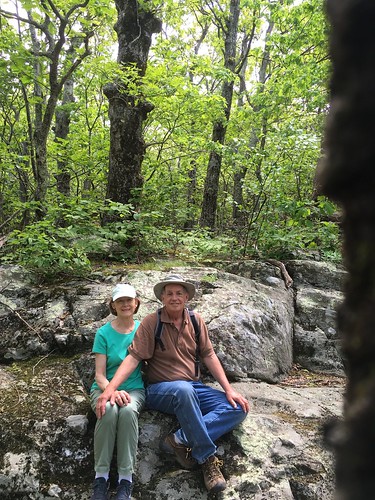
This past weekend, on May 24th, my wife and I celebrated 39 years of adventures shared. We hiked up Humpback Mountain where we wrote our vows under a spreading tree preparing for our wedding. The photos below celebrate a hike in Lost River State Park, standing on a bridge in Chattanooga Tennessee and the day we climbed Old Rag Mountain in Madison County, Virginia.
ACE Players Present 'Robin Hood'
Photos by Amanda Riley
As the school year winds to a close, one of the highlights is always the drama department’s play. Prince John schemes, Robin and his Merry Men play and plan and it was a wonderful show.
Cassady Bush’s set designs compliment a fine performance!

 Crossing Da Vinci's Bridge
Photo by Bob Kirchman
Crossing Da Vinci's Bridge
Photo by Bob Kirchman
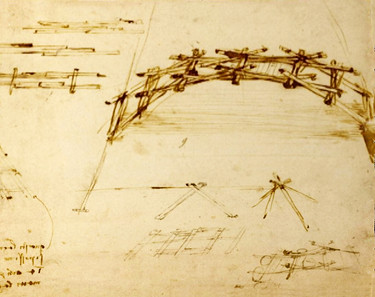
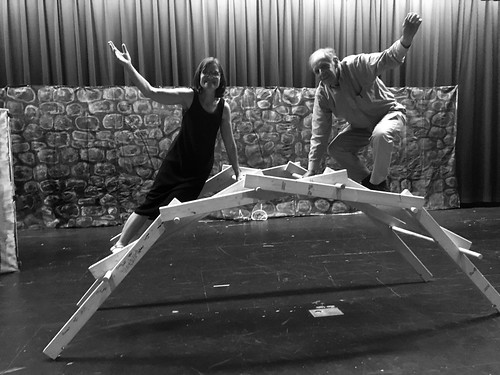
 A highlight of our year was the construction of the bridge design of Leonardo da Vinci.
Building a Self-Supporting Bridge
Leonardo da Vinci
A highlight of our year was the construction of the bridge design of Leonardo da Vinci.
Building a Self-Supporting Bridge
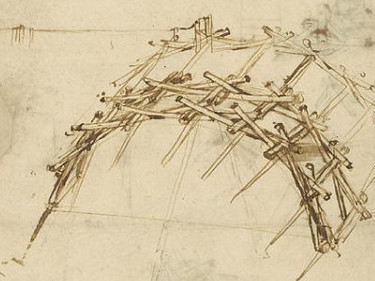
Leonardo da Vinci’s notebooks contain sketches for this intriguing bridge design. It was originally conceived as a military design that would allow soldiers to each carry one piece of the bridge and erect it on site using no mechanical fasteners. The bridge could then be disassembled rapidly and carried along to be used again and again. It is a beautiful balancing of structure and forces that reminds me of the work of
Buckminster Fuller, but it was created during the Renaissance!
Students in the studio art program of
Augusta Christian Educators built this model of the Da Vinci Bridge.
 Arlington and Washington on Memorial Day
 Remembering Those Who Died Defending Liberty
 The World War II Memorial.
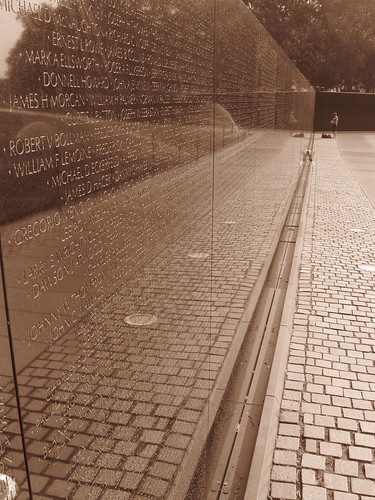 Vietnam Memorial...
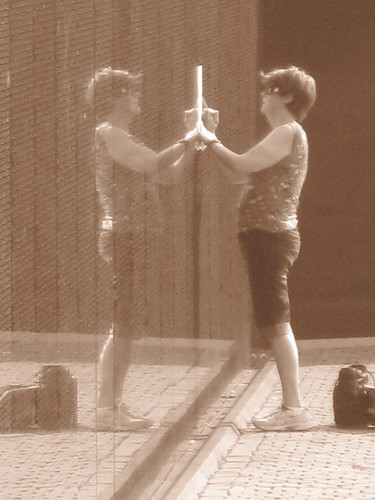 ...and a hero remembered.
 This is the view of Arlington Cemetery from the Old Post Chapel at Ft. Meyer.
 Spring buds in Arlington National Cemetery.
The Unsung Road Builders
Then I told them of the hand of my G-d which was good upon me; as also the king's words that he had spoken unto me. And they said, Let us rise up and build. So they strengthened their hands for this good work."
-- Nehemiah 2:18
Nehemiah
Spring buds in Arlington National Cemetery.
The Unsung Road Builders
Then I told them of the hand of my G-d which was good upon me; as also the king's words that he had spoken unto me. And they said, Let us rise up and build. So they strengthened their hands for this good work."
-- Nehemiah 2:18
Nehemiah in Bible times returned from exile in Persia to rebuild the defenses of Jerusalem. In 1942 another Nehemiah would find himself building the defenses of North America.
Nehemiah Atkinson was a young man in the Army's 97th Engineering Battalion who found himself traveling by train with his unit to an unknown destination. Little did he know he and his colleagues would be building a road to Alaska!
With manpower stretched thin, military leaders decided to send black troops, many from the deep South, North to Dawson Creek and the beginnings of the proposed Alcan Highway. In that era of segregation and Jim Crow laws, many doubted that these men could perform in the hostile climate of Northwestern Canada, but perform they did! Their clothing was only designed for temperatures around forty degrees
ABOVE zero. They managed to improvise. Many of the men could not read, they organized themselves so that the literate men would write letters home for their colleagues. They taught their colleagues to read.
They worked twelve to fourteen hours a day. Diversions were few and the black troops were isolated far in the wilderness. Some of the men managed to
'tame' some of the local wildlife... including black bears who would wander into camp attracted by the smell of food. The animals here had no experience with humans in some cases so they had no fear.
The black battalions were the last to get the best equipment, often laboring with hand tools even as the first D8 Caterpillar bulldozers came on the scene. Sometimes the guys from the 97th would perform a
'midnight requisition,' 'borrowing' a bulldozer from a better supplied unit. They would then proceed to build an impressive stretch of the highway on their own and post a sign to that effect.
Because the road was built under conditions of secrecy and the men of the 97th were so isolated, history largely forgot them. Still, their legacy is a mighty one. The Army was desegregated in 1948 and the 4000 black troops who had worked to build the Alcan had proved themselves ready for any task! Today their accomplishments are the subject of the book:
The Black Soldiers who Built the Alaska Highway by
John Virtue. They are also featured in the Megastructures presentation:
Building the Alaskan Highway.
As America enters into a new era where she remembers how to build great works, the men of the 97th offer our generation an amazing example and inspiration!
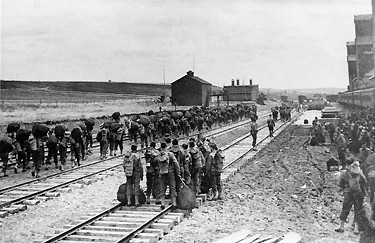 Men arrive by train to build the highway.
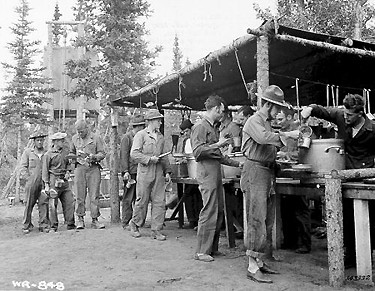 Mess call for highway workers.
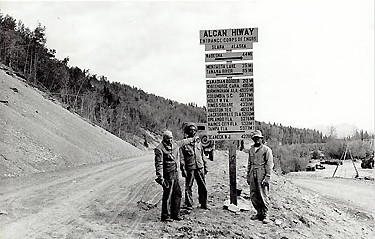 Signposts provided an outlet for creative expression.
Redefining Boundaries
Nehemiah Atkinson
Signposts provided an outlet for creative expression.
Redefining Boundaries
Nehemiah Atkinson was born in Biloxi, Mississippi, on September 8, 1918, the son of
C.C. and
Josephine Atkinson. His family moved to New Orleans in his youth when his father was appointed as Bishop of the diocese of the Holiness Church. He attended Thomy Lafon and J. W. Hoffman schools in New Orleans, and at the Louisiana Industrial Training School in Farmerville before beginning his military career. As a youth he had became fascinated by the game of tennis, hitting his first ball at age nine.
At that time, in the Great Depression, tennis was considered a pastime for the elite.White kids from places like Dartmouth were far more likely to play tennis than African-American kids in the Deep South. Still, Atkinson was undeterred in his pursuit of the game.
Atkinson loved the game and became quite good at it. When he came home from the war he had a passion to teach the game to young people of all backgrounds. He learned offset printing, worked as a night supervisor in a Coca-Cola plant and taught private tennis lessons by day to kids from well-to-do white families. He served as a tennis instructor for the New Orleans Recreation Department for 23 years before retiring in 1995. His legacy is an impressive number of young players who have attended college because of his mentoring!
New Orleans Tennis Professional
Lloyd Dillon remembers Mr. Atkinson:
“I can remember when Mr. Atkinson visited my high school in 1954. He played a classmate of mine who was also a good tennis player. Mr. Atkinson impressed me by the way he moved around on the basketball blacktop court converted into a tennis court for that event. He looked like he was gliding on air.”
Mr. A. ran tennis programs and used old wood racquets for kids each summer. He taught the basic tennis strokes, forehand, backhand, and serve; as well as the rules of the game. He had a way that made you love the game, even if you didn’t have any experience with the game.”
There were not tennis courts available for Blacks at that time in our neighborhood. Mr. A would use volleyball nets in parking lots or any place with space close by.”
He told me he was not going to retire unless he was certain that I got his job. Well, I did, but I knew it was going to be a tall order to do half of what he did with tennis and his life. Sometimes when I would get upset, he would always tell me to read Psalms 37:2,3:
Trust in the LORD and do good; so shalt thou dwell in the land, and verily thou shalt be fed.”[1.]
True Christian Service
Excerpt from A Dish of Orts (scraps)
By George MacDonald
But Jesus called them unto him and said, Ye know that the princes of the Gentiles exercise dominion over them, and they that are great exercise authority upon them. But it should not be so among you: but whosoever will be great among you, let him be your minister; and whosoever will be chief among you, let him be your servant: even as the Son of Man came not to be ministered unto, but to minister, and to give his life a ransom for many."
-- Matthew 20:25-28
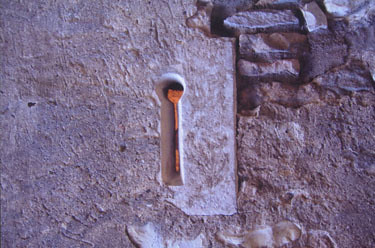 Archer slit, Chateau de Saint-Albain. Photo by Bob Kirchman.
E
Archer slit, Chateau de Saint-Albain. Photo by Bob Kirchman.
Every spring-fountain of gladness about us is his making and his delight. He tends us and cares for us; he is close to us, breathing into our nostrils the breath of life, and breathing into our spirit this thought and that thought to make us look up and recognize the love and the care around us. What a poor thing for the little baby would it be if it were to be constantly tended thus tenderly and preciously by its mother, but if it were never to open its eyes to look up and see her mother's face bending over it. A poor thing all its tending would be without that. It is for that that the other exists; it is by that that the other comes. To recognize and know this loving-kindness, and to stand up in it strong and glad; this is the ministration of God unto us. Do you ever think
"I could worship God if he was so-and-so?" Do you imagine that God is not as good, as perfect, as absolutely all-in-all as your thoughts can imagine? Aye, you cannot come up to it; do what you will you never will come up to it. Use all the symbols that we have in nature, in human relations, in the family--all our symbols of grace and tenderness, and loving-kindness between man and man, and between man and woman, and between woman and woman, but you can never come up to the thought of what God's ministration is. When our Lord came he just let us see how his Father was doing this always, he
"came to give his life a ransom for many." It was in giving his life a ransom for us that he died; that was the consummation and crown of it all, but it was his life that he gave for us--his whole being, his whole strength, his whole energy--not alone his days of trouble and of toil, but deeper than that, he gave his whole being for us; yea, he even went down to death for us.
But how are we to learn this ministration? I will tell you where it begins. The most of us are forced to work; if you do not see that the commonest things in life belong to the Christian scheme, the plan of God, you have got to learn it. I say this is at the beginning. Most of us have to work, and infinitely better is that for us than if we were not forced to work, but not a very fine thing unless it goes to something farther. We are forced to work; and what is our work? It is doing something for other people always. It is doing; it is ministration in some shape or other. All kind of work is a serving, but it may not be always Christian service. No. Some of us only work for our wages; we must have them. We starve, and deserve to starve, if we do not work to get them. But we must go a little beyond that; yes, a very great way beyond that. There is no honest work that one man does for another which he may not do as unto the Lord and not unto men; in which he cannot do right as he ought to do right. Thus, I say that the man who sees the commonest thing in the world, recognizing it as part of the divine order of things, the law by which the world goes, being the intention of God that one man should be serviceable and useful to another--the man, I say, who does a thing well because of this, and who tries to do it better, is doing God service.
We talk of
"divine service." It is a miserable name for a great thing. It is not service, properly speaking, at all. When a boy comes to his father and says,
"May I do so and so for you?" or, rather, comes and breaks out in some way, showing his love to his father--says,
"May I come and sit beside you? May I have some of your books? May I come and be quiet a little in your room?" what would you think of that boy if he went and said,
"I have been doing my father a service." So with praying to and thanking God, do you call that serving God? If it is not serving yourselves it is worth nothing; if it is not the best condition you can find yourselves in, you have to learn what it is yet. Not so; the work you have to do to-morrow in the counting-house, in the shop, or wherever you may be, is that by which you are to serve God. Do it with a high regard, and then there is nothing mean in it; but there is everything mean in it if you are pretending to please people when you only look for your wages. It is mean then; but if you have regard to doing a thing nobly, greatly, and truly, because it is the work that God has given you to do, then you are doing the divine service.
Of course, this goes a great deal farther. We have endless opportunities of showing ourselves neighbours to the man who comes near us. That is the divine service; that is the reality of serving God. The others ought to be your reward, if
"reward" is a word that can be used in such a relation at all. Go home and speak to God; nay, hold your tongue, and quietly go to him in the secret recesses of your own heart, and know that God is there. Say,
"God has given me this work to do, and I am doing it;" and that is your joy, that is your refuge, that is your going to heaven. It is not service. The words
"divine service," as they are used, always move me to something of indignation. It is perfect paganism; it is looking to please God by gathering together your services,--something that is supposed to be service to him. He is serving us for ever, and our Lord says,
"If I have washed your feet, so you ought to wash one another's feet." This will be the way in which to minister for some.
But still, when we are beginning to learn this, some of us are looking about us in a blind kind of way, thinking,
"I wish I could serve God; I do not know what to do! How is it to be begun? What is it at the root of it? What shall I find out to do? Where is there something to do?"
Now, first of all, service is obedience, or it is nothing. This is what I would gladly impress upon you; upon every young man who has come to the point to be able to receive it. There is a tendency in us to think that there is something degrading in obedience, something degrading in service. According to the social judgment there is; according to the judgment of the earth there is. Not so according to the judgment of heaven, for God would only have us do the very thing he is doing himself. You may see the tendency of this nowadays. There is scarcely a young man who will speak of his "master." He feels as if there is something that hurts his dignity in doing so. He does just what so many theologians have done about God, who, instead of taking what our Lord has given us, talk about God as "the Governor of the Universe." So a young man talks about his master as "the governor;" nay, he even talks of his own father in that way, and then you come in another region altogether, and a worse one. I take these things as symptoms, mind. I know habits may be picked up, when they get common, without any great corresponding feeling; but a wrong habit tends always to a wrong feeling, and if a man cannot learn to honour his father, so as to be able to call him "father," I think one or the other of them is greatly to blame, whether the father or the son I cannot say. I know there are such parents that to tell their children that God is their "Father" is no help to them, but the contrary. I heard of a lady just the other day to whom, in trying to comfort her, some one said, "Remember God is your Father." "Do not mention the name 'father' to me," she said. Ah! that kind of fault does not lie in God, but in those who, not being like him, cannot use the names aright which belong to him.
But now, as to this service, this obedience. Our Lord came to give his life a ransom for the many, and to minister unto all in obedience to his Father's will. We call him equal with God--at least, most of us here, I suppose, do; of course we do not pretend to explain; we know that God is greater than he, because he said so; but somehow, we can worship him with our God, and we need not try to distinguish more than is necessary about it. But do you think that he was less divine than the Father when he was obedient? Observe his obedience to the will of his Father. He was not the ruler there. He did not give the commands; he obeyed them. And yet we say He is God! Ah, that is no difficulty to me. Obedience is as divine in its essence as command; nay, it may be more divine in the human being far; it cannot be more divine in God, but obedience is far more divine in its essence with regard to humanity than command is. It is not the ruling being who is most like God; it is the man who ministers to his fellow, who is like God; and the man who will just sternly and rigidly do what his master tells him--be that master what he may--who is likest Christ in that one particular matter. Obedience is the grandest thing in the world to begin with. Yes, and we shall end with it too. I do not think the time will ever come when we shall not have something to do, because we are told to do it without knowing why. Those parents act most foolishly who wish to explain everything to their children--most foolishly. No; teach your child to obey, and you give him the most precious lesson that can be given to a child. Let him come to that before you have had him long, to do what he is told, and you have given him the plainest, first, and best lesson that you can give him. If he never goes to school at all he had better have that lesson than all the schooling in the world. Hence, when some people are accustomed to glorify this age of ours as being so much better in everything than those which went before, I look back to the times of chivalry, which we regard now, almost, as a thing to laugh at, or a merry thing to make jokes about; but I find that the one essential of chivalry was obedience. It is recognized in our army still, but in those times it was carried much farther. When a boy was seven years old he was sent into another family, and put with another boy there to do what? To wait with him upon the master and the mistress of the house, and to be taught, as well, what few things they knew in those times in the way of intellectual cultivation. But he also learned stern, strict obedience, such as it was impossible for him to forget. Then, when he had been there seven years, hard at work, standing behind the chair, and ministering, he was advanced a step; and what was that step? He was made an esquire. He had his armour given him; he had to watch his armour in the chapel all night, laying it on the altar in silent devotion to God. I do not say that all these things were carried out afterwards, but this was the idea of them. He was an esquire, and what was the duty of an esquire? More service; more important service. He still had to attend to his master, the knight. He had to watch him; he had to groom his horse for him; he had to see that his horse was sound; he had to clean his armour for him; to see that every bolt, every rivet, every strap, every buckle was sound, for the life of his master was in his hands. The master, having to fight, must not be troubled with these things, and therefore the squire had to attend to them. Then seven years after that a more solemn ceremony is gone through, and the squire is made a knight; but is he free of service then? No; he makes a solemn oath to help everybody who needs help, especially women and children, and so he rides out into the world to do the work of a true man. There was a grand and essential idea of Christianity in that--no doubt wonderfully broken and shattered, but not more so than the Christian church has been; wonderfully broken and shattered, but still the essence of obedience; and I say it is recognized in our army still, and in every army; and where it is lost it is a terrible loss, and an army is worth nothing without it. You remember that terrible story from the East, that fearful death-charge, one of the grandest things in our history, although one of the most blundering:--
Theirs not to make reply,
Theirs not to reason why,
Theirs but to do and die;
Into the valley of death
Rode the Six Hundred."
So with the Christian man; whatever meets him, obedience is the thing. If he is told by his conscience, which is the candle of God within him, that he must do a thing, why he must do it. He may tremble from head to foot at having to do it, but he will tremble more if he turns his back. You recollect how our old poet Spenser shows us the Knight of the Red Cross, who is the knight of holiness, ill in body, diseased in mind, without any of his armour on, attacked by a fearful giant. What does he do? Run away? No, he has but time to catch up his sword, and, trembling in every limb, he goes on to meet the giant; and that is the thing that every Christian man must do. I cannot put it too strongly; it is impossible. There is no escape from it. If death itself lies before us, and we know it, there is nothing to be said; it is all to be done, and then there is no loss; everything else is all lost unto God. Look at our Lord. He gave his life to do the will of his Father, and on he went and did it. Do you think it was easy for him--easier for him than it would have been for us? Ah! the greater the man the more delicate and tender his nature, and the more he shrinks from the opposition even of his fellowmen, because he loves them. It was a terrible thing for Christ. Even now and then, even in the little touches that come to us in the scanty story (though enough) this breaks out. "We are told by John that at the Last Supper He was troubled in spirit, and testified." And then how he tries to comfort himself as soon as Judas has gone out to do the thing which was to finish his great work:
"Now is the Son of Man glorified, and God is glorified in him. If God be glorified in him, God shall also glorify him in himself." Then he adds,--just gathering up his strength,--
"I shall straightway glorify him." This was said to his disciples, but I seem to see in it that some of it was said for himself. This is the grand obedience! Oh, friends, this is a hard lesson to learn. We find every day that it is a hard thing to teach. We are continually grumbling because we cannot get the people about us, our servants, our tradespeople, or whoever they may be, to do just what we tell them. It makes half the misery in the world because they will have something of their own in it against what they are told. But are we not always doing the same thing? and ought we not to learn something of forgiveness for them, and very much from the fact that we are just in the same position? We only recognize in part that we are put here in this world precisely to learn to be obedient. He who is our Lord and our God went on being obedient all the time, and was obedient always; and I say it is as divine for us to obey as it is for God to rule. As I have said already, God is ministering the whole time. Now, do you want to know how to minister? Begin by obeying. Obey every one who has a right to command you; but above all, look to what our Lord has said, and find out what he wants you to do out of what he left behind, and try whether obedience to that will not give a consciousness of use, of ministering, of being a part of the grand scheme and way of God in this world. In fact, take your place in it as a vital portion of the divine kingdom, or--to use a better figure than that--a vital portion of the Godhead. Try it, and see whether obedience is not salvation; whether service is not dignity; whether you will not feel in yourselves that you have begun to be cleansed from your plague when you begin to say,
"I will seek no more to be above my fellows, but I will seek to minister to them, doing my work in God's name for them."[2.]
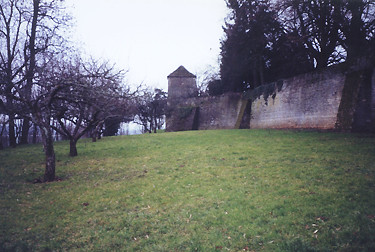 Chateau de Saint-Albain. Photo by Bob Kirchman.
 Chateau de Saint-Albain. Photo by Bob Kirchman.
Putting a Man on the Moon
Speech by President John F. Kennedy
Delivered in person before a joint session of Congress May 25, 1961
Section IX: Space:
Finally, if we are to win the battle that is now going on around the world between freedom and tyranny, the dramatic achievements in space which occurred in recent weeks should have made clear to us all, as did the Sputnik in 1957, the impact of this adventure on the minds of men everywhere, who are attempting to make a determination of which road they should take. Since early in my term, our efforts in space have been under review. With the advice of the Vice President, who is Chairman of the National Space Council, we have examined where we are strong and where we are not, where we may succeed and where we may not. Now it is time to take longer strides--time for a great new American enterprise--time for this nation to take a clearly leading role in space achievement, which in many ways may hold the key to our future on earth.
I believe we possess all the resources and talents necessary. But the facts of the matter are that we have never made the national decisions or marshaled the national resources required for such leadership. We have never specified long-range goals on an urgent time schedule, or managed our resources and our time so as to insure their fulfillment.
Recognizing the head start obtained by the Soviets with their large rocket engines, which gives them many months of lead-time, and recognizing the likelihood that they will exploit this lead for some time to come in still more impressive successes, we nevertheless are required to make new efforts on our own. For while we cannot guarantee that we shall one day be first, we can guarantee that any failure to make this effort will make us last. We take an additional risk by making it in full view of the world, but as shown by the feat of astronaut Shepard, this very risk enhances our stature when we are successful. But this is not merely a race. Space is open to us now; and our eagerness to share its meaning is not governed by the efforts of others. We go into space because whatever mankind must undertake, free men must fully share.
I therefore ask the Congress, above and beyond the increases I have earlier requested for space activities, to provide the funds which are needed to meet the following national goals:
First, I believe that this nation should commit itself to achieving the goal, before this decade is out, of landing a man on the moon and returning him safely to the Earth. No single space project in this period will be more impressive to mankind, or more important for the long-range exploration of space; and none will be so difficult or expensive to accomplish. We propose to accelerate the development of the appropriate lunar space craft. We propose to develop alternate liquid and solid fuel boosters, much larger than any now being developed, until certain which is superior. We propose additional funds for other engine development and for unmanned explorations--explorations which are particularly important for one purpose which this nation will never overlook: the survival of the man who first makes this daring flight. But in a very real sense, it will not be one man going to the moon--if we make this judgment affirmatively, it will be an entire nation. For all of us must work to put him there.
Secondly, an additional 23 million dollars, together with 7 million dollars already available, will accelerate development of the Rover nuclear rocket. This gives promise of some day providing a means for even more exciting and ambitious exploration of space, perhaps beyond the moon, perhaps to the very end of the solar system itself.
Third, an additional 50 million dollars will make the most of our present leadership, by accelerating the use of space satellites for world-wide communications.
Fourth, an additional 75 million dollars--of which 53 million dollars is for the Weather Bureau--will help give us at the earliest possible time a satellite system for world-wide weather observation.
Let it be clear--and this is a judgment which the Members of the Congress must finally make--let it be clear that I am asking the Congress and the country to accept a firm commitment to a new course of action, a course which will last for many years and carry very heavy costs: 531 million dollars in fiscal '62--an estimated 7 to 9 billion dollars additional over the next five years. If we are to go only half way, or reduce our sights in the face of difficulty, in my judgment it would be better not to go at all.
Now this is a choice which this country must make, and I am confident that under the leadership of the Space Committees of the Congress, and the Appropriating Committees, that you will consider the matter carefully.
It is a most important decision that we make as a nation. But all of you have lived through the last four years and have seen the significance of space and the adventures in space, and no one can predict with certainty what the ultimate meaning will be of mastery of space.
I believe we should go to the moon. But I think every citizen of this country as well as the Members of the Congress should consider the matter carefully in making their judgment, to which we have given attention over many weeks and months, because it is a heavy burden, and there is no sense in agreeing or desiring that the United States take an affirmative position in outer space, unless we are prepared to do the work and bear the burdens to make it successful. If we are not, we should decide today and this year.
This decision demands a major national commitment of scientific and technical manpower, materiel and facilities, and the possibility of their diversion from other important activities where they are already thinly spread. It means a degree of dedication, organization and discipline which have not always characterized our research and development efforts. It means we cannot afford undue work stoppages, inflated costs of material or talent, wasteful interagency rivalries, or a high turnover of key personnel.
New objectives and new money cannot solve these problems. They could in fact, aggravate them further--unless every scientist, every engineer, every serviceman, every technician, contractor, and civil servant gives his personal pledge that this nation will move forward, with the full speed of freedom, in the exciting adventure of space.”
Chateau de Saint-Albain. Photo by Bob Kirchman.
Putting a Man on the Moon
Speech by President John F. Kennedy
Delivered in person before a joint session of Congress May 25, 1961
Section IX: Space:
Finally, if we are to win the battle that is now going on around the world between freedom and tyranny, the dramatic achievements in space which occurred in recent weeks should have made clear to us all, as did the Sputnik in 1957, the impact of this adventure on the minds of men everywhere, who are attempting to make a determination of which road they should take. Since early in my term, our efforts in space have been under review. With the advice of the Vice President, who is Chairman of the National Space Council, we have examined where we are strong and where we are not, where we may succeed and where we may not. Now it is time to take longer strides--time for a great new American enterprise--time for this nation to take a clearly leading role in space achievement, which in many ways may hold the key to our future on earth.
I believe we possess all the resources and talents necessary. But the facts of the matter are that we have never made the national decisions or marshaled the national resources required for such leadership. We have never specified long-range goals on an urgent time schedule, or managed our resources and our time so as to insure their fulfillment.
Recognizing the head start obtained by the Soviets with their large rocket engines, which gives them many months of lead-time, and recognizing the likelihood that they will exploit this lead for some time to come in still more impressive successes, we nevertheless are required to make new efforts on our own. For while we cannot guarantee that we shall one day be first, we can guarantee that any failure to make this effort will make us last. We take an additional risk by making it in full view of the world, but as shown by the feat of astronaut Shepard, this very risk enhances our stature when we are successful. But this is not merely a race. Space is open to us now; and our eagerness to share its meaning is not governed by the efforts of others. We go into space because whatever mankind must undertake, free men must fully share.
I therefore ask the Congress, above and beyond the increases I have earlier requested for space activities, to provide the funds which are needed to meet the following national goals:
First, I believe that this nation should commit itself to achieving the goal, before this decade is out, of landing a man on the moon and returning him safely to the Earth. No single space project in this period will be more impressive to mankind, or more important for the long-range exploration of space; and none will be so difficult or expensive to accomplish. We propose to accelerate the development of the appropriate lunar space craft. We propose to develop alternate liquid and solid fuel boosters, much larger than any now being developed, until certain which is superior. We propose additional funds for other engine development and for unmanned explorations--explorations which are particularly important for one purpose which this nation will never overlook: the survival of the man who first makes this daring flight. But in a very real sense, it will not be one man going to the moon--if we make this judgment affirmatively, it will be an entire nation. For all of us must work to put him there.
Secondly, an additional 23 million dollars, together with 7 million dollars already available, will accelerate development of the Rover nuclear rocket. This gives promise of some day providing a means for even more exciting and ambitious exploration of space, perhaps beyond the moon, perhaps to the very end of the solar system itself.
Third, an additional 50 million dollars will make the most of our present leadership, by accelerating the use of space satellites for world-wide communications.
Fourth, an additional 75 million dollars--of which 53 million dollars is for the Weather Bureau--will help give us at the earliest possible time a satellite system for world-wide weather observation.
Let it be clear--and this is a judgment which the Members of the Congress must finally make--let it be clear that I am asking the Congress and the country to accept a firm commitment to a new course of action, a course which will last for many years and carry very heavy costs: 531 million dollars in fiscal '62--an estimated 7 to 9 billion dollars additional over the next five years. If we are to go only half way, or reduce our sights in the face of difficulty, in my judgment it would be better not to go at all.
Now this is a choice which this country must make, and I am confident that under the leadership of the Space Committees of the Congress, and the Appropriating Committees, that you will consider the matter carefully.
It is a most important decision that we make as a nation. But all of you have lived through the last four years and have seen the significance of space and the adventures in space, and no one can predict with certainty what the ultimate meaning will be of mastery of space.
I believe we should go to the moon. But I think every citizen of this country as well as the Members of the Congress should consider the matter carefully in making their judgment, to which we have given attention over many weeks and months, because it is a heavy burden, and there is no sense in agreeing or desiring that the United States take an affirmative position in outer space, unless we are prepared to do the work and bear the burdens to make it successful. If we are not, we should decide today and this year.
This decision demands a major national commitment of scientific and technical manpower, materiel and facilities, and the possibility of their diversion from other important activities where they are already thinly spread. It means a degree of dedication, organization and discipline which have not always characterized our research and development efforts. It means we cannot afford undue work stoppages, inflated costs of material or talent, wasteful interagency rivalries, or a high turnover of key personnel.
New objectives and new money cannot solve these problems. They could in fact, aggravate them further--unless every scientist, every engineer, every serviceman, every technician, contractor, and civil servant gives his personal pledge that this nation will move forward, with the full speed of freedom, in the exciting adventure of space.”