Showing posts with label Benjamin Franklin. Show all posts

Sunday, July 21, 2019

Rethinking College (and Education), Einstein

THYME0444
Volume XVII, Issue III

A 'Best of THYMEs' Feature...

Rethinking College (and Education)
IMG_0713
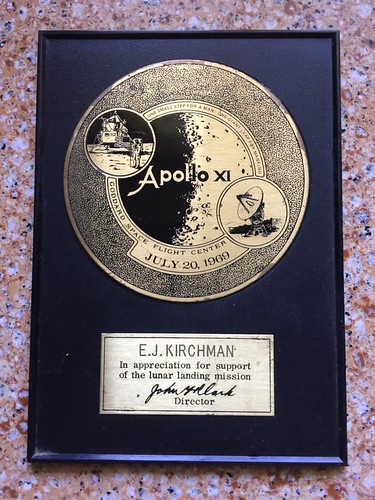
My Dad, Ed Kirchman, did his part to help put men on the moon. He almost didn't make it through the education system.

The 'other' weekly news magazine's U. S. Edition presents The Class of 2025 [click to read]. They ponder what they will have learned... and how they will pay for it! Clearly changes are needed. The average US student graduates with $26,000 in college debt, with total college debt around one trillion dollars. Unfortunately the job market often presents a hostile reality, the field they have prepared five years to enter isn't hiring. TIME's Amanda Ripley looks at new trends, such as online learning and how the way we learn is already changing in a Previous Article [click to read].

The rise in online learning and for-profit colleges is challenging the traditional academy. Ostensibly this is the underlying tension behind recent events at Charlottesville's University of Virginia, where popular President Teresa Sullivan was forced to resign and then quickly reinstated.

College costs are rising at a rate outpacing the economy at large. At the same time many are questioning its value, even as it is being touted as "being as essential now as high school was in the 'Fifties." Many young men are foregoing college and entering fields such as technology, finding that to offer a more rapid path to a paycheck. The trades are experiencing a renaissance as young people rediscover the joy and purpose of skilled work.

My Father became an engineer in an era where Engineering schools did not bother to teach Literature. He struggled in high school, and framed a letter from a high school adviser stating bluntly that he should pursue a field other than Engineering. Undeterred, Dad enrolled in Junior College, then transferred to Notre Dame. He worked for Wright Aviation before taking a job at the Martin Company's Middle River Plant in Baltimore. He framed the letter.

Dad worked on the seaplanes that were used in WWII, then as Middle River closed down, he started his own test lab. He opened it in one of those buildings with spaces for contractors that had a garage door and an office. His neighbors were plumbers and HVAC companies. He hired a lot of his old colleagues from Martin. Then he was hired by NASA's Goddard Space Flight Center, where he wrote the procedures for testing spacecraft.

Though his education did not include great literature, Dad was a Renaissance man who built his own great library. He read the classics for the pure joy of learning, and was as knowledgeable about literature as many who teach it. When I was young he would read to me from great volumes such as the works of Rudyard Kipling. What magical moments those bedtime stories would become! Little did Dad know he was innoculating me to survive industrialized education.

My point? Learning can be more pragmatic, learning should be lifelong. More people need to read thick wonderful books to their kids. Making young minds cram great literature for exams may leave a bad tasteI  and leaves no room for rumination. Dad often let me work alongside him doing projects. He taught me how to work, how to design a greenhouse, and most importantly; Dad taught me how to teach others.

I was the right-brained child who struggled in school. Dad apprenticed me in the skills I needed to eventually overcome that. It is my sincere hope that Apprenticeship will experience a Renaissance as we seek to develop the G-d-given gifts of the generations to follow. Will we again find deep satisfaction in training our own replacements? It is my sincere hope that industry, the professions, and most importantly gifted individuals will step up to the challenge!
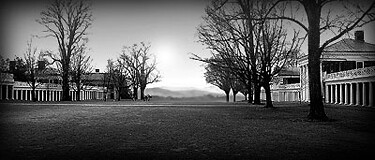
openlawn
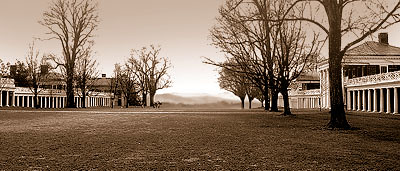
The Lawn of the University of Virginia originally opened to the surrounding community and countryside. Photos and rendering overlay by Bob Kirchman.

The Genius of Albert Einstein


He was a master of Sitzfleisch, the ability to sit still and ponder or perform a task for a very long time. Here is a man who found genius in endurance!

The Genius of Benjamin Franklin


Unlocking Young Imaginations
[click to read]

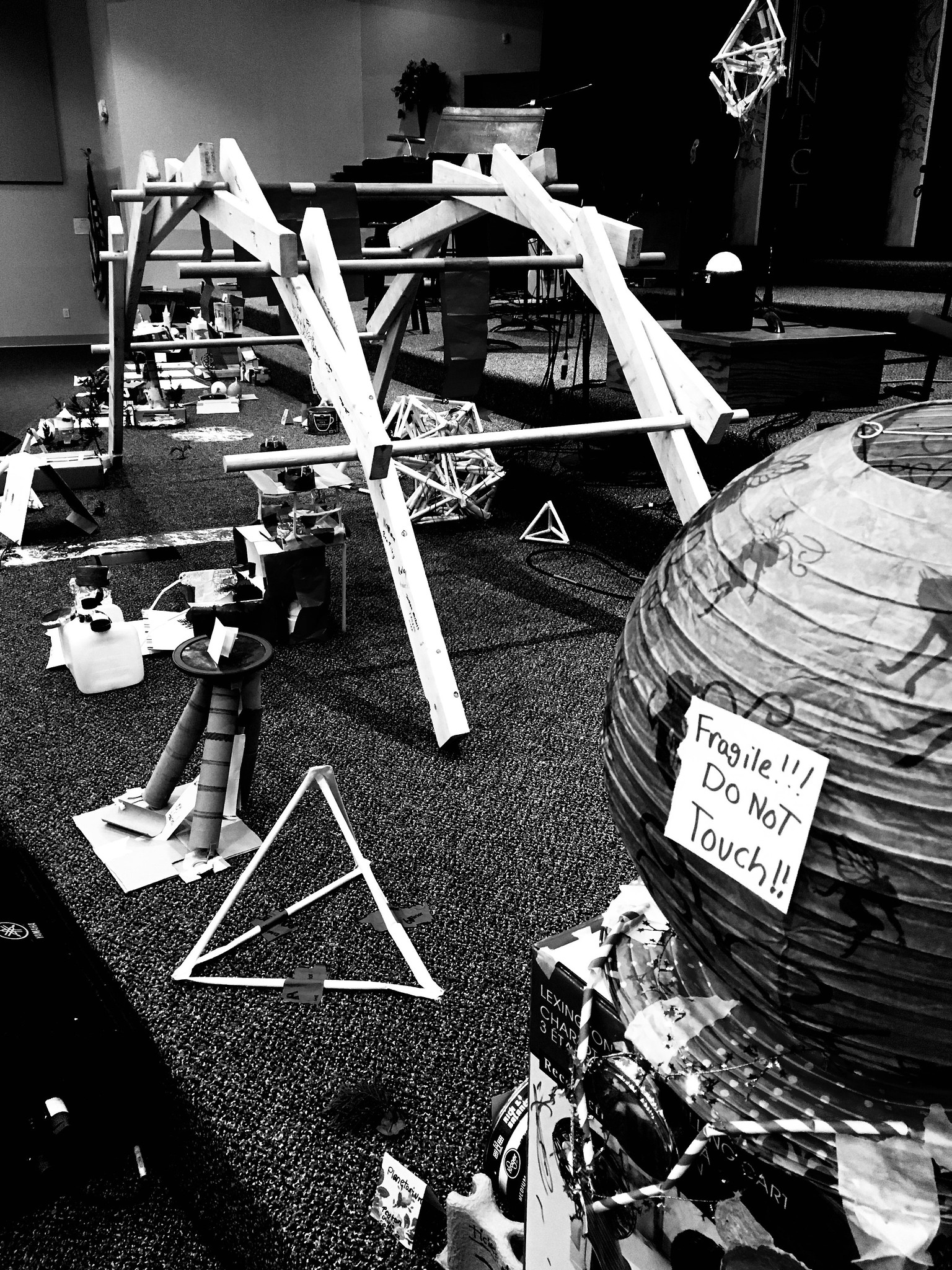
From 3D pens, fluid art and model miniature World’s Fair projects, campers in the Fun’dudle Art Camp spent all week creating art. [read more]
IMG_0849
The 2019 Waynesboro World's Fair was created by campers at Tammy Hornek's FunDoodle Art Camp.

Baby Praying Mantis
Photos by Bob Kirchman

Baby Praying Mantis

Baby Praying Mantis

Moonwalk Montage
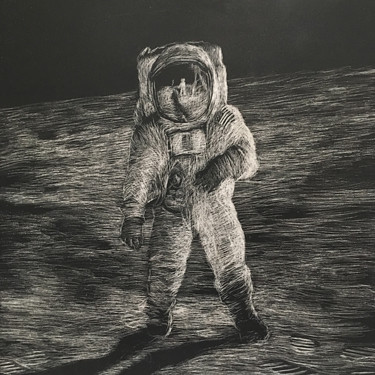
July 21, 1969, Apollo 11 Landed on the Moon


Neil Armstrong and Buzz Aldrin
The First Humans on the Moon
IMG_6623
Neil Armstrong is reflected in the visor of Buzz Aldrin, the first two humans to walk on the moon. Scratchboard, 12" x 12" by Bob Kirchman.

Laney’s Palette Art Show
Saturday September 14th, 2019 in Crozet, VA

Works by Kristina Elaine Greer will be on display at the gallery space of Tabor Presbyterian Church, 5804 Tabor Street, Crozet, Virginia 22932. There will be an opening reception on Saturday, September 14th, 2019 from 1:00 to 4:00pm at the church. All are invited. The show will feature Laney’s Acrylic Paintings and Pencil Drawings from 2004 – 2019.

Banner

Wednesday, September 21, 2016

A Republic, if You Can Keep It

Citizen Journalism with a Better Flavor

LIBERTY
Volume XII, Issue VIII

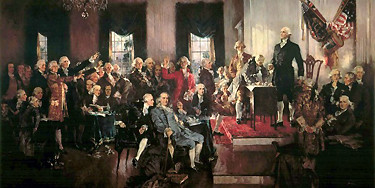
The American Promise is succinctly presented in a new book by Eric Metaxas: If You Can Keep It which begins with the famous exchange between Benjamin Franklin and a Mrs. Powell in Philadelphia as Franklin emerged from the Constitutional Convention. Mrs. Powell is said to have asked: "Well, doctor, what have we got? A republic or a monarchy?" to which Franklin responded: "A republic, madam -- if you can keep it." Metaxas goes on to examine the unique promise of this new republic, which was founded on the idea of liberty rather than simply arranged around a nationality or a people group. Though a number of reviewers chide Metaxas for passing quickly over the more mercenary elements in our nation's founding, he is holding the magnifying glass squarely over those elements of America's founding that enabled a diverse group of colonists and subsequent immigrants to become a great nation.

There was no internet in the days before independence. There were a number of very local newspapers. Thus the arrival of George Whitefield [1.] and his great revivals laid the groundwork for a shared dialogue among the colonists that was rooted in Divine principle! Those who would emphasize the mercenary elements of our founding are all too quick to dismiss the effect of men like Whitefield and the Wesley Brothers. Metaxas does us a great service by emphasizing the place of Faith and the colonists who indeed came seeking religious freedom. It is worth remembering that the very universities that rail against such notions as noble founding were originally founded to bring Faith to the New World, emphasizing the education of Native Americans in the principles of Faith and freedom. That Dartmouth and William and Mary's mascots are American Natives today is silent witness to this profound truth.

Metaxas explains a concept known as the Golden Triangle of Freedom which is all but forgotten in modern thought: Freedom Requires Virtue, Virtue Requires Faith, Faith Requires Freedom. Franklin, the 'least religious' founder understood this. He said: "As nations become corrupt and vicious, they have more need of masters." Toqueville observed: "Upon my arrival in the United States the religious aspect of the country was the first thing that struck my attention; and the longer I stayed there, the more I perceived the great political consequences resulting from this new state of things. In France I had always seen the spirit of religion and the spirit of freedom marching in opposite directions. But in America I found they were intimately united and that they reigned in common over the same country."

One should be asking hard questions then of a modern media that quickly derides Tim Tebow for admitting to the place his faith plays in is life, especially as they laud multimillionaire athlete Colin Kaepernick for his supposedly 'principled' stand -- er -- KNEEL in protest of what he sees as the unjustice of America. Indeed the First Amendment gives him the right to have his tantrum, even as he draws his enormous salary, but that same First Amendment protects those athletes who donned special cleats in memory of those who died in the attacks on America on September 11, 2001. The NFL fined them. I guess that is their 'right' as an employer, but when the Redskins and the Steelers joined American servicemen in holding the flag, they speak for a lot more of us than the 'Politically Correct' do. Modern media and the academy selectively ignore this country's noble beginnings as they are quick to point out its faults.

In fact, if one is honest with history there is indeed injustice and human failing in our country, but it is the principles of Faith that have elevated our response in answer to it! Metaxas goes on to point out the importance of moral leaders and that it is important to recognize the unique place and promise of America.

In his final Narnia book, The Last Battle, C. S. Lewis talks about loving not England but God's England. What is God's idea of England?  Because that is what God calls us to love in England. And what is God's idea of America? Because it is that in America and that alone that God calls us -- nay, commands us -- to love. Because the love of what is good and true and beautiful in anything will become the portal through which we love all that is good and true and beautiful beyond it. If we do not love America and teach our children to love America -- as God loves her -- we can never love the world beyond our shores and can never teach our children to do the same. And that, precisely, is our promise. That is the promise of America. It is why we came into existence and it is why we have flourished and why we must continue to do so." -- Eric Metaxas.

Banner

Undoing the 'Peculiar Institution'
[click to read]

Jefferson_Happiness_6-20_banner

With five simple words in the Declaration of Independence—“all men are created equal”—Thomas Jefferson undid Aristotle’s ancient formula, which had governed human affairs until 1776: “From the hour of their birth, some men are marked out for subjection, others for rule.” In his original draft of the Declaration, in soaring, damning, fiery prose, Jefferson denounced the slave trade as an “execrable commerce ...this assemblage of horrors,” a “cruel war against human nature itself, violating its most sacred rights of life & liberties.” As historian John Chester Miller put it, “The inclusion of Jefferson’s strictures on slavery and the slave trade would have committed the United States to the abolition of slavery.” -- Henry Wiencek [1.]

Jefferson also penned, borrowing from John Locke, the phrase "life, liberty, and the pursuit of happiness" in the Declaration of Independence. Locke's original list was actually "life, liberty and ESTATE," not simply 'property' as is often reported. Estate meaning a good deal more than one's physical possessions and 'pursuit of happiness' more an idea of Greek philosophers Aristotle and Epicurus and referring to the pursuit of 'true happiness' or 'virtue.'

Whether or not the author of America's founding document saw ahead to an eventual abolition of slavery is debatable, but it is quite clear that this editorial choice bode well for the struggle for freedom. Wiencek has documented that Jefferson retreated from his more abolitionist notions in later writings, but the foundation had been laid in the subtle direction taken by the Declaration. (read more)

The America I Love 

TheLawn2
The Lawn, Thomas Jefferson's University of Virginia in Charlottesville, Virginia. Here is imagined the view first designed by the patriot before the construction of Old Cabell Hall closed in the lawn.
Overlay of open lawn by Bob Kirchman. 

walk
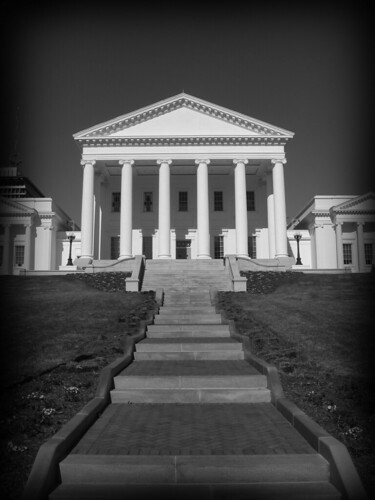
Thomas Jefferson also designed the Virginia State Capitol.

Capitol
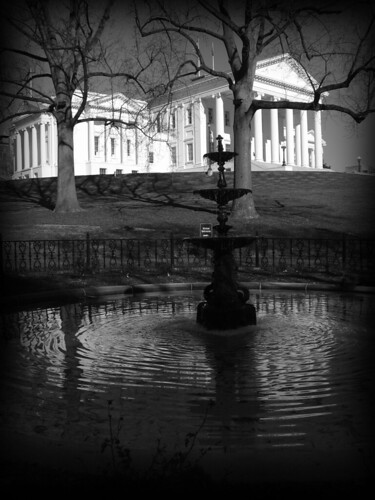
Fountain at the Virginia State Capitol.

PoplarForest
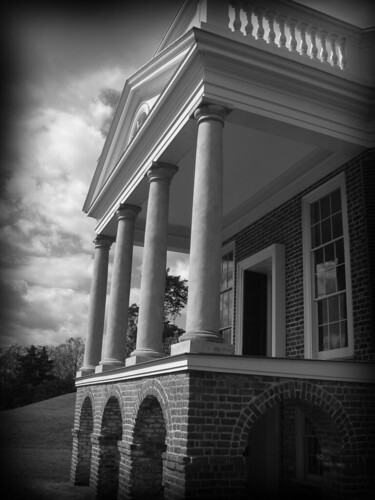
Jefferson's home at Poplar Forest near Lynchburg.

PONTIFUS_Banner