Tuesday, March 2, 2021

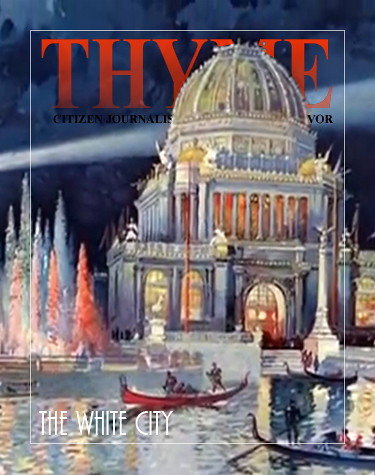
Chicago's 1893 White City, A Future Vision

ChicagoFair
Volume XVIII, Issue IV: The White City Vision

Great Vision in Perilous Times

While the conventional wisdom is that great innovation and vision happen in times of peace and prosperity, that is not necessarily so. It is often in the most difficult times that people of vision rise and take their place. There was a time, not so long ago, when our own country was able to project great vision for times to come. They were not times without great challenge and difficulty. In fact, they often were brought forth out of the darkest of times. To that end, here is a challenge four OUR times. We shall not be drawn down by the destruction and negativity we see now in high places and shall continue to seek a better vision, one that springs from Beauty, Truth and our Faith in the One Who gave us the Absolute Values.

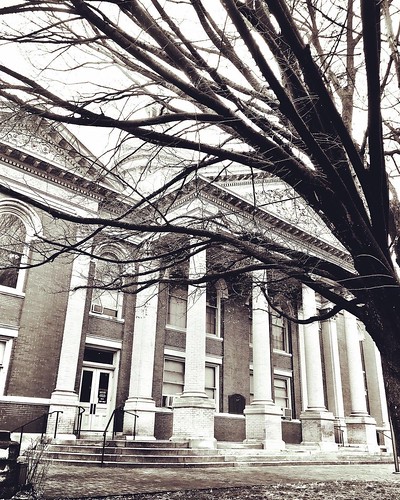
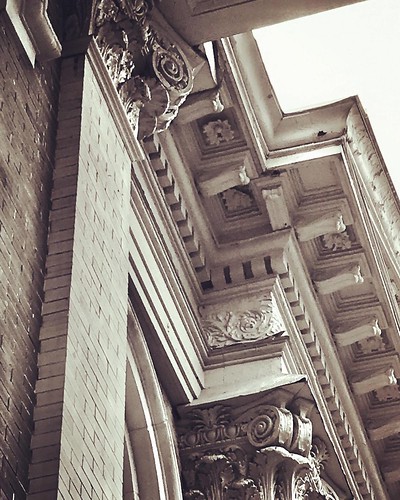
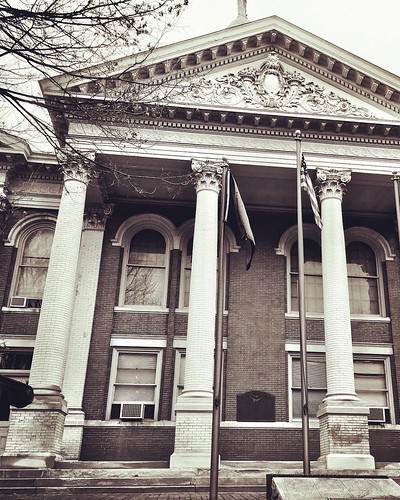
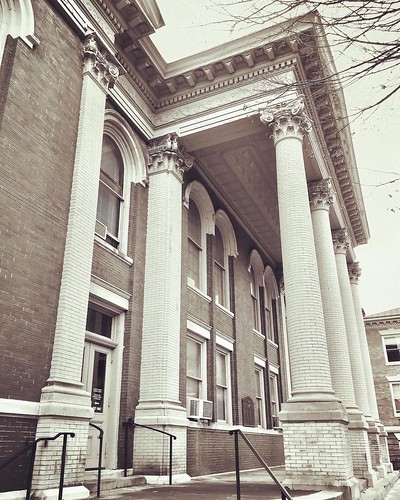
Augusta County Courthouse
An Argument for Well-Crafted Classicism
Photos by Bob Kirchman

Courthouse

Courthouse

Courthouse

Courthouse

Courthouse

Courthouse

Courthouse

Courthouse

Courthouse

Courthouse
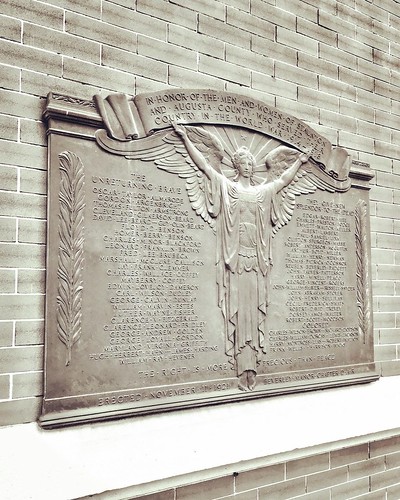
Standing the test of time, the Augusta County Courthouse was built to this form in 1901...

The Augusta County Courthouse is a two-story, red brick, public building in Staunton, Virginia. It was listed on the National Register of Historic Places in 1982. It was designed by T.J. Collins, and construction ended in the Autumn of 1901. It is located in the Beverley Historic District. It is the fifth court house constructed on the site, the first having been a log building constructed in 1755. At the time the present edifice was built, the ‘City Beautiful’ Movement put forth by Daniel Burnham and other prominent architects greatly influenced civic architecture of that time. The movement, which was originally associated mainly with Chicago, Cleveland, Detroit, and Washington, D.C., promoted beauty not only for its own sake, but also to create moral and civic virtue among urban populations. Advocates of the philosophy believed that such beautification could promote a harmonious social order that would increase the quality of life, while critics would complain that the movement was overly concerned with aesthetics at the expense of social reform. The work of the late Roger Scruton and Leon Krier continues in that tradition.

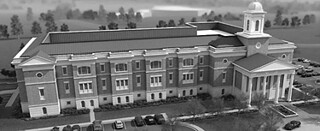
Certainly the Classical courthouse makes a strong argument for traditional style as a civic architecture. Plans created for a relocated and much expanded Augusta County Courthouse proposed for the future added Classical elements to a decidedly modern building. The resulting design – generated by computer – perhaps illustrates the folly of legislating architectural style. Good design does indeed create spaces that lift the human experience, but such design often defies codification. Indeed, there are great Modernist buildings and poorly thought traditional ones. This is particularly true where the designer lacks a sense of appropriate proportions. It must be noted here that there is always a healthy popular support for traditional style and government should acknowledge that. Architectural review boards, as a whole however, tend to discourage healthy innovation.
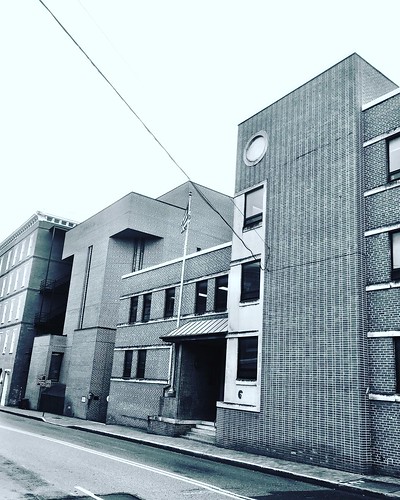
District Courts Building

District Courts Building

District Courts Building
...compared with the District Courts Building, built in the late Twentieth Century.
augusta-county-courthouse-6
In 2016 Moseley Architects proposed a replacement courthouse to be constructed in Verona. Classical detail is added to what is essentially a modern building mass.
IMG_1643
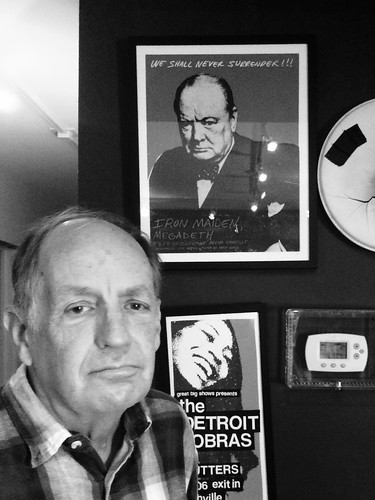
“We shall never surrender!” Winston Churchill on an ‘Iron Maiden’ poster at Crozet Pizza.

Bright Light in Darkest Hour
The Herculean Task of Saving Civilization

I have, myself, full confidence that if all do their duty, if nothing is neglected, and if the best arrangements are made, as they are being made, we shall prove ourselves once again able to defend our Island home, to ride out the storm of war, and to outlive the menace of tyranny, if necessary for years, if necessary alone.

At any rate, that is what we are going to try to do. That is the resolve of His Majesty’s Government-every man of them. That is the will of Parliament and the nation.

The British Empire and the French Republic, linked together in their cause and in their need, will defend to the death their native soil, aiding each other like good comrades to the utmost of their strength.

Even though large tracts of Europe and many old and famous States have fallen or may fall into the grip of the Gestapo and all the odious apparatus of Nazi rule, we shall not flag or fail.

We shall go on to the end, we shall fight in France,
we shall fight on the seas and oceans,
we shall fight with growing confidence and growing strength in the air, we shall defend our Island, whatever the cost may be,
we shall fight on the beaches,
we shall fight on the landing grounds,
we shall fight in the fields and in the streets,
we shall fight in the hills;

We shall never surrender, and even if, which I do not for a moment believe, this Island or a large part of it were subjugated and starving, then our Empire beyond the seas, armed and guarded by the British Fleet, would carry on the struggle, until, in God’s good time, the New World, with all its power and might, steps forth to the rescue and the liberation of the old.”  – Winston Churchill

A while ago I saw ‘Darkest Hour,’ Joe Wright’s film about Winston Churchill in May of 1940 and his facing the challenge of Europe’s fall and the immanent threat of invasion faced by Great Britain at the beginning of World War II. It is a wonderfully inspiring story of a great and flawed man who was indeed the man history needed in a time so overwhelming. Gary Oldman is very convincing as Churchill. His rendition of the “Blood, Toil, Tears and Sweat” speech to Parliament had me fully invested in the story.

You cannot reason with a tiger when your head is in its mouth” – another stirring quote by the great man is heard after much soul-searching by Churchill. A very human Churchill is rendered by Oldman, supported by Kristin Scott Thomas as Clementine Churchill and Lily James, Playing Churchill’s secretary Elizabeth Layton. The real Elizabeth Layton wrote the book ‘Mr. Churchill’s Secretary’ which she wrote after serving in that capacity. According to Ms. James: “Initially I started talking about the film because I was so excited about the prospect of working with Joe Wright. He’s someone I really looked up to and Gary Oldman as Churchill is an insanely brilliant thing. Then I started reading Elizabeth Layton’s book and I was so drawn to her and her experiences and this different perspective on Churchill, it was a much more intimate view of him from her eyes. She was an incredible woman, so dedicated and committed to Churchill. She was witnessing history unfold and was the first person to hear these speeches, so it was a real thrill.”

Though Miss Layton actually arrived later than the film depicts, she did indeed find her initial meeting of Churchill quite frustrating and really did mess up the spacing of the first document she typed for him. In fact he drove her from the room. She returned a few days later. Churchill initially was gruff and did not engage in pleasantries, but Miss Layton persisted and grew to admire the man. She drafted (and redrafted) his speeches and no doubt polished them. She and Clementine deserve place in history for their support of the very human leader who rose to face a Herculean task in fighting the Reich.
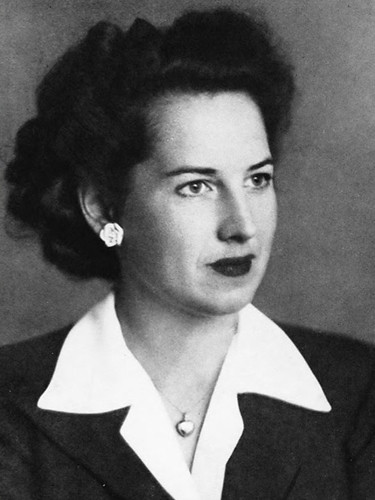
171130_MOV_ElizabethNel.jpg.CROP.promo-xlarge2
Elizabeth Layton Nel, Churchill's wartime secretary.

Elizabeth Layton Nel
[click to read]

12:01AM GMT 16 Nov 2007

Elizabeth Nel, who has died aged 90, was the last surviving personal secretary to have worked for Winston Churchill during the Second World War. (read more)

Pennsylvania Station


When the Future Came to Lake Michigan


In the Nineteenth Century, a vision for future America rose on the shore of Lake Michigan.

A Classical Foundation for America
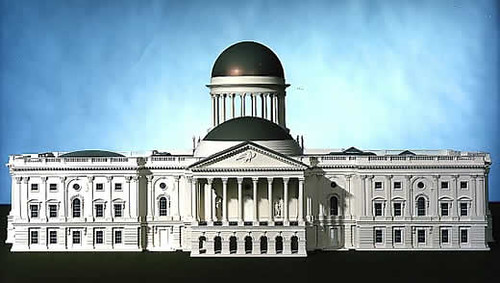
Thornton_Design_of_the_Capitol
Dr. William Thornton's original design for the United States Capitol.

Classical Revivals, Past and Present 

When Dr. William Thornton created the original drawings for the United States Capitol, he drew on classical forms. A new nation built her civic buildings in the style of the great ancient civilizations. White columned and stately, they rose out of the swamps of the Potomac River. Thomas Jefferson raised a replica of the Maison Carrée, a Roman temple in Nimes, France; on a hill overlooking the James River as a Capitol for the Commonwealth of Virginia. Yes, Classical Architecture indeed defined the style for America’s first civic edifices – a departure from the Georgian Style so often associated with the Colonial period.

Architects like Benjamin Henry Latrobe continued the tradition. Many fine works were built with great optimism in those early days. As our country grew Westward, a hasty hodgepodge grew up as the railroads pushed across the land. Speculators laid out sprawling Chicago in grids as far as the eye could see. It was sprawling, intimidating and unhealthy. The Nineteenth Century was a period of unparalleled growth, but there was need again for a vision to uplift that growth. In 1851 London held what is considered to be the first World’s Fair. Wonders were shown in an immense building called the Crystal Palace. Inspiration and innovation were to be found their by the many people who visited.

As the Nineteenth Century came to its end, Paris held the 1889 Exposition Universal with its grand halls and the great Eiffel Tower. Showcasing innovation and invention, the fair presented a vision for the future. The 300th anniversary of Columbus’s ‘discovery’ of the ‘New World’ presented an opportunity for America to host such a fair. Congress passed a motion for it and then the competition began for which city should play host to it. Philadelphia seemed a logical choice, but New York was the bustling port – America’s gateway to the world (as well as her largest city). Surely New York should be the site.

But out on the shores of Lake Michigan, stretching into the prairie, stood America’s SECOND largest city. Chicago was rapidly becoming the hub of American commerce. Chicago began in earnest to compete for the fair. Popular Mayor Carter Harrison Sr., a crafty political force, worked to bring the fair to Chicago. Honor bound to create something rivaling Paris, the city turned to Architects John Welborn Root, Daniel Burnham and Charles Atwood to design a grand vision of what an American metropolis should be. Frederick Law Olmsted, the creator of New York’s Central Park, was coerced into creating a landscaped site plan. The result was a grand campus with lakes, canals, a wooded island and surrounding those water features would stand a Classical world with colonnades and monumental fountains.

Time was not on the builders’ side, however. There was not time to build the buildings out of carved stone in the traditional manner. Instead, the builders would build steel and wooden frames covered with wood lath. Plaster would be applied to the lath (this was called ‘staff).’ This allowed the buildings to go up fast, but assured they would be temporary. Spray painting was invented to allow the ‘white’ coating that protected the plaster to go on in a timely manner. Hand painting would have been impossible in the time allotted. As it was, the fair opened for a one season run in 1893, not 1892.

Special rail lines were built to serve the fair. Visitors detraining at the lakefront would step into a surreal vision of a ‘Celestial City’ White edifices towering over reflecting pools would inspire the design of American civic architecture well into the Twentieth Century. Frank Baum saw the fair and it inspired his ‘OZ,’ also a white city, but one had to view it through green sunglasses! Walt Disney’s father worked building the fair buildings. But it was a mirage. Only one fair building was solid construction – the Palace of Fine Arts. Since it would hold treasures from around the world, the insurers demanded real masonry construction. It is the only fair building that remains today.
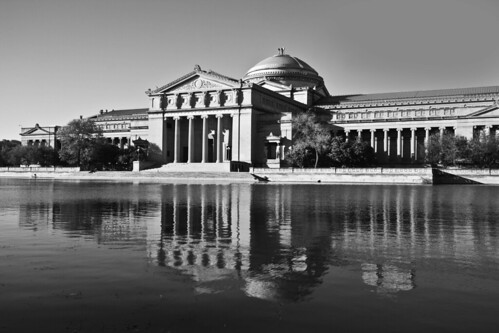
Museum of Science and Industry
The Palace of Fine Arts, today the Museum of Science and Industry.

A Day at the Fair in 1893

00001
The Palace of Fine Arts.

locwf1893chicago1
Aerial view of the fair showing the design of Frederick Law Olmstead for the site.
00003

00002
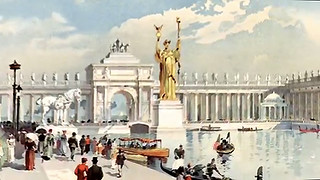
The Peristyle.

00005

00006
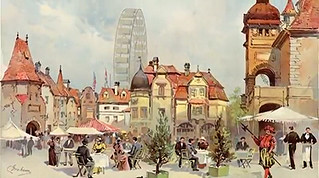
The original Ferris Wheel, sometimes also referred to as the Chicago Wheel, was designed and constructed by George Washington Gale Ferris Jr. With a height of 80.4 metres (264 ft) it was the tallest attraction at the World's Columbian Exposition in Chicago, Illinois, where it opened to the public on June 21, 1893.
00004
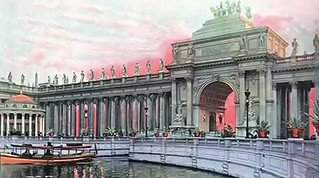
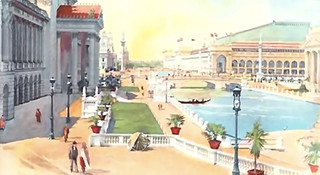
Great exhibition buildings surrounding the canals...
00009
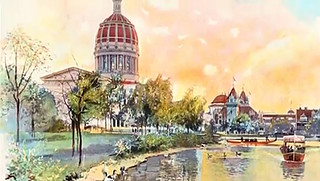
...in a landscape created by Frederick Law Olmstead. Here is the Illinois State Pavilion.

00012

00013
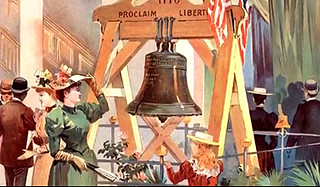
The Liberty Bell at the World's Fair.
31.194_cropped_SL1
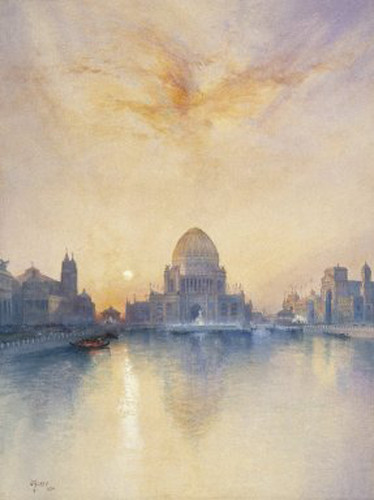
“Thomas Moran, a follower of the British painter J. M. W. Turner, was drawn to dramatic natural features in places such as Yellowstone and the Grand Canyon. In this view of the lagoon and central buildings constructed for the Chicago World’s Columbian Exposition of 1893—an extravagant, nationalistic salute to the westward advance of “civilization”—Moran bathed the scene in the glowing colors of a vivid sunset and violet shadows that might have seemed extreme if rendered in oils.” – The Brooklyn Museum

CS_Lewis_Banner

JOSIAH, Chapter Fourteen, Unto All Nations

JOSIAH012
Volume XX, Issue IX: Special Book Section

Josiah
By Bob Kirchman
Copyright © 2020, The Kirchman Studio, all rights reserved

Chapter 14: Unto All Nations

The next few weeks were a whirlwind of activity as Big Diomede readied for the celebration! The little chapel on the island always seemed happiest when it rejoiced with the bride and bridegroom and Mrs. Greene spared nothing in decorating it. But all the while they wondered – who was third on their crew? Both were well trained in the work of spaceflight and balanced simulator time with getting fitted for wedding clothes. Abiyah Ben-Gurion was suspected, but he was getting older and didn’t visit the simulator rooms much anymore. He was, many people noted, taking lots of long walks with Adam now.

Adam had followed in the footsteps of his capable parents and was a great pilot in his own right. He was a loner like his dad had been and everyone assumed he must like it that way. He did seem to have a lot to discuss with dad these days. Was his dad in fact going back to Mars? He still passed the physical – with a few ‘look the other ways’ by the flight surgeons.

We’ll never know for sure, but if the truth be known, I doubt it was clear who would go; Abiyah or Adam, as they talked it out but clearly the father felt some responsibility for the colony and the son loved his father. He had rebelled some as a youth but he now saw how wonderful his upbringing had been. The virtue of gratitude – the only virtue Abiyah would lay claim to, had been passed from father to son!

Though the older Ben-Gurion was methodical in his attempts to discourage his son, he was also quite proud of him. In the end, it was Adam who begged his father for the chance to complete the work that he had begun. Sarah and Abiyah, of all people, were uniquely able to understand the drive of their son. Since they knew Josiah, Adila and Adam quite closely, seeing them work together at school, they saw a team that was every bit as capable as the team of Cohen – Ben-Gurion decades before them. Now they congregated frequently at the Ben-Gurion home for meals and conversation.

After the wedding, the three began training for the mission in dead earnest. All three of them expressed some disappointment that meeting the best launch window meant missing the World’s Fair in Fairgate, but that was a small concern. The Martians were waiting. Josiah and Adila also sought out the company of the Greenes and over macaroni and cheese, they discussed such things as the journeys of Paul in the First Century. Surely they were following in his footsteps. “What constitutes a nation in the eyes of the Divine?” Dr. Greene asked his pupil and his pupil’s wife as they supped together.

The dictionary says, ‘a large aggregate of people united by common descent, history, culture, or language, inhabiting a particular country or territory.’” Responded Josiah.
THE END
(Epilogue) [Click to Read]

Previous Chapter | Next Chapter
[click to read ]

Copyright © 2020, The Kirchman Studio, all rights reserved

PontifusBANNER

Wednesday, February 24, 2021

In Praise of Interconnectivity

Interconnectivity
SPECIAL REPORT: In Praise of Interconnectivity

Baby Bells and “Baby Books”

It’s time to break up Facebook. If you support real free markets, please listen for a minute. We all love the innovation that comes from free competition. We all love the very real choices that we have in a market economy. In my youth, we never liked the phone company all that much. The phone company in its first three decades was a monopoly. There was little choice and less than radical innovation. Ruth Buzzy did a very funny routine where she pretended to be a switchboard operator dealing with a very frustrated “Mr. Millhouse.” At one point, she offers the retort “The Phone Company is Omnipotent!” We laughed, but it was true. One overruling corporation operated the national network. Only Western Electric could supply the equipment. Then in the 1980s that all changed.

The big monopoly was broken up into smaller regional companies. While the results of the breakup are arguable, one thing is clear. The path was opened for innovation and choice. A ‘Corporate Monarchy’ had fallen. Essential to the success of this breakup was interchangeability. The ‘Baby Bells’ still had to be interconnected. Otherwise you would be left essentially without a national phone system. Like the railroads in the Nineteenth Century, a 4’ 8” standard gauge track was necessary. Likewise couplers, switches and signaling had to be standardized. Westinghouse’s airbrake had to be adopted by all the major lines or you couldn’t send a rail car across the country. Standardization is often cited as a reason for monopoly. It isn’t. Standardization across company lines allowed for private rail companies to operate in their own regions and often compete into other regions.

The problem of market-limiting fiefdoms is not new. Initially state governments (and later the Federal government) invested in railway infrastructure. They later became large private entities. While I might have had a choice of rail lines for a cross-country shipment, I had only one choice if I was shipping to a town in South Dakota. The pricing reflected this. Automobiles and trucks afforded consumers new choices. The railroads were forced to do what they do best – big unit trains. The railway freight office is no more. Universally available access to the highways enabled this.

Ostensibly the internet is an open highway, but large operators such as Google and Facebook have grown to essentially “own the road.” The “New Media” can regulate content with a ferocity government regulators could only dream of. Yes, you can create alternative platforms such a Parler but the recent shutdown of that very platform should send a chilling message. Parler, MeWe and a host of other platforms are supposedly free to exist, but they face a couple of problems. As a few major players control the platforms, they are always subject to being “turned off” by those big players. Secondly, while the phone companies and the railroads were required to provide interconnectivity, the internet giants are not. Regulation and oversight are proposed as a way to deal with this. Another way might just be ‘Breakup with interconnectivity.’ What might this look like.

If we define a ‘major platform’ as one that essentially shuts out any serious competition, we might insist on a voluntary decentralization of such platforms. Facebook, for example, could voluntarily spin off parts of its company large enough to avoid regulatory oversight. In such a scenario, entities not under Zuckerberg’s control would have full access to the platform, now viewed as a sort of national infrastructure. For example, I might choose to have my Facebook account hosted by a ‘Baby Book,’ FAITHBOOK. It allows be to have friends on the Facebook platform and enjoy all the benefits of interconnectivity – just like being on T-Mobile and talking with a friend on Verizon. Because my page and my posts are no longer hosted by Facebook, it is FAITHBOOK that sets standards other than those necessary for seamless interconnectivity.

FAITHBOOK does not limit speech or provide ‘Fact Checking.’ It publishes a disclaimer that essentially says so. There is an appeal process for illegal activity and issues such as copyright and libel, but there is no ‘master switch’ in their office apart from them. On the other hand, I am quite able to filter out what I consider offensive content. I can create a filter based on my preferences excluding pornographic content, political posts, advertisements for dating sites and gambling. I can select a pre-set ‘family’ setting or customize. I own all rights to my own pictures. I can block out advertiser targeting or modulate it.

My content lives on FAITHBOOK, but my friends on Facebook who do not choose to come over can still access it and have it in their feeds by selecting it. Meanwhile, those of us who HAVE migrated pretty much enjoy the old Facebook experience we used to enjoy. Enough activity should cross over the border voluntarily to enrich both platforms. I no longer have to maintain a presence on multiple platforms because of interchangeability.

Creating such a change would require the embracing of the idea behind antitrust legislation and a willingness by courts and lawmakers to act in the interest of consumers. The principle of interchangeability allows for such innovations as smart phones and the cell phones that preceded them. It is time to provide it in the new marketplace.

Big Tech's Flawed Defense
[click to read]

Lawrence Solomon in the Epoch Times

Google, Facebook, and Twitter aren’t private companies best left alone by governments. They aren’t even private companies if “private” is meant to distinguish corporate activities from governmental functions. The distinction between the public and private sectors has long been blurry at best where major corporations have been concerned, with each sector involved in the other’s business. Governments compete with the private sector in garbage collection, electric utilities, railroads, and banking, while the private sector competes with government in prisons, elementary schools, ports, and the military. The fiction that a bright line separates major corporations from governments can also be seen in Nevada, which is proposing to not only contract out this or that government service but to spin off governments to private owners holus-bolus. Under draft legislation soon to work its way through the state legislature, high-tech corporations with more than $1 billion to invest would be free to build, own, and operate entire cities. Wielding the same authority as a county, the corporations will impose taxes, provide schools, operate courts, and provide police, fire, and other government services. (read more)

Ma Bell Suppressed Innovation for Thirty Years
[click to read]

Oh, for the days of Ma Bell!” is not a lament we’re likely to hear. And for good reason. Before the breakup of AT&T, America’s telephone system was a government-sanctioned monopoly characterized by stagnant service offerings, high costs, and a glacial pace of consumer-facing innovation. (read more)

“Woke Coke”

IMG-4986

According to a leak from an employee who was forced to undergo such training: “Coke is using training videos from “antiracist” speaker and diversity “White Fragility” author Robin DiAngelo and includes orders to try to “be less white” in order to be a good person. Corporate training incorporating critical race theory of the kind taught by people like DiAngelo and Professor Ibram X. Kendi is increasingly popular, as woke capitalism tries to get social justice points for basically picking on white people, Christians and conservatives of any color. “Nothing exempts any white person from the forces of racism” according to DiAngelo, who adds that “In the U.S. and other Western nations, white people are socialized to feel that they are inherently superior because they are white.” What she means is that all white people are racist because they’re white.”

While a corporate spokesperson quickly backpedaled the notion, saying the video was “simply included” in the materials, it is obvious that the corporation is simply going along with the cultural mindset of the day. We’re interested in seeing if Coca Cola’s Christmas (excuse me, HOLIDAY) marketing becomes more inclusive – featuring more brown bears and black bears. Stay tuned as Ted files a wrongful termination suit.

PontifusBANNER 

Tuesday, February 23, 2021

Photographic Ramblings as Spring Approaches

GoodShepherd
Volume XX, Issue VIII: Springtime, Good Shepherd Episcopal Church.

Photographic Ramblings, Springtime

New life, the coming of the great feasts of Passover and Easter celebrate deliverance and new life. It is fitting that in our hemisphere the season is marked by the return of Spring!

Temple
Temple Beth Israel, Staunton, Virginia.

A Legend is Gone
[click to read]

The Passing of Rush Hudson Limbaugh

Let us all speak, and fearlessly. Let that be Rush’s monument. In a way, he built it himself.”
– Andrew Klavan
(read More)

Frederick Douglass and IMAGO DEI
[click to read]

Frederick Douglass was a former slave, abolitionist, supporter of women’s suffrage, orator, writer, adviser to Presidents, and diplomat. All of this is well known, but one of the most misunderstood elements of his life story was his deep and abiding Christian faith. (read more)

A Conversation with Dr. Shelby Steele
Part I [click to read]

Dr. Shelby Steele addresses racial division in America, examining the civil rights movement of the 1960s and comparing it to the campaign for social justice today. He reminds us of the importance of strong marriages and families as the solution to many societal ills. (read more)

A Conversation with Dr. Shelby Steele
Part II [click to read]

Dr. Shelby Steele addresses racial division in America, examining the civil rights movement of the 1960s and comparing it to the campaign for social justice today. He reminds us of the importance of strong marriages and families as the solution to many societal ills. (read more)

We’ll Have Herd Immunity by April
[click to read]

Opinion by Dr. Marty Makary in WSJ

Amid the dire Covid warnings, one crucial fact has been largely ignored: Cases are down 77% over the past six weeks. If a medication slashed cases by 77%, we’d call it a miracle pill. Why is the number of cases plummeting much faster than experts predicted? In large part because natural immunity from prior infection is far more common than can be measured by testing. Testing has been capturing only from 10% to 25% of infections, depending on when during the pandemic someone got the virus. Applying a time-weighted case capture average of 1 in 6.5 to the cumulative 28 million confirmed cases would mean about 55% of Americans have natural immunity. (read more)

Some medical experts privately agreed with my prediction that there may be very little Covid-19 by April but suggested that I not to talk publicly about herd immunity because people might become complacent and fail to take precautions or might decline the vaccine. But scientists shouldn’t try to manipulate the public by hiding the truth. As we encourage everyone to get a vaccine, we also need to reopen schools and society to limit the damage of closures and prolonged isolation. Contingency planning for an open economy by April can deliver hope to those in despair and to those who have made large personal sacrifices.” – Dr. Makary

Dr. Makary is a professor at the Johns Hopkins School of Medicine and Bloomberg School of Public Health, chief medical adviser to Sesame Care, and author of “The Price We Pay.”

31 Reasons Why I Won’t Take the Vaccine
[click to read]

by Chananya Weissman in Gates of Vienna

It’s not a vaccine. A vaccine by definition provides immunity to a disease. This does not provide immunity to anything. In a best-case scenario, it merely reduces the chance of getting a severe case of a virus if one catches it. Hence, it is a medical treatment, not a vaccine. I do not want to take a medical treatment for an illness I do not have. (read more)

Ma Bell Suppressed Innovation for Thirty Years
[click to read]

Oh, for the days of Ma Bell!” is not a lament we’re likely to hear. And for good reason. Before the breakup of AT&T, America’s telephone system was a government-sanctioned monopoly characterized by stagnant service offerings, high costs, and a glacial pace of consumer-facing innovation. (read more)

Baby Bells and “Baby Books”
[click to read]

It’s time to break up Facebook. If you support real free markets, please listen for a minute. We all love the innovation that comes from free competition. We all love the very real choices that we have in a market economy. In my youth, we never liked the phone company all that much. The phone company in its first three decades was a monopoly. There was little choice and less than radical innovation. Ruth Buzzy did a very funny routine where she pretended to be a switchboard operator dealing with a very frustrated “Mr. Millhouse.” At one point, she offers the retort “The Phone Company is Omnipotent!” We laughed, but it was true. One overruling corporation operated the national network. Only Western Electric could supply the equipment. Then in the 1980s that all changed. (read more)

“Refusal to Hear Election Cases is Inexplicable”
[click to read]

The Supreme Court ruled 6-3 to reject the review of two 2020 Pennsylvania presidential election cases Monday, but Justices Samuel Alito, Neil Gorsuch and Clarence Thomas believe they should have been given hearings. (read more)

The 1964/65 World's Fair

the-unisphere-in-queens-new-york
The Unisphere, symbol of the fair in Flushing Meadow Park, Queens, New York. Photo by Guy Percival

Peter Müller-Munk
The Silversmith Who Designed the Unisphere


MullerMunk
Peter Müller-Munk, Industrial Designer.

Today the Unisphere, a twelve story representation of the world balanced above a reflecting pool in Flushing Meadow Park remains as a reminder of the 1964 New York World’s Fair. Most people know that it was fabricated by U.S. Steel in Pittsburgh, Pennsylvania but few people know that the design was created by a German silversmith.

Peter Müller-Munk was born Klaus-Peter Wilhelm Müller on June 25, 1904, in a wealthy suburb of Berlin, in present-day Germany. He began his career as a silversmith, crafting unique and custom silver objects before turning to industrial design. He emigrated to the United States in 1926 and worked as a metalworker at Tiffany and Co. in New York City. He moved to Pittsburgh in 1935 to accept a job at the Carnegie Institute of Technology as assistant professor in the first American university baccalaureate degree program in industrial design. In 1938 he opened his first consulting office in Pittsburgh with Robert Paul Karlen as his first employee. Clients had so expanded by 1945 that he found it necessary to resign from Carnegie Tech to devote himself to his business. At the time, he began operating under the name Peter Müller-Munk Associates with Karlen and Raymond Smith as associates. Anton Parisson became the fifth partner in 1957. In 1956 Ernst Budke became an associate of the firm. By 1960 there were five partners and six associates. PMMA's client list spanned the globe; local ones included the Pittsburgh Plate Glass Company, Westinghouse, and U.S. Steel. Perhaps the firm’s most recognized design is that of the Unisphere, commissioned by U.S. Steel as the iconic symbol of the 1964 New York World’s Fair. After Müller-Munk died in 1967, his work was largely forgotten until the Carnegie Museum of Art mounted a show of his work.
FairDefined
Fifty-seven years ago this aerial photograph was taken of the New York World's Fair in Flushing Meadow Park. The photograph was likely taken by an airplane mounted camera as was typically used to take overhead photos of large areas in the days before satellite photography.

Charles and Ray Eames
The Way of the Amateur


Merriam Webster says “The earliest sense of amateur ("one that has a marked fondness, liking, or taste") is strongly connected to its roots: the word came into English from the French amateur, which in turn comes from the Latin word for “lover” (amator).” Thus the earliest meaning of the word is simply doing something “for the love of it.” Charles and Ray Eames exemplify that way of living.

Charles Ray Eames
Charles and Ray Eames designing the IBM Pavilion for the 1964 New York World's Fair.

The IBM Pavilion at the 1964-65 New York World's Fair covered 54,038 square feet (1.2 acres) in Flushing Meadow, N.Y. Designed by Charles and Ray Eames and Eero Saarinen Associates, the pavilion created the effect of a covered garden, with all exhibits in the open beneath a grove of 45, 32-feet high, man-made steel trees. The pavilion was divided into six sections: The "Information Machine," a 90-foot-high main theater with multiple screen projection; pentagon theaters, where puppet-like devices explained the workings of data processing systems; computer applications area; probability machine; scholar's walk; and a 4,500-square-foot administration building. IBM Archives.

naturalbridgecover
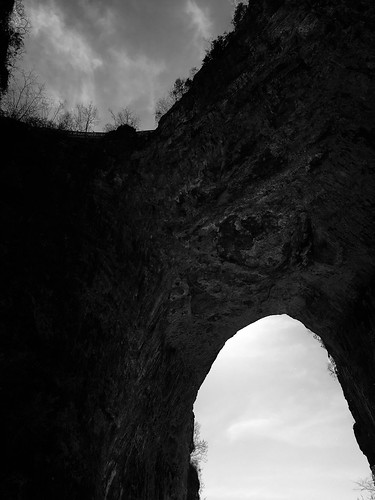
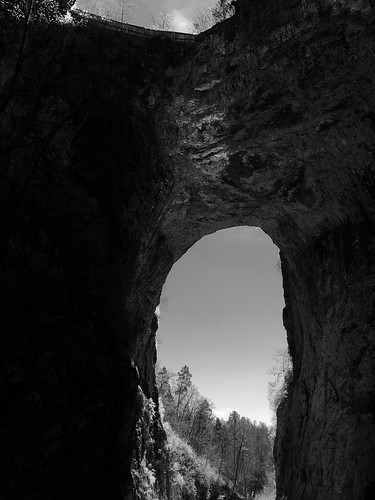
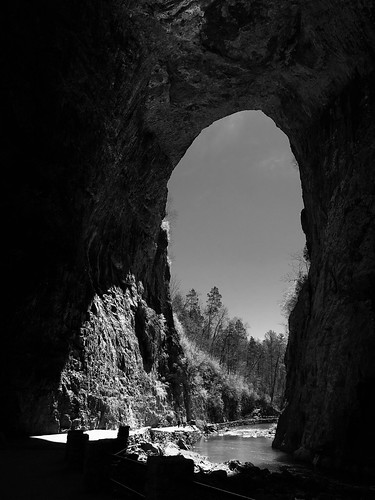
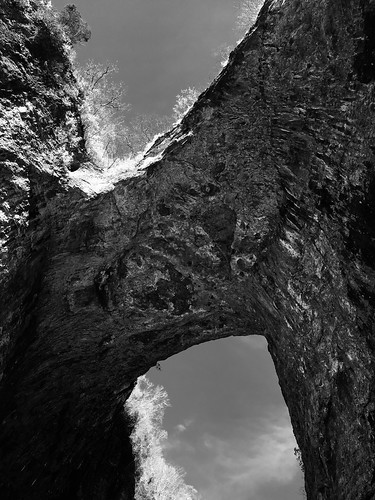
Special Feature: New Prints of Natural Bridge

Natural Bridge, Creation in Stone

Every Spring I look forward to presenting new prints of Rockbridge County’s most famous landmark. This year I will have to do it by means of this publication. If you would like to purchase one of these prints at 8” x 10,” please contact me and I will make arrangements to get one to you.

Bob Kirchman

Mohomony Morning Series

Mohomony Morning

Mohomony Morning

Mohomony Morning

Mohomony Morning

Mohomony Morning

Mohomony Morning

Mohomony Morning

Mohomony Morning

Mohomony Morning

Mohomony Morning

Mohomony Morning

Mohomony Morning

Mohomony Morning

Mohomony Morning

Mohomony Morning

Mohomony Morning

Mohomony Morning

Mohomony Morning

Mohomony Morning

naturalbridgeadvert

JOSIAH, Chapter Thirteen, Entreat Me...

JOSIAH013
Volume XX, Issue VIII: Special Book Section

Josiah
By Bob Kirchman
Copyright © 2020, The Kirchman Studio, all rights reserved

Chapter 13: Entreat Me Not to Leave Thee

West concluded the meeting saying “You must think it over. We must know that this is something you do of your OWN volition. We have reached out to those who might be your fellow crewmen. Of course, they and you are sworn to secrecy. Just think, if the news media in the ‘Lower 48’ get a hold of this, they’ll start making all sorts of statements and demands. You know how they love to paint the Alaska Republic as a ‘cold and uncaring’ entity. Even though APOLLONIUS destroyed his own colony, they’ll make us the villains. They’ll accuse us of marooning the settlers there. There will be any number of ‘conspiracy theories.’”

I… must pray, and let you know then.”

In the days that followed, Josiah Zimmerman sought the continued counsel of Greene and Ben-Gurion, who for their part, happily gave him all the time he needed. Of course, he wanted the adventure, and the purpose of the mission. What would his parents think? What about his fiancé, Adila? He understood the secrecy and its necessity, but he didn’t even know who he was crewing with. In the Twenty-first Century such commitment to the unknown was rare to ask of anyone. It was something out of another time. So Josiah Zimmerman screwed up his nerve and sought out Dr. Greene, spilling his fears and concerns. The good doctor said little, but said he’d arrange a meeting soon to help him through this.

A week or so later, Greene sent a message that Josiah should come to the chapel office that afternoon at 2:00pm, Big Diomede Time. The young man arrived freshly showered and somewhat out of breath. He was surprised to see his parents and Adila there! With them were Sarah and Abiyah Ben-Gurion and their son Adam. “We are the first three people to set foot on Mars.” Abiyah said, and he went on to explain that Greene was not going to be there as he had a granddaughter’s dance recital to go to that afternoon. “Besides, he told me he’s pretty much out of advice for you anyway. He WILL be present to counsel you about another step you might take in life – one that I think will come up in the discussion this afternoon.”

Ben-Gurion continued “I’ve invited Adila’s parents to this meeting as well. I think you know Sarah and my story. The secret marriage and all – and you know how Adam was already with us when we set foot on Mars. Sarah touched the planet slightly before me, but that is for the historians to sort out. In the Guiness Book of World Records, we’re tied at the moment. Since Adila is fluent in five languages and aerospace studies as well, she was also a logical choice for this mission.”

Since our mission,” Sarah chimed in, “Mission Control has written stricter policies about things such as our ‘secret marriage,’ if you get my drift. But, since you have already made it quite clear that you are committed to each other, we just want to make sure you know that you need not decide without the benefit of blessing. And we sure do not want you deciding in the dark without input from those who love you.”

Adila spoke next: “Entreat me not to leave thee, or to return from following after thee: for whither thou goest, I will go; and where thou lodgest, I will lodge: thy people shall be my people, and thy God my God: Where thou diest, will I die, and there will I be buried: the LORD do so to me, and more also, if ought but death part thee and me.” – the words of Ruth to Naomi, but also much referenced in marital loyalty as well.

The two of them would follow in the footsteps of Abiyah and Sarah. They set to work planning their wedding.
(to be continued) [read more]

Previous Chapter | Next Chapter
[click to read ]

Copyright © 2020, The Kirchman Studio, all rights reserved

PontifusBANNER