Volume XX, Issue XII: Leonardo da Vinci's Amazing Bridge Designs
The Da Vinci Bridge by A.C.E. Coop
In a matter of minutes a pile of sticks becomes a bridge! Here is Leonardo da Vinci’s design for a portable fastenerless bridge as found in his notebooks and reconstructed by students of Augusta Christian Educators Homeschool Coop.
Da Vinci's Forgotten Design for the Longest Bridge in the World Proves What a Genius He Was. It would have been held together by compression only. Leonardo da Vinci was truly a Renaissance man, impressing both his contemporaries and modern observers with his intricate designs that spanned many disciplines. But although he's best known for iconic works such as Mona Lisa and Last Supper, in the early 16th century, da Vinci designed a lesser-known structure: a bridge for the Ottoman Empire that would have been the longest bridge of its time. Had it been built, the bridge would have been incredibly sturdy, according to a new study. In 1502, Ottomon ruler Sultan Bayezid II requested proposals for the design of a bridge that would connect Constantinople, what's today Istanbul, to the neighboring area known as Galata. Da Vinci was among those who sent a letter to the sultan describing a bridge idea. (read more)
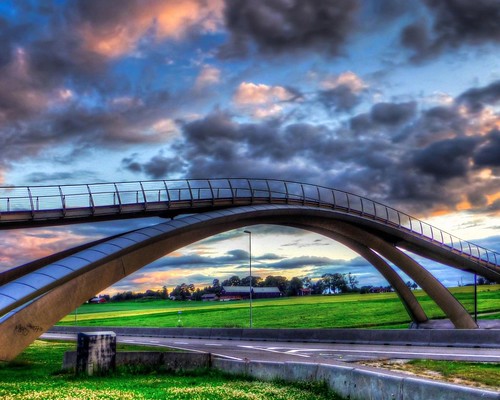
The Vebjørn Sand da Vinci Project built a laminated-wood parabolic-arch pedestrian bridge in Norway over European route E18 in Ås, Norway, in 2001. It was a partnership between the Norwegian Public Roads Administration and Norwegian painter and artist Vebjørn Sand, who headed the project. The resulting da Vinci Bridge, based on the Golden Horn design, is one of several installations that Sand is known for in Norway. Wikipedia
In 1502 A.D., Sultan Bayezid II sent out the Renaissance equivalent of a government RFP (request for proposals), seeking a design for a bridge to connect Istanbul with its neighbor city Galata. Leonardo da Vinci, already a well-known artist and inventor, came up with a novel bridge design that he described in a letter to the Sultan and sketched in a small drawing in his notebook. He didn't get the job. But 500 years after his death, the design for what would have been the world's longest bridge span of its time intrigued researchers at MIT, who wondered how thought-through Leonardo's concept was and whether it really would have worked. (read more)
Leonardo da Vinci’s 1485 Parachute
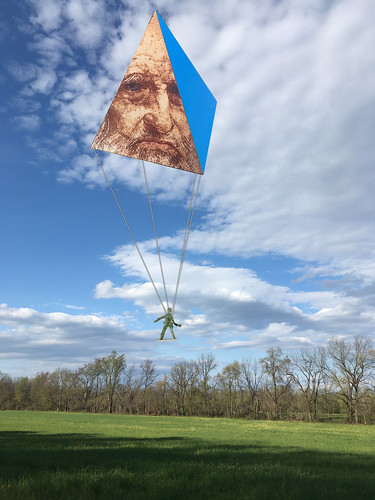
Sometime around 1485 Leonardo da Vinci made a small sketch in Codex Atlanticus of a pyramid shaped ‘parachute’ along with the following description:
Se un uomo ha un padiglione de pannolino intasato, che sia 12 braccia per faccia e alto 12, potrà gittarsi d’ogni grande altezza senza danno di sé. (If a man has a structure made out of coated cloth 12 arms wide and 12 tall, he will be able to throw himself from any great height without hurting himself.) Don’t try this at home.
It is doubtful that da Vinci was actually able to test his device at the time. On June 26, 2000, 515 years later, British balloonist Adrian Nicholas built a parachute of wood and canvas to the artist’s specifications, dropping from a hot air balloon at 10,000 feet. He descended successfully to 2000 feet, where he used a conventional parachute to complete his descent. In 2008 Swiss adventurer Olivier Vietti-Teppa used a modified version of Leonardo’s parachute to carry him all the way to the ground.
Print out the sheets below to build your own Leonardo da Vinci Parachute!
Volume XX, Issue XII: The Future, as Imagined by Young People
Young People Imagine the Future
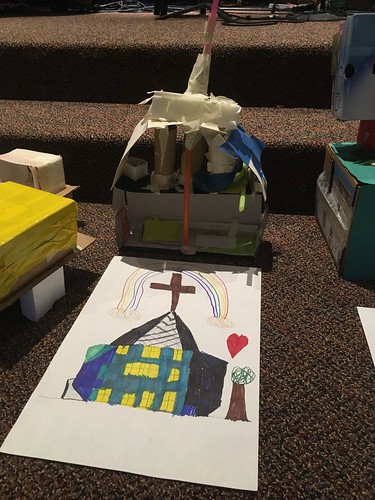
It was a week of wild creativity as students unleashed their imaginations to build the “World of Tomorrow.” We assembled Leonardo da Vinci’s Bridge, rolled paper into struts to build tetrahedrons, got mentioned by Michelle L. Mitchell[1.] in the News Virginian and most of all stretched our collective ability to imagine things we have not seen yet. We drew our ideas and then found ways to build what we imagined. It is hard to believe that that was two Summers ago, but the lesson of young people imagining the future is one we need now more than ever!
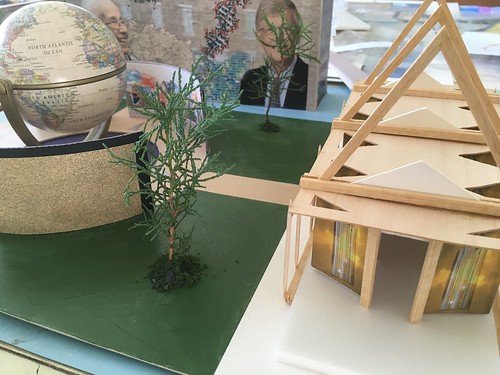
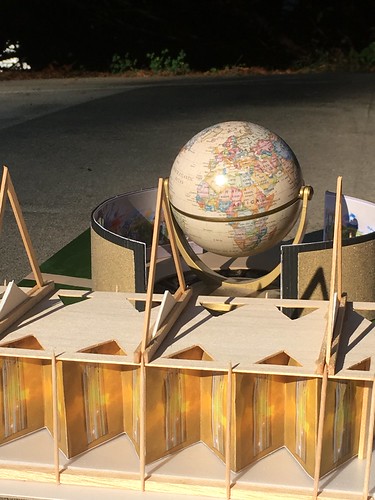
Some 'example pavilions' that I created to help the creative juices flow...
...included a Pavilion of Tyrol, complete with stained glass windows that have glass organ pipes embedded in them as designed by Xaver Wilhelmy...
...and the Pavilion of the Bering Strait Bridge Corporation with a reproduction of a mural painted by myself and Kristina Elaine Greer of children of the world entitled Journey to Jesus.
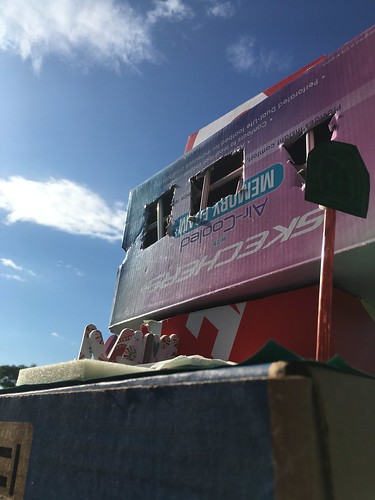
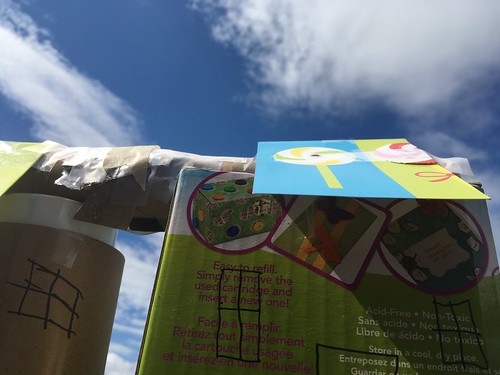
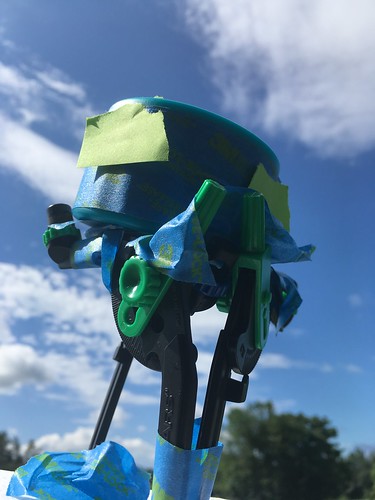
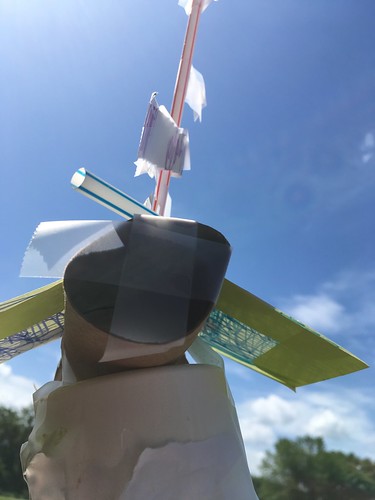
Our campers worked at architectural drawing and imagined buildings they would like to create. Then they built them!
We photographed our finished pavilions against the sky to get a sense of the scale and presence they would have as actual buildings. Photos by Bob Kirchman.
The 'City of Tomorrow' in 1939
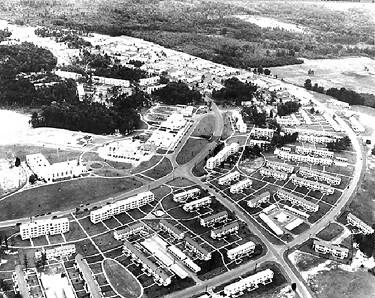
Envisioning the future can be dangerous. In a world mired in the drabness of the Depression, city planners created Greenbelt, Maryland. The open spaces and cleanliness are a wonderful contrast to the often polluted and overcrowded world of the present, but it is worth noting that some of the ‘industrial’ solutions presented in the movie have created problems of their own.
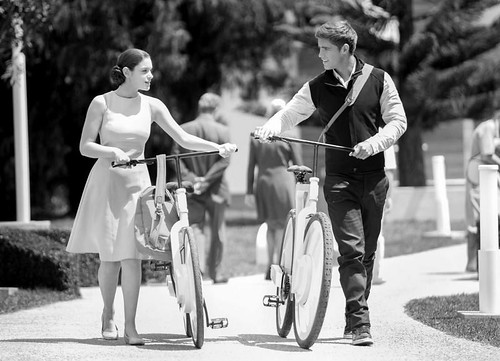
Bicycles in the 1939 movie 'The City' speed through Greenbelt, Maryland.
Fiona and Jonas with bicycles in the screen adaptation of 'The Giver.'
Democracity, Greenbelt, ‘The Community.’ All citizens needed to do, according to the planners, was “assent democratically to the centralization of planning.” It sounds real good in the midst of prolonged depression or the stagnation of the Wiemar Republic. But what is the true result of such centralization. Greenbelt kids are shown riding bicycles, painting pictures and playing at life situations such as a miniature post office. In actuality education itself was being ‘centralized.’ The Baby Boom had resulted in overcrowded classrooms (my first grade class was over fifty). Creative Wonder had to be sacrificed as we sat in orderly rows and learning itself became ‘industrialized.’
So what is the answer? I suspect it has less to do with urban design and more to do with humanity than planners would imagine. Decades later, the planners are now decrying the automobile suburbs and celebrating the grid cities they once liberated us from. Would that they would look at the wonderful ‘streetcar suburbs’ and urban open spaces that we actually enjoy – giving us a certain amount of messy freedom while organizing infrastructure and preserving openness – actually preserving ‘color!’ We like cul-de-sacs. We love our gardens. We like to choose the color of our dwelling. We like driving in open spaces.
We need to embrace the richness in our human expression of design. My children had a book in which two urban settings were presented as illustrations. One was ‘sameness,’ a very Soviet modernist city of tall bland buildings. The other – ‘uniqueness’ was – Paris! It was a very compelling argument!
C. S. Lewis on Free Will
God created things which had free will. That means creatures which can go wrong or right. Some people think they can imagine a creature which was free but had no possibility of going wrong, but I can't. If a thing is free to be good it's also free to be bad. And free will is what has made evil possible. Why, then, did God give them free will? Because free will, though it makes evil possible, is also the only thing that makes possible any love or goodness or joy worth having. A world of automata -of creatures that worked like machines- would hardly be worth creating. The happiness which God designs for His higher creatures is the happiness of being freely, voluntarily united to Him and to each other in an ecstasy of love and delight compared with which the most rapturous love between a man and a woman on this earth is mere milk and water. And for that they've got to be free.
Of course God knew what would happen if they used their freedom the wrong way: apparently, He thought it worth the risk. (...) If God thinks this state of war in the universe a price worth paying for free will -that is, for making a real world in which creatures can do real good or harm and something of real importance can happen, instead of a toy world which only moves when He pulls the strings- then we may take it it is worth paying.” ― C.S. Lewis, The Case for Christianity
The 2014 movie adaptation of Lois Lowery’s The Giver[2.] is a very instructive portrayal of what Lewis is saying. If you are not familiar with this novel, it is the story of a future world where security and freedom from want is secured by an enforced sameness. Gone are the joys of color and music. People see in black and white. Art is decorative but uninspired. Climate is regulated and people live in a community reminiscent of the ideal New Deal City, Greenbelt, Maryland.[3.] Greenbelt was Eleanor Roosevelt’s experiment in creating a ‘garden city’ to replace the hodgepodge of sometimes chaotic architecture of the time. Americans living in the Depression and Dust Bowl days were quick to embrace such a vision. Down the road from Greenbelt was the Beltsville Agricultural Research Center. Modern chemical-dependent farming and methods were being developed there.[4.]
In The Giver, emotion is carefully suppressed with drugs and ‘precision of language’ is used to eliminate Love, Anger and any sort of emotion.
But as the film unfolds, the elimination of pain and struggle has come at a cost. Elimination of Love also comes with the elimination of Faith and Hope. Mankind is deprived of those three qualities that Scripture says are the three things that last!
Though the book and the film adaptation are classified as ‘young adult’ dystopian fiction the film adaptation is worth note on a higher level. I do not think Lowery set out to write a book about deep truth (she herself says that it is simply an idea that came to her visiting her father in a nursing home – that memories are important) but that makes it all the more intriguing as it explores the value of life and the question of what gives life value. The movie ending is less confusing than that of the original novel in that it suggests that Lewis’s thoughts on what is really important are worth the risk and suggests a remedy. It is a thoughtful message for all.
The references to free will in Lewis’s books are one of the most prominent features the reader encounters. Indeed, even a cursory reading of a number of his works would reveal his belief in God’s gift to humanity of a free will to choose between two equally available choices. That is, to choose between good and evil, right and wrong.” – Zach Dawes
'Seeing color' in The Giver.
Future 'sameness.'
Greenbelt, Maryland.
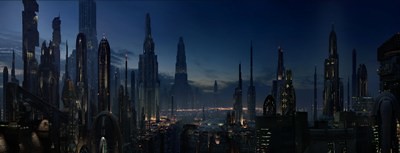
Everyday Life in Modern Coruscant Asian Megacities as Political Theater
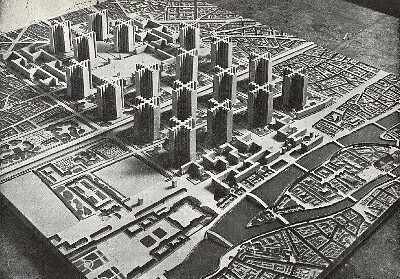
What Le Corbusier would have wrought in Paris has become the new reality of Bejing and Shanghai.
Le Corbusier once wrote of his Plan Voisin for Paris: “Since 1922 [for the past 42 years] I have continued to work, in general and in detail, on the problem of Paris. Everything has been made public. The City Council has never contacted me. It calls me ‘Barbarian’!” -- Le Corbusier’s writings, p. 207.
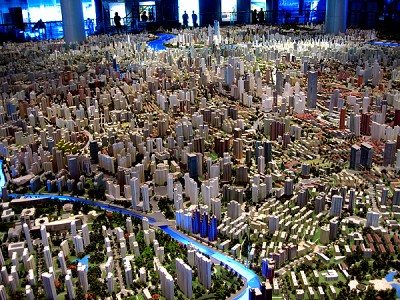
Fast forward to the Twenty-first Century and Shanghai [Le Corbusier on steroids]. It all seems like the realization of the fictional Coruscant from Star Wars... a completely urban environment that stretches as far as the eye can see. The entire planet of Coruscant is one continual city.
Guy Sorman discusses the rise of Asian 'Super Megagopolises' [click to read] in City Journal. Looking at the Mega-model of Shanghai, one could begin to wonder: "can Coruscant be that far off." Sorman points out, however, that Shanghai is largely a political creation...designed to create the impression that China is ready for business with the world. [5.]
Every day the city teems with life and every night the workers necessary to make it function vacate the pristine city. It is like Disney World, where the 'cast members' descend into 'Utilidor,' remove their costumes, and disappear to homes elsewhere.
For Shanghai workers, 'homes elsewhere' often means crowded and substandard. Just as China's factories are seldom seen by Westerners, those who maintain the stage for world commerce live in a vastly different world than the one they 'portray' in their 'day jobs.'
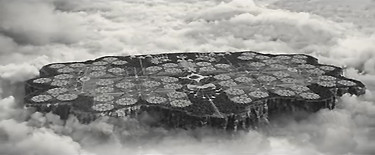
Or perhaps, the Death Star in Star Wars is a better analogy. Its scale is way beyond human. It is intended to convey a sense of awe. Might we be looking at the work of some latter day Nimrod, seeking to elevate himself to the heavens?
Sorman points out how the mad rush into the 21st Century has obliterated the traditional spaces of Shanghai and Beijing, which were much more human in size and scate. Again Star Wars comes to mind. Green beautiful planets like Naboo and Alderon risk elimination as the Empire expands its grasp.
This scale model of Shanghai dwarfs the people in the room...
...and calls to mind the fictional city of Coruscant.
In the 'Sixties America sought to 'remake' her major cities. Le Corbusier style housing blocks were constructed to elevate the urban poor. Many of these 'projects' have since been torn down. While we were building them Moscow was building similar blocks of apartments. Today in Moscow, urban youths flock to the rooftops. [6.] Called 'Roofers,' these young people seek the rooftops simply for the openness and the view.
How to Return to the Village Returning Government to the People in the 'Audience'
Nineteenth Century America was a nation of villages. Great centers of commerce existed, but they were fed by a vibrant countryside. When Thomas Jefferson created his ideal 'Academic Village' to house the University of Virginia he purposefully left one side open to the surrounding agricultural land. From the steps of the Rotunda one could look upon the rolling hills of Albemarle County.
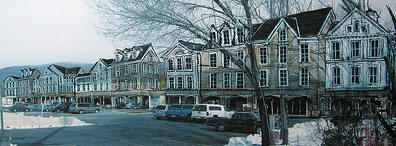
Architect Stanford White convinced the University to fill the void with Old Cabell Hall a long time ago. The recently completed South Lawn attempts to recreate a space leading off into the trees of Charlottesville. The challenge of getting back to the garden is ever before us. Rooftop Gardens [click to read] offer one method of getting people and open spaces together. Reclaiming existing environments is another. Aging strip malls could be recycled into village centers for the surrounding suburban homes, offering a place residents could walk or bicycle to. Vacant lots and neglected riverfronts can become parks and gardens.
Proposed Renewal of the Crozet Shopping Center. Drawing created by the Kirchman Studio.
Suburb bashing has always been a fashionable intellectual pastime.That is one reason I like Robert A. M. Stern. He sees the reasons people seek out single family dwellings of a traditional form. I have a friend who lives on the upper West side and his penthouse with a view of the Hudson is very nice but give me my gardens.People put up with the wretched infrastructure overload and strip centers because the village is still appealing. The residential areas become landscaped oasis for their residents. Kids play outside the house in view of the kitchen window. People visit at the back fence. Moreover the suburbs are seen by their dwellers as affirming opportunity and safety. If people had no emotion for their homes they would be fine with Le Courbusier type high rises but that is simply not the case.The problem is really one of infrastructure and public space [or lack therof]. Strip malls and box stores create a sterile wasteland but they may become the village centers of the future.
Time magazine once featured a piece called 'Repurposing Suburbs' which shows some fine examples of recreating this type of public space. ThisCrozet project turns a tired strip mall into a village center. One cannot wait for Crozet's redesigner to get his creative hands on some of the new "Town Center" projects which are now just collections of big box stores. Some time ago I drew a concept where the CSX tracks between Staunton and Charlottesville became a light rail line connecting Staunton, Fishersville, Waynesboro, Crozet, Ivy, The University of Virginia Medical Center and Downtown Charlottesville. The result would be a series of village centers and a better utilization of existing infrastructure.
City Journal's writers draw conflicting conclusions. Houston is touted as encouraging its middle class while Gotham offers limited options. Dense urban areas do tend to create energy efficiency. The trick is to see opportunities to improve the communities we have already created.That would certainly involve offering condominiums and a pedestrian friendly center to suburban communities and reclaiming all those wonderful old low density neighborhoods of our cities.
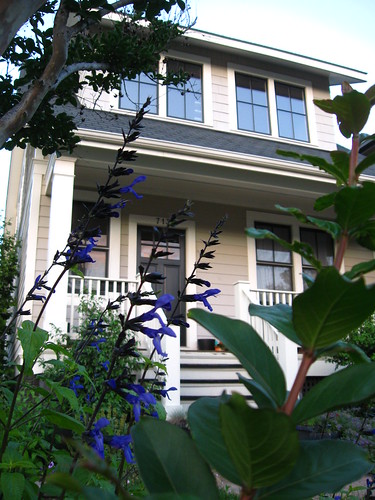
Front Yard garden, Arlington, Virginia. Photo by Bob Kirchman.
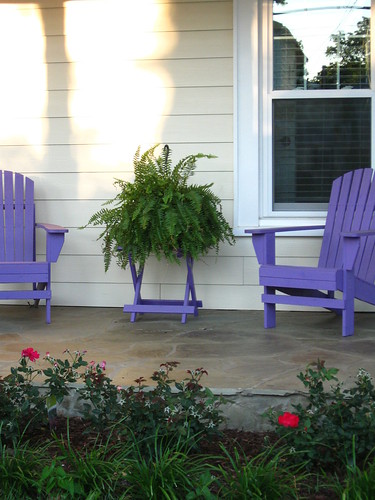
Front Porch, Arlington, Virginia. Photo by Bob Kirchman.
For I know the plans I have for you, declares the Lord, plans for welfare and not for evil, to give you a future and a hope.” – Jeremiah 29:11
My generation is being indoctrinated by a mainstream narrative to actually believe we have never seen prosperity. (read more)
Building on the Past
Revitalizing the Core of Small Towns
We are now seeing the value of small spaces that house commerce and the folly of centralizing everything. In the past, we were indeed a nation of villages. ‘Economies of Scale’ changed all that. But now, as whole business areas are deserted in our present crisis we see the value of relatively remote centers like our grandparents knew. Fortunately much of that infrastructure still is in place and could be revitalized with some help in zoning policies and tax deferral for small businesses that want to come in to these places.
Initially there could be a renewed filling of the existing buildings followed by a process of infill on these existing town centers to provide medical and professional offices, loft residences and a vibrant culture to support a variety of local businesses. Will it work? It did in our little town of Crozet. The center of the town was indeed walk-able. Residents of the local retirement home patronized the local lunch counter. Indeed, I learned a lot listening to an older gentleman who was a regular there. He had been a radioman on a B-24 Liberator in the Pacific Theatre and had a lot of good stories to tell. Somewhere between there and our community meetings we came up with the idea for the Crozet Trestle Mural. Small towns can incubate big ideas.
At the time I lived there, a short walk (or run) would take you to open country. There was a rocky field near Mint Springs Park that always tugged at my heart. Finally I realized that it was very much like the Bavarian countryside where my ancestors came from. Preserving such treasures and making the most of them would make sense on so many levels.
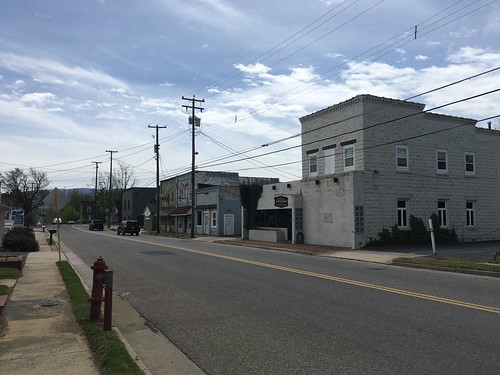
Draft Avenue, Stuart's Draft, Virginia as it is today.
The images in this article are related and I’m going to explain how, but first I want to start with a personal anecdote. My siblings and I have always loved playing with dominoes to create intricate chains that snake around the house. After setting up the course, we would watch as the first domino toppled into the second, creating a chain reaction that was mesmerizing. One thing we learned quickly through our domino creations was the importance of introducing regular breaks in the chain. The purpose of these was to isolate the effect of an accidental fallen domino or an ill-placed footstep. Without breaks, a single stray piece could completely destroy our creation prematurely. Only after each section was complete would we bridge the gaps to unify the whole. This same thinking is present in many systems. Firefighters use firebreaks to slow the spread of wildfires. Builders use firewalls to prevent or slow the spread of a building fire. You are likely familiar with this principle in your own life in some form. (read more)
Infill development—building on unused or underutilized land within the existing urban footprint—meets many of the goals a strong town should have. Because these developments make use of existing infrastructure, they represent added wealth without the future liabilities of infrastructure replacement. There are many other benefits too: added vibrancy, more housing options at more affordable prices, and a lower environmental impact. (read more)
Infill in Rural Areas
Many rural areas are dotted with older towns that, while they are grandfathered in, cannot be improved by existing codes. They languish in a sort of limbo as a few businesses do occupy them ‘by right.’ Unfortunately there are many more vacancies as there is not the culture or traffic to support much more than is already there. To that end, infill policies, which have proven effective in urban neighborhoods, should be pursued in rural main streets as well.
Finley Memorial Presbyterian Church. Photo by Bob Kirchman.
A Vision for Stuarts Draft 2039
Today the Village of Stuarts Draft is a place born of agriculture with a close-knit community, strong industry supported by hard-working families, ample natural resources, and numerous recreational possibilities.
Stuarts Draft’s future should be marked by a theme of cohesive planning and living, connected by a walkable mixed-use path to its residential, recreational, and urban areas. Stuarts Draft will continue to be visibly surrounded by pastoral and rural views as it remains framed by agricultural industry. Its good wage-producing employment centers continue to be sheltered from the main thoroughfares, with accessible, clean business centers providing a level of continuity in appearance and location. Its old downtown is distinguished by its quaint appearance, maintaining the flavor of its historic roots, and remaining mixed-use in nature.
Architectural endeavors continue to add to the quaint and historic feeling of the community in all areas of building, but allow for modern convenience. Safe pedestrian and bicycle facilities are a priority in this nature-driven community where new development is concerned and when connecting existing areas of recreation, business, and living.
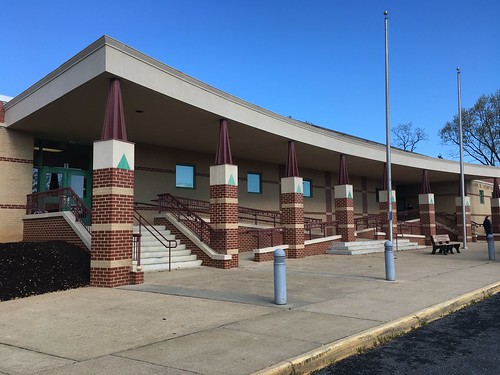
Guy K. Stump Elementary School on Draft Avenue. Photo by Bob Kirchman.
Quality public centers include excellent schools, a library, and facilities that double as community centers, emergency services, and which have enhanced “green” features. Attractive recreation facilities which appeal to a wide range of users have and will continue to be added to the network that ties the community together.”– Stuarts Draft Small Area Plan|2019-2039, Timmons Group [1.]
In 1939 Frank Capra made a film in which Jimmy Stewart portrays Jefferson Smith, a young Washington outsider who suddenly finds himself appointed to the United States Senate. Smith, unaccustomed to the ways of Washington, is accosted by reporters who quickly identify him (in their minds) as a dangerous incompetent. Sound familiar? When Smith see’s their ‘reporting’ the next day he goes after the reporters. Chasing them into the hallowed National Press Club he addresses them all: “Why don’t you tell the truth?” Diz Moore, one of the reporters, responds by quoting Pontius Pilate“What is Truth?” That Capra saw this as a problem to be reckoned with in 1939, in the midst of the Great Depression and on the eve of the great World War, is telling. We should probably not be so surprised that it is indeed an even greater problem in 2021.
Reporter Diz Moore, played byThomas Mitchellwho played Uncle Billy opposite Stewart in It’s A Wonderful Life, asks “What is Truth?”
Volume XX, Issue XI: Leonardo da Vinci City Planning
Leonardo da Vinci’s Pandemic Inspired Planning
And How it Might Help Us Today
ByBob Kirchman
In the years 1484 and 1485 the bubonic plague ravaged Milan. Though this was during the Renaissance, the city itself was Medieval in its plan with narrow streets crowded with a hodgepodge of shops, houses and other essential buildings. Sanitation was terrible and sunlight often never penetrated the narrow streets. The great Renaissance polymath saw this as a breeding ground for pestilence, and so he set to work to create a better city. In his notebooks he drew an open plan with wide spaces and canals – open to sunlight and with separation between passageways for freight and refuse and those for pedestrians. It was a first step towards modern city planning. 1.
The buildings were classical in form and multistory. Shops and services were on the lower levels and residences on the floors above. Fresh air and sunlight would freely waft in upon the houses above. The nasty dirty necessities of city life would be relegated to underground tunnels. This was a forward looking approach for sure. Unfortunately Ludovico Sforza, the Duke and absolute ruler of Milan, had little interest in rebuilding the fabric of his city so the idea remained on paper. Il Moro had more pressing matters on his mind as the French king sought at that time to conquer the powerful duchy. Eventually Renaissance planning would open up plazas and grand avenues, but this would be more driven by the need to create grand processional avenues to showcase important architecture and monuments.
The villages of great and peaceful republics would also place spaces between houses and allow for gardens as well as light and fresh air. Consider Colonial Williamsburg, where the gardens and grounds of the historic buildings are much cherished even in our day. Cities that no longer needed to crowd behind walls for defense naturally spaced themselves in a more appealing manner. On the frontier there were still fortifications around settlements but the lands that were settled far away from hostile enemies grew up open to the surrounding farms, fields and woodlands. Even our Revolution and our vicious Civil War were events so out of the ordinary that American cities did not hunker into walled fortifications. The Capital of our republic was actually laid out like the great hunting garden at the Palace of Versailles. There were even to be canals in the area now occupied by the National Mall. Pierre L’Enfant overlayed a grid with diagonal avenues in 1791 that was also crossed by canals, not unlike the drawings of Leonardo.
The machine age would fill the open avenues with railway tracks and then automobiles. By the end of the Nineteenth Century the major cities were reaching skyward. Again, density became the rule. Large cities like New York and Chicago again found themselves shut in from light and fresh air. Though advances in the design of waterworks and sewers helped, it was not uncommon for the wealthy to leave the cities in the Summertme for country homes and their benefits. Air conditioning made it possible for people to function more comfortably in the urban Summers and vacations became a more universal and more short-term practice for all classes of Americans. Streetcar suburbs allowed for year-round life in less crowded circumstances.
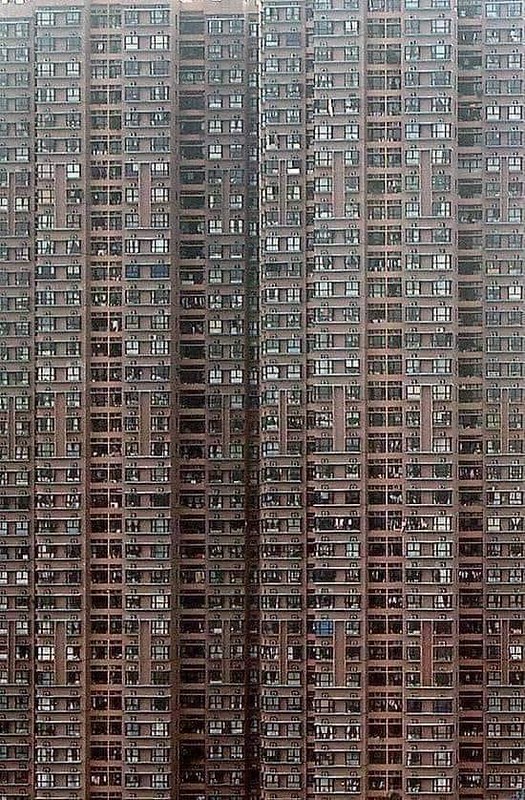
The coming of the automobile age was indeed a mixed blessing as more roads and parking spaces crowded into spaces needed for living. Buildings grew taller in the center of town while the suburbs kept moving outward. Eventually you had a new level of crowding, crowded highways, crowded elevators, and crowded transit. The last century saw the rise of the great Asian megacities. Though they seem to have been built largely for show, they crowd people into ‘Vertical Medievalism,’ small apartments packed close together in buildings that rise many stories. It was here that the modern pandemic would rage out of control. A virus born in Wuhan would rage through entire apartment buildings as frightened officials sealed the doors. Many died as a result. The shared utilities of such buildings served as a conduit for pestilence.
“Vertical Medievalism:” A multistory apartment building in Hong Kong.
Centralization has many benefits for economies of scale and in times past, defense. But urban planner Charles Marahone recently referenced some drawings by New Urbanist Leon Krier which show an interesting alternative – one that we might actually emulate. 2. Krier shows us the pattern of our cities at present, growing ever dense and upward at their cores and sprawling outward. This, says Marahone, is a recipe for pandemic. What if, muses Marahone, we instead let smaller towns grow spaced out from the mother city. With the increasing trend of remote working it becomes less necessary for large companies to concentrate their workers in high-rise buildings or suburban mega-campuses. Remote workers love the closeness to family and smaller community but miss the places where people come together, the centers of culture. To that end, Krier’s smaller town centers, spaced apart, make a lot of sense. Most people would live and work in a more convivial setting that was also less in contact with the great wide world. People would still enjoy the ability to move about, but would no longer crowd together twice a day on transportation.
Services would now be, of necessity, a thing to be provided locally. More people would be employed closer to home, doing what they do, that cannot be done remotely. Separation, a concept first visited by da Vinci, would now be possible on a regional scale. But, remembering that El Moro wasn’t ready to rebuild Milan, how do we in the 21st Century find the resolve to rebuild American Villages. The answer may be simpler than we think. For years a little village has languished near my home – the little town of Stuarts Draft. The old town center is lifeless, but the factories that drive the economy of Augusta County and a lot of suburban housing surround it. Here is an opportunity to reestablish a center, as Leon Krier envisions, of community activity. Many of our dead strip malls can be rezoned as multipurpose developments with housing and locally essential retail and services replacing the shuttered rows of storefronts.
Think of a world where people live in smaller community, open to the beauty of forest and farmland, but buffered from the great waves of pandemic and stresses of commuting. This is a world where people might live closer to their children, taking a lunch-time for a school event with them or just meeting with them for an hour in the park. It is a way to create more interaction, not less, while creating a healthy level of built-in ‘social distancing’ at the same time.
1 Paris Manuscript B, Leonardo da Vinci
2 Do You Want to Know What Works? Charles Marahone in Strong Towns, May 28, 2019
A section of a building from Paris Manuscript B,Leonardo da Vinci
Architecture Biennale 2016 exhibit:Leonardo da Vinci – Water City
Architecture Biennale 2016 exhibit:Leonardo da Vinci – Water City
Museo Nazionale della Scienza e della TecnologiaLeonardo da Vinci
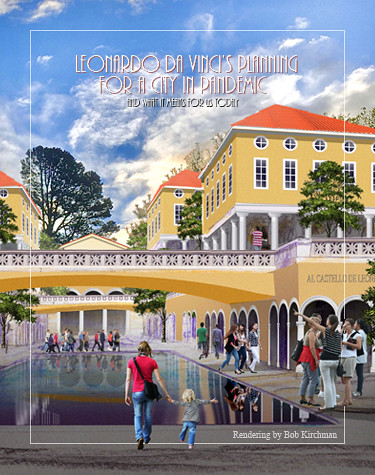
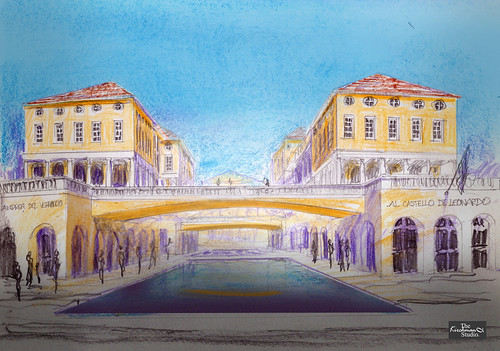
Leonardo da Vincienvisioned residences above shops and services, canals and separated walkways...
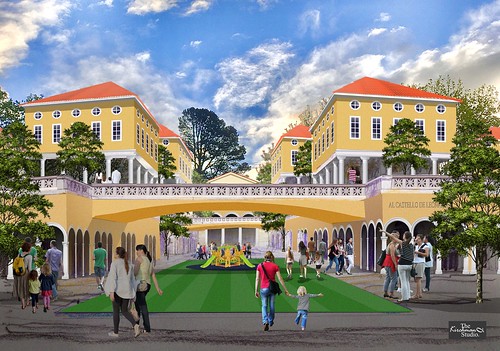
Here I have developed Leonardo da Vinci's exercise in city planning as a mixed use project to be built on the site of a dying mall. I added some trees and greenery to the final vision.
...which might be employed in the design of a village center replacing a dying mall.
Here the pool is replaced by greenspace in another variation.