Showing posts with label Notre Dame de Paris. Show all posts

Monday, April 22, 2019

Notre Dame, Josiah, Unto All Nations, Phantasies

NotreDame
Volume XVI, Issue XVI

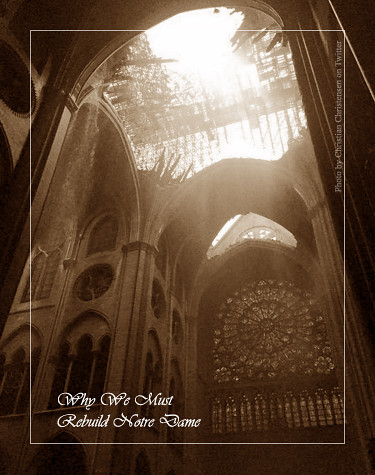
Why We Must Rebuild Notre Dame

As fire roared through the 800 year old “Forest,” the oak timbered roof structure of Notre Dame de Paris, many of us were moved to tears. Firefighters fought valiantly but regretfully admitted that they of themselves could not save the venerable cathedral. Helplessly we watched. Helplessly they fought on. Morning revealed that the ancient oak timbers and the lead roof were gone. The spire had collapsed into the intersection of nave and narthex, leaving a gaping hole in the limestone vaulting. Several more holes had been made in the vault by collapsing timbers. It was indeed a sad sight.

The morning also revealed that the great rose windows had survived with minimal damage. The great pipe organ survived, as did the Pieta and Cross at the Altar! We rejoiced. What had we lost? What had miraculously been saved? It was a flood of emotions. What does Notre Dame mean to us?
IMG_8373
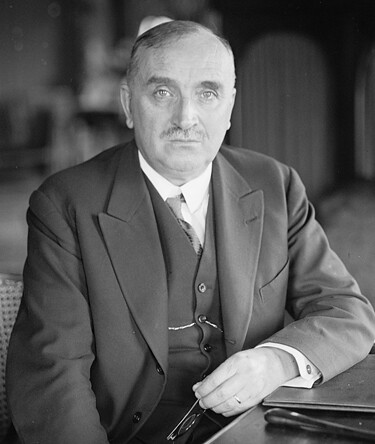
Paul Claudel.

French President Emmanuel Macron vowed to rebuild the Cathedral in an ambitious five years. Secular and Spiritual voices unite in the call to rebuild. So, what exactly is the importance of this Cathedral to the human story? Well, historians will point out that it represents a time when Western Culture, guided by Faith, created order out of the chaos following the demise of the great Roman State. The architecture, aspiring toward the transcendent, lifts the spirit! But then there are the personal recollections. In the transept of the great cathedral, just to the right of the nave near the Southern rose window is a plaque commemorating the conversion of French poet, playwright and diplomat Paul Claudel. Claudel’s life spans 1868 to 1955 and his early years were like that of so many young people today. He was a nonbeliever. He was not particularly motivated by spiritual things.

On Christmas Day in 1886, at the age of eighteen, young Paul attended the High Mass at the cathedral. He recalls that he was not particularly moved as the new archbishop celebrated the liturgy. But something prompted Claudel to return to the cathedral for evening vespers. “It was the gloomiest Winter day, and the darkest rainy afternoon over Paris.” As the Magnificat was sung, something happened in the young man’s heart: “In an instant, my heart was touched and I believed with such a strength of adherence, with such an uplifting of my entire being, with such powerful conviction, with such a certainty leaving no room for any kind of doubt, that since then all the books, all thee arguments, all the incidents and accidents of a busy life have been unable to shake my faith, nor indeed to affect it in any way.”
Lustiger
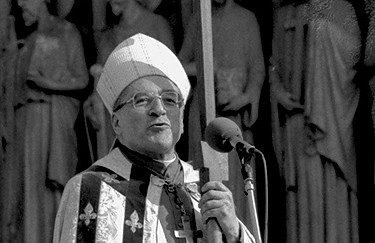
Jean-Marie Lustiger.

Then there is the story of Cardinal Jean-Marie Lustiger. He was born in Paris in 1926. His Polish Jewish parents were merchants who owned a store on the West Bank. During the Shoah, in which his mother died, young Jean Marie was taken in by a Christian family. He discovered a Bible in the home of his piano teacher – reading the familiar Torah, but going further into the New Testament story as well. At age 14, he visited the Cathedral in OrlĂ©ans on Holy Thursday. Moved by the rich symbolism of the liturgy and the great cathedral, he returned on Good Friday and announced his intent to join the church. He would later study for the priesthood and eventually become Bishop of Paris, officiating over evening Mass in the great cathedral of Notre Dame! As a young seminarian, Bishop Robert Barron of Los Angeles studied in Paris and would often attend the Mass that Cardinal Lustiger officiated at. Lustiger would deliver energetic homilies – twenty minutes was a short one. Barron would often stand at the spot where Paul Claudel was converted, looking up at the North Transept Rose Window, which many consider to be the most beautiful of all the rose windows.

Robert Barron speaks of the powerful testimony of such a beautiful work – formed by now unknown craftsmen in worship to the Divine – that performed in him an “Alchemy of the Soul.”

We don’t build buildings like that today. Many of us worship in metal buildings driven by an economy prescribed by “good stewardship.” Some will argue that we should forgo rebuilding great cathedrals because the money can be better used elsewhere. To them I would simply say that this is not an either/or proposition. We should do both. Even the barest metal building church invests in “Worship” but it is usually just instruments for the worship band. All of us in some sense can identify with that moment in Matthew 26:7 when a woman anointed Jesus’ feet with precious perfume. There is beauty that springs from the proclamation of the Gospel. Notre Dame de Paris is indeed such a beauty. The testimonies of Barron, Lustiger and Claudel bear witness to it.

Faith and Beauty
Images that Lead to Worship and Relationship with God
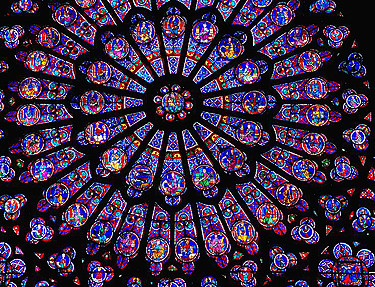
rose-window-notre-dame
North Rose Window, Notre Dame de Paris.
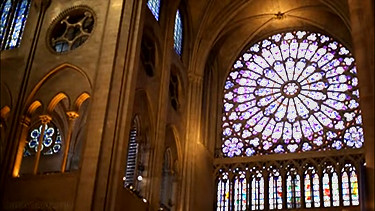
RoseWindow
North Rose Window, Notre Dame de Paris.
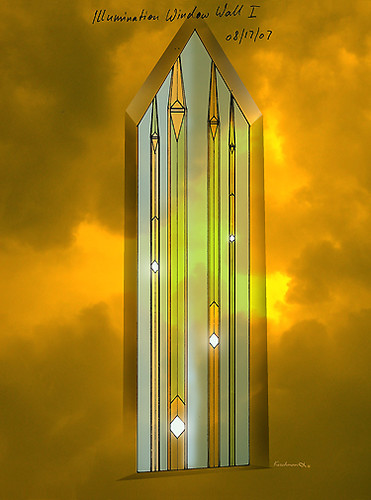
Sound Sculpture
Sound Sculpture, Xaver Wilhelmy's design for functional glass organ pipes in a window combines beautiful visual imagery with beautiful music. Rendering by Bob Kirchman.

Catholicism and Beauty
By Bishop Robert Barron


A refreshing perspective on the place of the beautiful in leading to Faith.
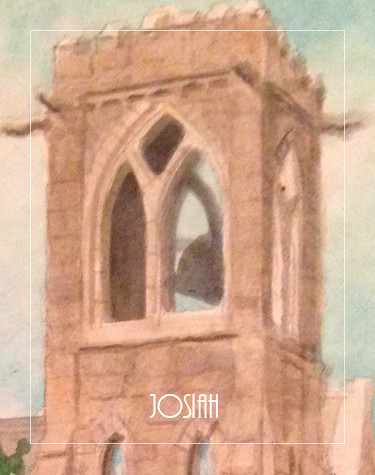
JOSIAH002
Volume XVI, Issue XVIa

Josiah
By Bob Kirchman
Copyright © 2019, The Kirchman Studio, all rights reserved

Chapter 2: Unto All Nations

On the campus on Big Diomede, young Josiah Zimmerman, Rupert’s grandson, walked with Jonathan Greene, the president of the college and Josiah’s favorite professor. They were discussing Matthew 24:14: “And this gospel of the kingdom shall be preached in all the world for a witness unto all nations; and then shall the end come.”

What constitutes a nation in the eyes of the Divine?” Josiah asked.

The dictionary says, ‘a large aggregate of people united by common descent, history, culture, or language, inhabiting a particular country or territory.’ Not too helpful in determining the mind of the Master. The rebirth of freedom in the North has come with a rebirth of fervor to reach the nations, as is evidenced by your presence at this institution. Still, I think we can identify such groups around us with some certainty and we are putting the Bible in their hands. The upcoming World’s Fair in Fairgate, Alaska will no doubt mark a point where we’ve pretty much put the Holy Scriptures in every human language there is. We correspond with believers in every part of the world. I think at this point the burden is on us to identify any particular place of occupation that has NOT been reached. That is where I think our Master’s focus would be.”

That is my frustration, sir. I feel like the work is going to be done before I get there. I read about the Moravians going out into the wilds and reaching the Cherokee and the joy of shining the Gospel where it has never shone before… and I look at the situation today. Even the Middle East is opening up to the message. With the demise of APOLLONIUS, the academy and the media have found new faith quite without our help. They started looking for truth and beauty again. Guess where it led them?”

Is it wrong, Dr. Greene, to be jealous to do a great work for God?”

That is a good one, young friend, and it deserves a thoughtful answer.” The good doctor was silent for a moment, then he continued, “Remember our discussion last week, and how for an artist like Sandro Botticelli the recognition of beauty led to transcendent truth. When he painted ‘The Birth of Venus’ it is evident that his sense of desire has been guided Heavenward. So it shall be with your ambitions to do great works. Think of Ransom in the college maintenance shops. He likes to work with his hands. Building a door gives him great pleasure… but I pray one day he will see who he’s building the door for! He’s an old special forces guy… mind and conscience pretty much seared, but get a planer in his hands and his eyes light up. God does not despise us for our aspirations. He meets us there. But, mind you, He will lead us upward. He has no desire to leave us playing in the mud when he’s planned for us a holiday at the beach! (I’m paraphrasing Lewis here).”

But, why should I feel such a passion to reach the nations if they have already been reached? I mean, should I not be able to find contentment and purpose in a simple task like Brother Lawrence who served most nobly working in the kitchen? Still, if I deny the drive inside me, I feel that I am lying.”

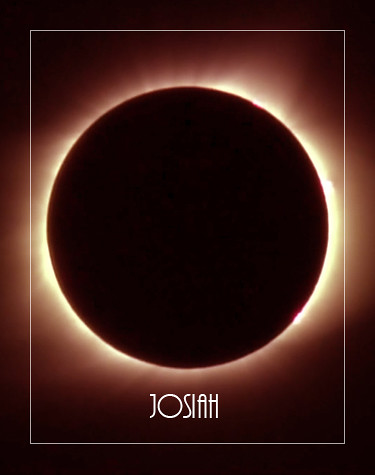
Passion is good, but true knowledge must define it. Remember the 2033 eclipse over Alaska. There was an author who wrote a book about the eclipse signaling the end of the world… nothing new here. The Millerites did it in the 19th Century. They were still waiting after their ‘appointed’ date and refigured it. Then they were still waiting after that. I think the Divine holds his cards close for a reason. We need to serve him like this will be our last day on Earth, but we need to build our works to last for 100 years. Some see contradiction there but it is clear that the tension between the two holds us in place to serve Him. I’m rambling, but I feel like the Lord will inform your passion and make it most profitable. You will indeed hear Him say ‘Well done, good and faithful servant!’ one day. That is enough.”
(to be continued)

Phantasies25
Volume XIII, Issue III

Phantasies
By George Macdonald, Chapter 25

Our life is no dream; but it ought to become one, and perhaps will."
~ Novalis

And on the ground, which is my modres gate,
I knocke with my staf; erlich and late,
And say to hire, Leve mother, let me in."
~ Geoffrey Chaucer, "The Pardoneres Tale".

Sinking from such a state of ideal bliss, into the world of shadows which again closed around and infolded me, my first dread was, not unnaturally, that my own shadow had found me again, and that my torture had commenced anew. It was a sad revulsion of feeling. This, indeed, seemed to correspond to what we think death is, before we die. Yet I felt within me a power of calm endurance to which I had hitherto been a stranger. For, in truth, that I should be able if only to think such things as I had been thinking, was an unspeakable delight. An hour of such peace made the turmoil of a lifetime worth striving through.

I found myself lying in the open air, in the early morning, before sunrise. Over me rose the summer heaven, expectant of the sun. The clouds already saw him, coming from afar; and soon every dewdrop would rejoice in his individual presence within it.

I lay motionless for a few minutes; and then slowly rose and looked about me. I was on the summit of a little hill; a valley lay beneath, and a range of mountains closed up the view upon that side. But, to my horror, across the valley, and up the height of the opposing mountains, stretched, from my very feet, a hugely expanding shade. There it lay, long and large, dark and mighty. I turned away with a sick despair; when lo! I beheld the sun just lifting his head above the eastern hill, and the shadow that fell from me, lay only where his beams fell not. I danced for joy. It was only the natural shadow, that goes with every man who walks in the sun. As he arose, higher and higher, the shadow-head sank down the side of the opposite hill, and crept in across the valley towards my feet.

Now that I was so joyously delivered from this fear, I saw and recognised the country around me. In the valley below, lay my own castle, and the haunts of my childhood were all about me hastened home. My sisters received me with unspeakable joy; but I suppose they observed some change in me, for a kind of respect, with a slight touch of awe in it, mingled with their joy, and made me ashamed. They had been in great distress about me. On the morning of my disappearance, they had found the floor of my room flooded; and, all that day, a wondrous and nearly impervious mist had hung about the castle and grounds. I had been gone, they told me, twenty-one days. To me it seemed twenty-one years. Nor could I yet feel quite secure in my new experiences. When, at night, I lay down once more in my own bed, I did not feel at all sure that when I awoke, I should not find myself in some mysterious region of Fairy Land. My dreams were incessant and perturbed; but when I did awake, I saw clearly that I was in my own home.

My mind soon grew calm; and I began the duties of my new position, somewhat instructed, I hoped, by the adventures that had befallen me in Fairy Land. Could I translate the experience of my travels there, into common life? This was the question. Or must I live it all over again, and learn it all over again, in the other forms that belong to the world of men, whose experience yet runs parallel to that of Fairy Land? These questions I cannot answer yet. But I fear.

Even yet, I find myself looking round sometimes with anxiety, to see whether my shadow falls right away from the sun or no. I have never yet discovered any inclination to either side. And if I am not unfrequently sad, I yet cast no more of a shade on the earth, than most men who have lived in it as long as I. I have a strange feeling sometimes, that I am a ghost, sent into the world to minister to my fellow men, or, rather, to repair the wrongs I have already done.

May the world be brighter for me, at least in those portions of it, where my darkness falls not.

Thus I, who set out to find my Ideal, came back rejoicing that I had lost my Shadow.

When the thought of the blessedness I experienced, after my death in Fairy Land, is too high for me to lay hold upon it and hope in it, I often think of the wise woman in the cottage, and of her solemn assurance that she knew something too good to be told. When I am oppressed by any sorrow or real perplexity, I often feel as if I had only left her cottage for a time, and would soon return out of the vision, into it again. Sometimes, on such occasions, I find myself, unconsciously almost, looking about for the mystic mark of red, with the vague hope of entering her door, and being comforted by her wise tenderness. I then console myself by saying: "I have come through the door of Dismay; and the way back from the world into which that has led me, is through my tomb. Upon that the red sign lies, and I shall find it one day, and be glad."

I will end my story with the relation of an incident which befell me a few days ago. I had been with my reapers, and, when they ceased their work at noon, I had lain down under the shadow of a great, ancient beech-tree, that stood on the edge of the field. As I lay, with my eyes closed, I began to listen to the sound of the leaves overhead. At first, they made sweet inarticulate music alone; but, by-and-by, the sound seemed to begin to take shape, and to be gradually moulding itself into words; till, at last, I seemed able to distinguish these, half-dissolved in a little ocean of circumfluent tones: "A great good is coming--is coming--is coming to thee, Anodos"; and so over and over again. I fancied that the sound reminded me of the voice of the ancient woman, in the cottage that was four-square. I opened my eyes, and, for a moment, almost believed that I saw her face, with its many wrinkles and its young eyes, looking at me from between two hoary branches of the beech overhead. But when I looked more keenly, I saw only twigs and leaves, and the infinite sky, in tiny spots, gazing through between. Yet I know that good is coming to me--that good is always coming; though few have at all times the simplicity and the courage to believe it. What we call evil, is the only and best shape, which, for the person and his condition at the time, could be assumed by the best good. And so, farewell.

The End

Falling Spring Falls
Thomas Jefferson said of Falling Spring Falls in the Alleghany Highlands of Virginia:“The only remarkable cascade in this country is that of the Falling Spring in Augusta…it falls over a rock 200 feet into the valley below.” -- Thomas Jefferson, ‘Notes on the State of Virginia’ written in 1781. The falls are actually 80 feet high.

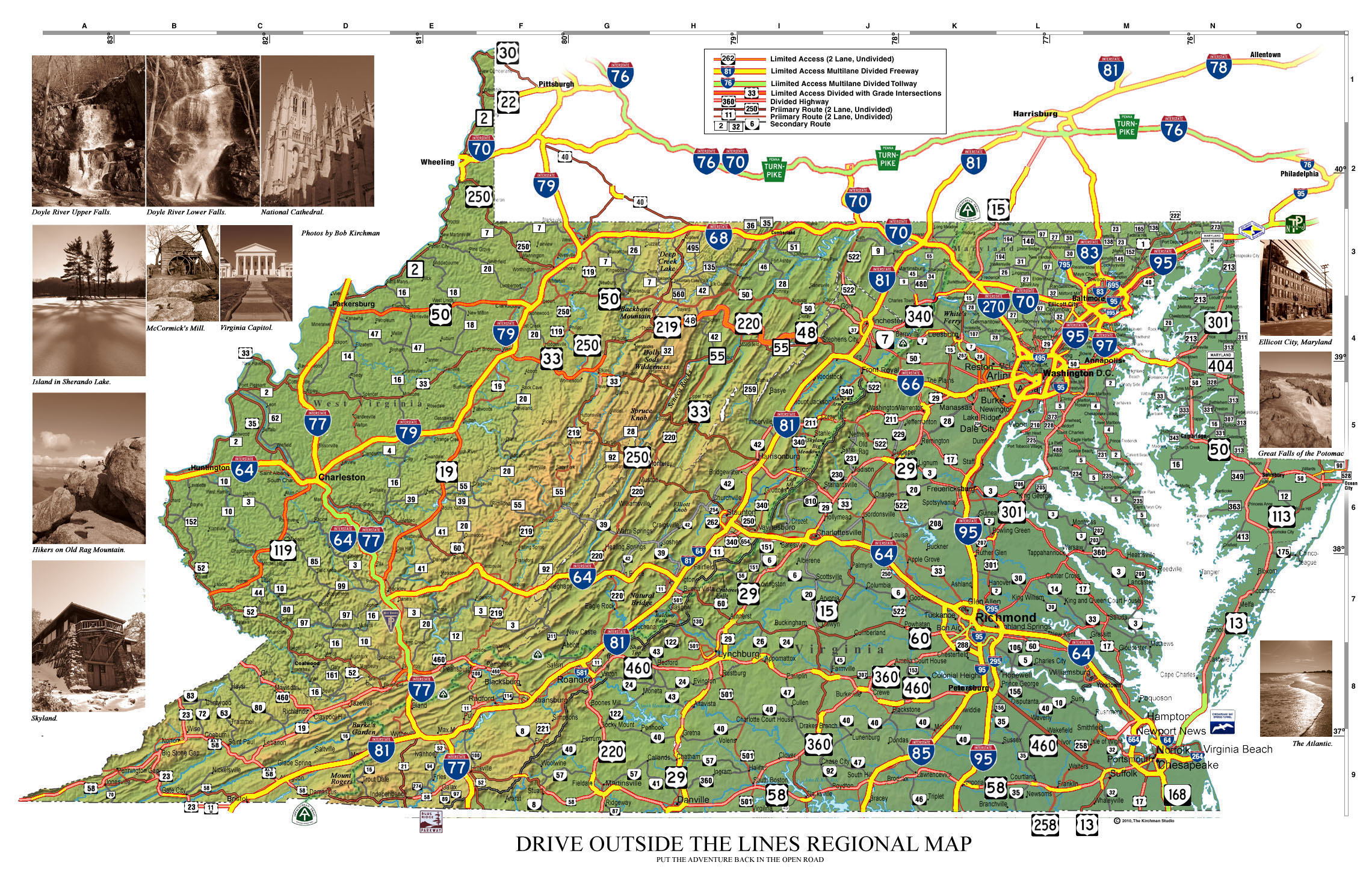
Regional Travel Map
A Different Trip Planning Resource
A_map
Regional Travel Map by Bob Kirchman.

Sometimes it is nice to have a good old flat paper map in front of you when you are planning a regional road trip. GPS and electronic maps are great, but they sometimes fail to give you the 'overview' you had with a good old-fashioned map. As you plan your Summer travels, you can download the Journey Regional Map [click to read], print it, and plan a few road trips.
FindLove
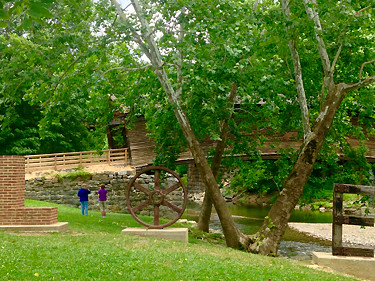
Find LOVE at Alleghany County Virginia's 160 year-old Humpback Bridge.[1.]
paintbank_web
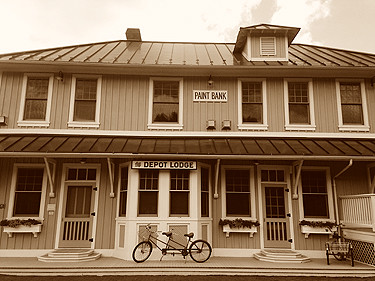
Paint Bank, in Craig County, Virginia got its unusual name from the iron ochre and red clay taken from the banks of Potts Creek that was used by Native Americans, notably the Cherokees, as war paint, and to make their pottery with a distinctive red color. Photo by Bob Kirchman
Paint Bank, Virginia
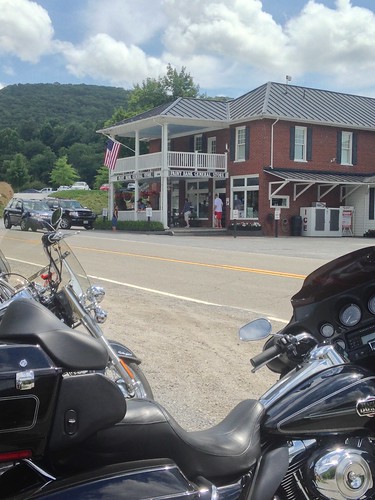
The General Store in Paint Bank, Virginia. The Swinging Bridge Restaurant is located in an extension of this building and features delicious buffalo dishes. Photo by Bob Kirchman
Tingler's Mill
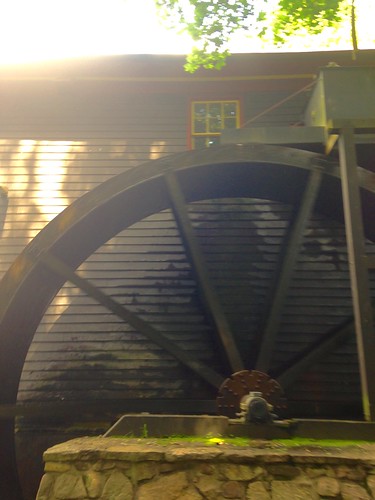
Tingler's Mill in Paint Branch, Virginia. Photo by Bob Kirchman

Why Beauty Matters


Finally, brethren, whatsoever things are true, whatsoever things are honest, whatsoever things are just, whatsoever things are pure, whatsoever things are lovely, whatsoever things are of good report; if there be any virtue, and if there be any praise, think on these things." -- Phillipians 4:8

Let thy work appear unto thy servants, and thy glory unto their children. And let the beauty of the Lord our God be upon us: and establish thou the work of our hands upon us; yea, the work of our hands establish thou it." -- Psalm 90:16,17

Around the World in 80 Days
by Jules Verne
[click to read]
Reform_Club._Upper_level_of_the_saloon._From_London_Interiors_(1841)_web
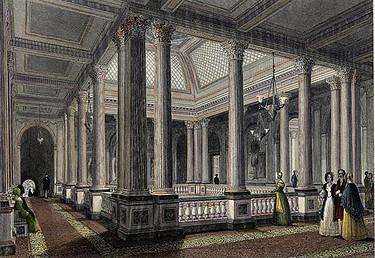
1841 Lithograph of the interior of London's Reform Club. Here Phileas Fogg enters into the wager that begins his attempt to circumnavigate the globe. The Reform Club is a private members club on the south side of Pall Mall in central London. As with all London's original gentlemen’s clubs, it comprised an all-male membership for decades, but was the first to change its rules to include the admission of women on equal terms in 1981. Since its founding, the Reform Club has been the traditional home for those committed to progressive political ideas, with its membership initially consisting of Radicals and Whigs. However, today it is no longer associated with any particular political party, and now serves a purely social function.

In 1832, Parliament passed a law changing the British electoral system. It was known as the Great Reform Act.

This was a response to many years of people criticising the electoral system as unfair. For example, there were constituencies with only a handful of voters that elected two MPs to Parliament. In these rotten boroughs, with few voters and no secret ballot, it was easy for candidates to buy votes. Yet towns like Manchester that had grown during the previous 80 years had no MPs to represent them.

In 1831, the House of Commons passed a Reform Bill, but the House of Lords, dominated by Tories, defeated it. There followed riots and serious disturbances in London, Birmingham, Derby, Nottingham, Leicester, Yeovil, Sherborne, Exeter and Bristol.

The riots in Bristol were some of the worst seen in England in the 19th century. They began when Sir Charles Weatherall, who was opposed to the Reform Bill, came to open the Assize Court. Public buildings and houses were set on fire, there was more than £300,000 of damage and twelve people died. Of 102 people arrested and tried, 31 were sentenced to death. Lieutenant-Colonel Brereton, the commander of the army in Bristol, was court-martialed.

There was a fear in government that unless there was some reform there might be a revolution instead. They looked to the July 1830 revolution in France, which overthrew King Charles X and replaced him with the more moderate King Louis-Philippe who agreed to a constitutional monarchy.

In Britain, King William IV lost popularity for standing in the way of reform. Eventually he agreed to create new Whig peers, and when the House of Lords heard this, they agreed to pass the Reform Act. Rotten boroughs were removed and the new towns given the right to elect MPs, although constituencies were still of uneven size. However, only men who owned property worth at least £10 could vote, which cut out most of the working classes, and only men who could afford to pay to stand for election could be MPs. This reform did not go far enough to silence all protest. -- UK National Archives

Around the World in 80 Days (French: Le tour du monde en quatre-vingts jours) is a classic adventure novel by the French writer Jules Verne, first published in 1873. In the story, Phileas Fogg of London and his newly employed French valet Passepartout attempt to circumnavigate the world in 80 days on a £20,000 wager set by his friends at the Reform Club. (read more)
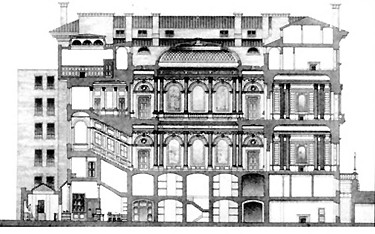
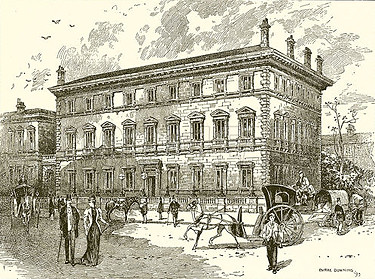
cutaway

The Reform Club, Pall Mall, London
The Reform Club was founded in 1836, in Pall Mall, in the centre of what is often called London's Clubland. The founders commissioned a leading architect of the day, Charles Barry, to build an imposing and palatial clubhouse. It is as splendid today as when it opened in 1841. Membership was restricted to those who pledged support for the Great Reform Act of 1832, and the many MPs and Whig peers among the early members developed the Club as the political headquarters of the Liberal Party.

The Vision of Jules Verne

He was born in 1928 in the port city of Nantes, France. His father was a pragmatic lawyer but his mother nurtured his creative inclinations. Though he followed his father’s wishes and trained to be a lawyer, he would go on to meet publisher Pierre-Jules Hetzel who would serialize his stories. These Voyages Extraordinaires would eventually become his famous novels earning him the title: “Father of Science Fiction.” Although Verne died in 1905 his works continued to be published and he would become the second most translated author in the world. Verne saw the technological revolution of the Nineteenth Century as it unfolded and crafted new applications of it as he charted his ‘Voyages.’ It is not surprising that as a youth I was drawn to his work.


PontifusBANNER

Monday, April 15, 2019

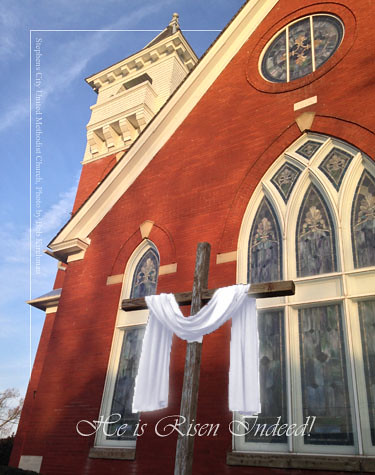
Notre Dame de Paris, A Mystery Appears, Easter

Easter
Volume XVI, Issue XV

Wishing You a Blessed Easter

IMG_8019
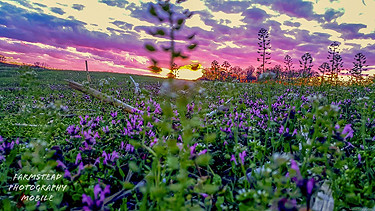
Photo by Stacey Phillips of Farmstead Photography. Used by permission.

Let the fields be jubilant, and everything in them; let all the trees of the forest sing for joy.” – Psalm 96:12

IMG_8004
Sunrise Through The Cherry Tree. Photo by Sandra Barlow Powell.

Palm Sunday, How to Cure Conflict
[click to read]

For unto us a child is born, unto us a son is given: and the government shall be upon his shoulder: and his name shall be called Wonderful, Counsellor, The mighty G-d, The everlasting Father, The Prince of Peace." -- Isaiah 9:6 (read more)

Restoration and Basketball
[click to read]

This was written after UVA's win at the time just after Charlottesville's difficult days when a young woman and a number of law enforcement officers were killed. Tony Bennett is deep, he is a true gentleman and he cares about the community he serves. (read more)

Notre Dame de Paris Rose Windows Safe!

IMG_8286

IMG_8285
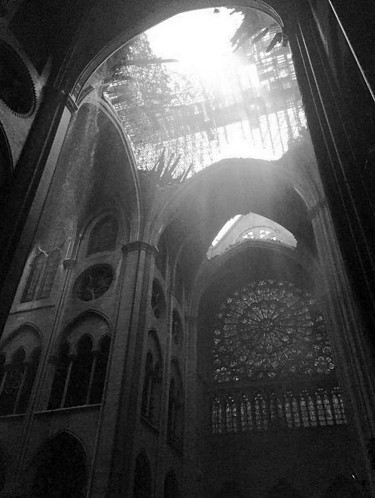
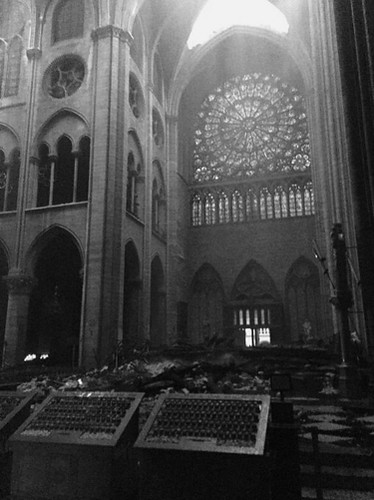
After the terrible fire that ripped through Notre Dame de Paris, today we learned that the priceless rose windows and the magnificent pipe organ have survived. These photos show the transept where the spire fell through the vault. There is much damage to repair as the roof was completely destroyed, but much remains. Photos by Christian Christensen

Josiah001

Josiah
By Bob Kirchman
Copyright © 2019, The Kirchman Studio, all rights reserved

Chapter 1: A Mystery Appears

You wanted to see me right away?” Abiyah Ben-Gurion said as he walked into the Zimmerman offices in Wales, Alaska. Elizabeth O’Malley’s assistant Hannah replied, “Yes, I did! I just received this communication from our office on Space Station/Assembly Center 005. It seems they’ve observed something you need to look at on Mars.”

She continued: “As you know, we’ve done periodic flyovers of the abandoned colony ruins… sort of a chance to observe decay in the Martian environment… and, Oh, I am so sorry. I recall how painful that was for you, but please indulge me. There is a mystery here we need you to weigh in on. Let me bring up the images.”

Hannah’s deskpad displayed two views of the colony ruins taken from orbit. The first was a photo Abiyah’s wife Sarah had taken several decades ago. The second was freshly processed from an unmanned probe that was orbiting Mars as they spoke.

See those surviving greenhouses in the shadow of that rock mass. That was all that remained of the APOLLONIUS Colony when you returned to Earth after it had been tragically destroyed by the missile. Look at the footprint carefully. Now look at the view from our probe as it flew over yesterday. See the difference?”

Abiyah’s keen eye caught it at once, “The footprint is different!” he exclaimed. “How can that be?”

We’re perplexed as well. It is BIGGER! We wondered if blast sand had covered some greenhouses and now has blown off, but Sarah’s images of the colony before destruction show no greenhouses there!”

Well, I’m stymied,” said Abiyah, “we scanned repeatedly for signs of life and you know how thorough Sarah is!”

The 3D printers we sent up then were pretty primitive by today’s standards. There was not the AI to self-duplicate anything. As I recall, the greenhouses involved a fair amount of human manipulation to construct. They could manufacture the struts and clear panels from local soils heated in the kiln, but that too required a lot of human oversight.”

So, obviously we have someone… or someTHING adding on to the remains of the colony!”

That’s it sir, we have a riddle on our hands.”

Well, Hannah, let’s use Occam's Razor to begin with. Someone has been adding greenhouses to our colony… or what’s left of it. Who would be the simplest to suspect. We have not tracked any ships from other nations going out to Mars. Space Aliens are always invoked in a case like this… but we’ve never actually seen one… EVER! I would have to say that someone survived the blast that destroyed the colony, incredible as that may sound. The reason we didn’t detect them was that they remained in an underground bunker… perhaps aware of the radiation danger outside. They had no communication ability as that was totally destroyed.”

He continued, “It would have had to have been one of the more technically inclined colonists, to be sure -- Someone who could keep the oxygenation going in the greenhouses and run the 3D printers. I daresay there is more than one survivor.”

So, what do we do next?” Hannah mused.

We need to make contact, if we can. Remember they launched the missile to destroy our ship in orbit. It fell back to Mars and exploded on the colony… we thought it exploded destroying everyone. We don’t know if they are so poisoned by the leadership of APOLLONIUS that they believe we are tainted and they are the enlightened ones.”

Hannah looked up at the painting of Rupert Zimmerman, the mind behind the enterprises that now required their oversight and wondered what Mr. Z would have said at this moment, but it had been some time since Rupert passed after taking pneumonia following the ceremonies to commence construction on the St. Lawrence Island Crossing. Rupert had always been somewhat of an enigma to those closest to him in life, and his painted eyes gazed down at Hannah giving nothing away.
(to be continued,)

Sherando Island
The Island in Sherando Lake. Photo by Bob kirchman.

Phantasie24
Volume XVI, Issue XVa

Phantasies
By George Macdonald, Chapter 24

We are ne'er like angels till our passions die."
~ Thomas Dekker.

This wretched Inn, where we scarce stay to baite,
We call our dwelling-place:
We call one step a race:
But angels in their full enlightened state,
Angels, who live, and know what 'tis to be,
Who all the nonsense of our language see,
Who speak things, and our words, their ill-drawn
Pictures, scorn,
When we, by a foolish figure, say,
Behold an old man Dead! then they
Speak properly, and cry,
Behold a man-child born!"
~ Abraham Cowley

I was dead, and right content. I lay in my coffin, with my hands folded in peace. The knight, and the lady I loved, wept over me.

Her tears fell on my face.

Ah!" said the knight, "I rushed amongst them like a madman. I hewed them down like brushwood. Their swords battered on me like hail, but hurt me not. I cut a lane through to my friend. He was dead. But he had throttled the monster, and I had to cut the handful out of its throat, before I could disengage and carry off his body. They dared not molest me as I brought him back."

He has died well," said the lady.

My spirit rejoiced. They left me to my repose. I felt as if a cool hand had been laid upon my heart, and had stilled it. My soul was like a summer evening, after a heavy fall of rain, when the drops are yet glistening on the trees in the last rays of the down-going sun, and the wind of the twilight has begun to blow. The hot fever of life had gone by, and I breathed the clear mountain-air of the land of Death. I had never dreamed of such blessedness. It was not that I had in any way ceased to be what I had been. The very fact that anything can die, implies the existence of something that cannot die; which must either take to itself another form, as when the seed that is sown dies, and arises again; or, in conscious existence, may, perhaps, continue to lead a purely spiritual life. If my passions were dead, the souls of the passions, those essential mysteries of the spirit which had imbodied themselves in the passions, and had given to them all their glory and wonderment, yet lived, yet glowed, with a pure, undying fire. They rose above their vanishing earthly garments, and disclosed themselves angels of light. But oh, how beautiful beyond the old form! I lay thus for a time, and lived as it were an unradiating existence; my soul a motionless lake, that received all things and gave nothing back; satisfied in still contemplation, and spiritual consciousness.

Ere long, they bore me to my grave. Never tired child lay down in his white bed, and heard the sound of his playthings being laid aside for the night, with a more luxurious satisfaction of repose than I knew, when I felt the coffin settle on the firm earth, and heard the sound of the falling mould upon its lid. It has not the same hollow rattle within the coffin, that it sends up to the edge of the grave. They buried me in no graveyard. They loved me too much for that, I thank them; but they laid me in the grounds of their own castle, amid many trees; where, as it was spring-time, were growing primroses, and blue-bells, and all the families of the woods

Now that I lay in her bosom, the whole earth, and each of her many births, was as a body to me, at my will. I seemed to feel the great heart of the mother beating into mine, and feeding me with her own life, her own essential being and nature. I heard the footsteps of my friends above, and they sent a thrill through my heart. I knew that the helpers had gone, and that the knight and the lady remained, and spoke low, gentle, tearful words of him who lay beneath the yet wounded sod. I rose into a single large primrose that grew by the edge of the grave, and from the window of its humble, trusting face, looked full in the countenance of the lady. I felt that I could manifest myself in the primrose; that it said a part of what I wanted to say; just as in the old time, I had used to betake myself to a song for the same end. The flower caught her eye. She stooped and plucked it, saying, "Oh, you beautiful creature!" and, lightly kissing it, put it in her bosom. It was the first kiss she had ever given me. But the flower soon began to wither, and I forsook it.

It was evening. The sun was below the horizon; but his rosy beams yet illuminated a feathery cloud, that floated high above the world. I arose, I reached the cloud; and, throwing myself upon it, floated with it in sight of the sinking sun. He sank, and the cloud grew gray; but the grayness touched not my heart. It carried its rose-hue within; for now I could love without needing to be loved again. The moon came gliding up with all the past in her wan face. She changed my couch into a ghostly pallor, and threw all the earth below as to the bottom of a pale sea of dreams. But she could not make me sad. I knew now, that it is by loving, and not by being loved, that one can come nearest the soul of another; yea, that, where two love, it is the loving of each other, and not the being loved by each other, that originates and perfects and assures their blessedness. I knew that love gives to him that loveth, power over any soul beloved, even if that soul know him not, bringing him inwardly close to that spirit; a power that cannot be but for good; for in proportion as selfishness intrudes, the love ceases, and the power which springs therefrom dies. Yet all love will, one day, meet with its return. All true love will, one day, behold its own image in the eyes of the beloved, and be humbly glad. This is possible in the realms of lofty Death. "Ah! my friends," thought I, "how I will tend you, and wait upon you, and haunt you with my love."

My floating chariot bore me over a great city. Its faint dull sound steamed up into the air--a sound--how composed?" How many hopeless cries," thought I, "and how many mad shouts go to make up the tumult, here so faint where I float in eternal peace, knowing that they will one day be stilled in the surrounding calm, and that despair dies into infinite hope, and the seeming impossible there, is the law here!

But, O pale-faced women, and gloomy-browed men, and forgotten children, how I will wait on you, and minister to you, and, putting my arms about you in the dark, think hope into your hearts, when you fancy no one is near! Soon as my senses have all come back, and have grown accustomed to this new blessed life, I will be among you with the love that healeth."

With this, a pang and a terrible shudder went through me; a writhing as of death convulsed me; and I became once again conscious of a more limited, even a bodily and earthly life.
(to be continued)

IMG_0119-EFFECTS
Tulip Symmetry. Photo by Bob Kirchman.

WMTA
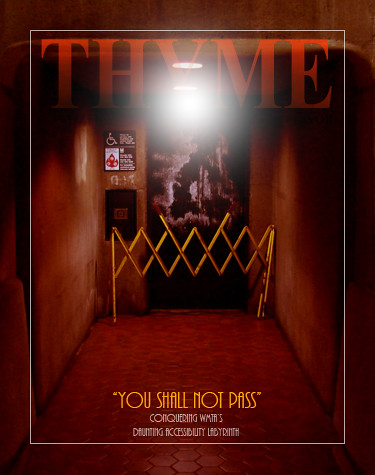
Elevator to Surface, Smithsonian Station in the Washington Metro.

Take Metro In a Wheelchair, Just Once
[click to read]

Do Metro executives know what the Metro is like for a person who uses a wheelchair? (read more)

A New Proposal for 'Elysian Lilies'
By Bob Kirchman

metro_web
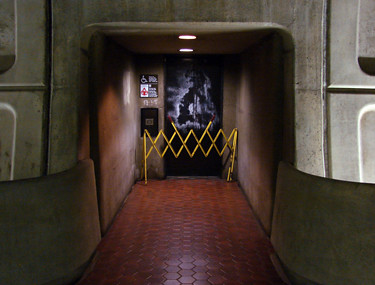
In Metro's Smithsonian Station, the Elevator is tucked into a dark alcove that is poorly marked. If you forget to check the status updates for elevators, you might encounter this scene... the elevator is out of service.

In the older Metro Stations in Washington D. C., the elevators might seem like an afterthought. In Smithsonian Station, the elevator sits in a dark alcove and is easily missed. Harry Weese designed the stations as a crypt, of sorts, to the Federal City. He wanted you to know you were underground.

Newer Metro stations have two elevators side by side and they are large enough for two people in wheelchairs to ride together. Smithsonian Station's elevator is relatively small. Adding to the claustrophobia is the dark alcove. While the vaulted stations and open escalators are elegant in their muted illumination, a case might be made for the elevator alcove needing to visually signal connection to the world above.

To that end, a variation of the 'Elysian Lilies' mural is designed below, along with a brighter ceiling light and a brighter elevator door.

ElysianLily2_web
'Elysian Lilies' Mural Design for a Lift Alcove. Bob Kirchman

Panda Popularity Personified
Kids and Pandas are Inseparable at DC Zoo

Panda at the Subway Entrance
A panda sculpture at the National Zoo Metro station attracts attention. Photo by Bob Kirchman 

The Challenge of Leadership

theprayer
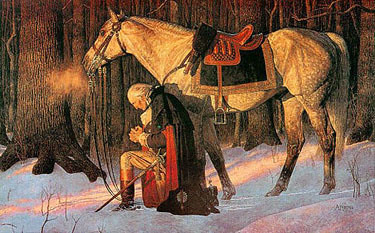
"The Prayer at Valley Forge" by Arnold Friberg is one of the best known paintings of the American Revolution. It depicts George Washington at Valley Forge.

No doubt, George Washington knew the challenge of leadership well. He began his career without a full college degree, but at the age of sixteen he obtained his surveyer's certificate from The College of William and Mary. At an age when most modern young men are playing video games, he was out discovering and marking an actual country! He did do something akin to the actions of modern young men when he discreetly carved his initials into Rock Bridge County's natural wonder, Natural Bridge!

Washington is noted for his military career, but historian James Hodges, Ph.D.gives us some unique insight into the man's character:

At the Battle of Brandywine in September 1777, a particularly brutal battle with much carnage on both sides, a fox terrier got lost between the lines. The little dog was captured by the Americans, who saw inscribed in his collar: “Property of General Howe.” Washington made sure the little dog was fed, cleaned and treated well. Under a flag of truce, Alexander Hamilton delivered the dog to General Howe, who had suffered great mental anguish thinking his little terrier had been lost to him forever.

Washington had been passionately fond of horses from early boyhood, and owned his first horse at 17. His mother, Mary Ball Washington, was a skilled horsewoman who taught young George how to train horses using only the gentlest of methods, and to never resort to any cruelty. Washington learned that harsh training methods were counter-productive, because horses treated with respect are eager to please their riders." [1.]

At the second battle of Trenton, on January 2, 1777, it was clearly evident that Washington's great charger Nelson returned the affection of his rider. Though cannon shells were bursting around them, man and horse stood firm. To those men Washington led into battle, they stood together as a symbol of strength. A soldier writes: “As I crossed the bridge crowded with fellow soldiers, I brushed up against the boot of the man and flank of the horse. Both seemed to exude courage.”

After the great war was over, Washington indeed became President of the nation he had helped to create. His leadership skills would be tested in the days of the Newburgh Conspiracy, where he would avert a military coup. The young nation's coffers were empty. The Continental Army had not been fully paid, and an uprising was brewing. There was talk of taking up arms against the Congress. Washington went to his officers and appealed to them in an emotional address on March 15, 1783.

Cool heads prevailed and Congress voted on a plan to pay the men. Interestingly, Washington distrusted the notion of political parties. He never aligned with one himself, though those around him were crafting the foundation for the two party system we have today. Perhaps the man's own sayings tell us volumes about his life and its motivations: [2.]

It is impossible to rightly govern the world without G-d and Bible."

The propitious smiles of Heaven can never be expected on a nation that disregards the eternal rules of order and right which Heaven itself has ordained”

Make sure you are doing what G-d wants you to do---then do it with all your strength."

What students would learn in American schools above all is the religion of Jesus Christ.” "It is the duty of all Nations to acknowledge the providence of Almighty G-d, to obey his will, to be grateful for his benefits, and humbly to implore his protection and favors."

My mother was the most beautiful woman I ever saw. All I am I owe to my mother. I attribute my success in life to the moral, intellectual and physical education I received from her."

The General hopes and trusts that every officer and man will endeavor to live and act as becomes a Christian soldier defending the dearest rights and liberties of his country."

If to please the people, we offer what we ourselves disapprove, how can we afterwards defend our work? Let us raise a standard to which the wise and honest can repair. The rest is in the hands of G-d."

No people can be bound to acknowledge the Invisible Hand which conducts the affairs of men more than the people of the United States. Every step by which they have advanced to the character of an independent nation seems to have been distinguished by some token of providential agency"

I am sure that never was a people, who had more reason to acknowledge a Divine interposition in their affairs, than those of the United States; and I should be pained to believe that they have forgotten that agency, which was so often manifested during our Revolution, or that they failed to consider the omnipotence of that G-d who is alone able to protect them.”

Happiness and moral duty are inseparably connected.”

I earnestly pray that the Omnipotent Being who has not deserted the cause of America in the hour of its extremist hazard, will never yield so fair a heritage of freedom a prey to "Anarchy" or "Despotism"."

Blossoms
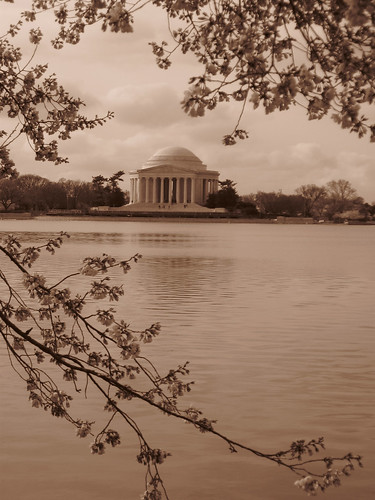
Cherry Blossoms frame the Jefferson Memorial on the Washington, D. C. Tidal Basin. Photo by Bob Kirchman

Caesar Rodney's Midnight Ride

Now one was neither Tory nor Whig; it was either dependence or independence.” Caesar Rodney, after Lexington and Concord.

We all know the famous story of Paul Revere's midnight ride. Virginians celebrate the memory of Jack Jouett, who rode to Monticello to warn Thomas Jefferson of approaching British troops.Jefferson and the Virginia Legislature were able to escape across the Blue Ridge Mountains to Staunton. Still, the most memorable midnight ride that saved the young republic has to be that of Caesar Rodney. Without Rodney's ride, there would not have been a republic at all.

Caesar Rodney was born in 1728 on his family's 800 acre farm, Byfield, on St. Jones Neck in East Dover Hundred, Kent County, Delaware. The family could trace its ancestry to the Adelmare family of Treviso, Italy. Caesar Rodney's farm was a large one, worked by slaves, and it provided wheat and barley to markets in Philadelphia. His brother Thomas described him as possessing a: "great fund of wit and humor of the pleasing kind, so that his conversation was always bright and strong and conducted by wisdom... He always lived a bachelor, was generally esteemed, and indeed very popular." Indeed, his talents found him taking his place in public service. He served as sheriff and in a number of other positions. He joined Thomas McKean as a delegate to the Stamp Act Congress in 1765 and was the Brigadier General of the Delaware Militia. He went on to serve in the Continental Congress.

Here is where he made his most courageous contribution to the cause of American independence. In 1776 the vote to adopt the Declaration saw the Delaware delegation deadlocked. This was a problem as the delegates to the convention had decided that an all or nothing approach was essential. Of Delaware's two present delegates Mckean favored independence. The other delegate, George Read, did not. Rodney, who was also qualified to vote, was at home performing his duties as General of the militia when the initial voting took place. Mckean had sent word to Rodney that his vote would be needed in Philadelphia... but the message never got to him. Rodney was a bachelor and his love interest at the time was being used by the Tories to divert his participation! She was intercepting the messages! By the time McKean's message finally got to Rodney, the first deadlocked vote had already taken place and it was well into the evening. Rodney mounted his horse and rode through a great thunderstorm along the muddy road to Philadelphia. Lightning illuminated the wet road as he sloshed along as rapidly as conditions would allow. For seventy miles he rode.

Rodney was not a well man. He suffered from a rare form of cancer that disfigured his face and sapped his strength. No doubt he knew the ride could kill him, but he pressed on. He was committed to an act of treason that might lead to his death if he did survive. But he pressed on through the darkness. He reached Philadelphia by mid-morning. Spattered with mud, he stepped into the chamber just in time to cast his historic vote. Now the votes by all colonies who actually voted was unanimous! The framers rightly considered this essential to the success of the Declaration. Without Caesar Rodney's heroic ride, there would have not been a July 4th for us to celebrate! Rodney served in the war effort, even fighting alongside George Washington, who said of him: “The readiness with which you took to the field at the period most critical to our affairs, the industry you used in bringing out the militia of the Delaware State and the alertness observed by you in forwarding on the troops from Trenton, reflect the highest honor on your character and place your attachment to the cause in a most distinguished point of view.” As a young republic took its place in the world, Rodney continued to serve but his health was now rapidly declining. He died in 1784. [2.]

His legacy lives on today though. My friend Brandy Leigh Messick and her four sons are proud descendents of this great patriot and continue his mission to promote the values of this great nation to this day! Special thanks to her for providing additional background for this article.

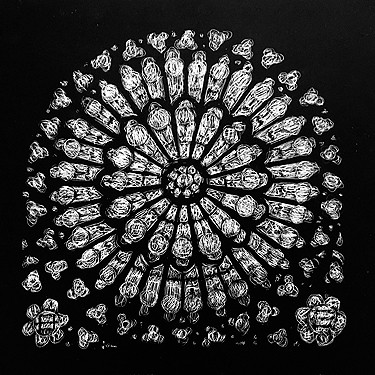
North Rose Window, Notre Dame de Paris
PSALM 48, Bringing the Beauty of Zion
to the World

NortRose
North Rose Window, Notre Dame de Paris. 
— Scratchboard, 12" x 12" by Bob Kirchman

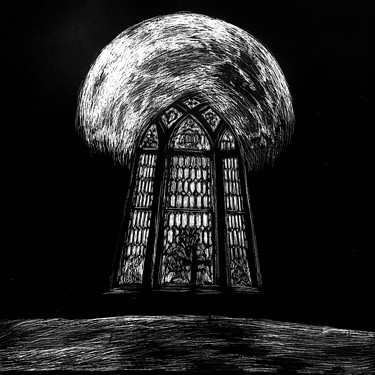
ZION
“Bringing the Beauty of Zion to the World”
— Scratchboard 12” x 12” by Bob Kirchman. A gift to Kristina and Jonathan Greer.

Walk about Zion, and go around her: tell the towers thereof. Mark ye well her bulwarks, consider her palaces; that ye May tell it to the generation following” — PSALM 48:12,13

THYMEResurrectionIII
Volume XVI, Issue XVb

The Meaning of the Miraculous

For many Centuries man has acknowledged  the miraculous. In the weeks to come the Jewish community celebrates their deliverance from Egypt and the beginning of their journey to the Promised Land. [1.] A dialogue set in a meals has all generations together consider the preservation of their people that could only be seen as a work of G-d. Previous generations always saw G-d, or some miraculous force as Creator. The Patriarchs saw Him as Provider and Deliverer! The relatively recent concept of Evolution (Charles Darwin in the Nineteenth Century) has created a philosophy of Naturalism that either outright rejects or quietly diminishes the Theistic explanation.

I once attended an Easter service at a large church in Richmond. The minister asserted that the Resurrection was not important! I don't remember anything else he said. I was astonished because Christ's Resurrection would seem to be a cornerstone of Christianity. Many voices today denounce Faith. They may not directly denounce it, but in the academy it is the subject of "open discourse" such as that experienced by Ryan Rotella at FAU [click to read]. Rotella was asked to leave a class. His "offense" was refusing to participate in an excercise where students were required to "stamp on Jesus." Dennis Prager [click to read] has more details. Though the school ultimately apologized to Rotella, it justified its so-called "open discourse" in doing so.

Running from the Resurrection

In fact, among many in academia today you are likely to hear some variation of the following: "There are other reasons why I consider Christianity to be an ill-chosen creed, such as the morals actually taught in the Bible, many of which are abhorrent to a compassionate and just man, or other details of its theology which run counter to observable facts." writes atheist Richard Carrier in introduction to his argument against Jesus' resurrection from the dead.

Here in his introduction, Carrier gives what I believe is his real reason for being uncomfortable with a physical resurrection. A G-d who can so control the laws of nature can ask 'unreasonable' things of us as well. A 'Compassionate and Just Man,' in Carrier's world can support abortion on demand because it is not 'abhorrent' to his viewpoint that abortion is a kind response to the needs of women with unplanned pregnancies. The beating heart of the unborn child need not be seen here as an 'observable fact.' Likewise, the 'restrictive' definition of marriage as a relationship defined by Scripture in specific terms may be viewed as archaic and discriminatory.If G-d didn't design it, He cannot write the specifications.

The elimination of Christianity as an authoritative source allows us to personalize moral decisions. In a culture that elevates self-actualization, this is virtue. It spares us the heavy lifting required to weigh moral absolutes with human frailty.

Jesus, meeting a Samaritan woman at a well, is a prime example of what I mean by this heavy lifting. Balancing compassion for the woman with his observation that she has not been a faithful wife, Jesus creates a constructive dialogue. He does not condemn her, nor does He overlook the complexity she has created in her relationships. He speaks truth and ultimately the dialogue that results sets her free. Here Absolute Love and Absolute Truth are in no way mutually exclusive. In the end her search for 'Living Water' trumps her desire to live as she pleases. [2.]

A G-d who can part the Red Sea, Create worlds and has power over death is pretty much to be respected. A G-d who changes human lives in intimate communion with his Creation is amazing.

Before Jesus appeared, the concept of Resurrection is found in Scripture. Sometimes it is very clear and other times it is a logical assumption consistent with the text.

Resurrection Foretold

And he made his grave with the wicked, and with the rich in his death; because he had done no violence, neither was any deceit in his mouth. Yet it pleased the Lord to bruise him; he hath put him to grief: when thou shalt make his soul an offering for sin, he shall see his seed, he shall prolong his days, and the pleasure of the Lord shall prosper in his hand. He shall see of the travail of his soul, and shall be satisfied: by his knowledge shall my righteous servant justify many; for he shall bear their iniquities. Therefore will I divide him a portion with the great, and he shall divide the spoil with the strong; because he hath poured out his soul unto death: and he was numbered with the transgressors; and he bare the sin of many, and made intercession for the transgressors." -- Isaiah 53:9-12

The famous Messianic text above talks of triumph after death. Other texts that may be seen as prophetic of Resurrection are: Genesis 3:15, Psalm 2:7, Psalm 16:9-11, Psalm 22:14-25, Psalm 30:29, Psalm 40:13, Psalm 110:1, Psalm 118:21-24, Hosea 5:15-6:3, Zechariah 12:10.

Resurrection Documented and Verified

I know of no one fact in the history of mankind which is proved by better, fuller evidence of every sort, to the understanding of a fair inquirer, than the great sign which God hath given us that Christ died, and rose again from the dead." says Dr. Thomas Arnold, formerly Professor of History at Rugby and Oxford Universities. Simon Greenleaf, one of the most skilled legal minds ever produced in this nation, top authority on the question of what constitutes sound evidence, developer of the Harvard Law School, after a thorough evaluation of the four Gospel accounts from the point of view of their validity as objective testimonial evidence, concluded:

It was therefore impossible that they could have persisted in affirming the truths they had narrated, had not Jesus actually risen from the dead, and had they not known this fact as certainly as they knew any other fact." [3.] Dr. Henry M. Morris PhD writes more on The Importance of the Resurrection [click to read]. His point is that the foundational truth of the Christian faith has plenty of evidence to support it.

A G-d who can part the Red Sea, Create worlds and has power over death is pretty much to be respected. A G-d who changes human lives in intimate communion with his Creation is amazing.

Butterfly_icon
A Caterpillar becomes a butterfly. Nature itself suggests the possibility of miraculous transformation and new life! Rice Paper Butterfly, or Paper Kite Butterfly, Idea leuconoe.
Illustration © 2016, by Kristina Elaine Greer for HOPE Publications, Pvt. ltd.

PontifusBANNER