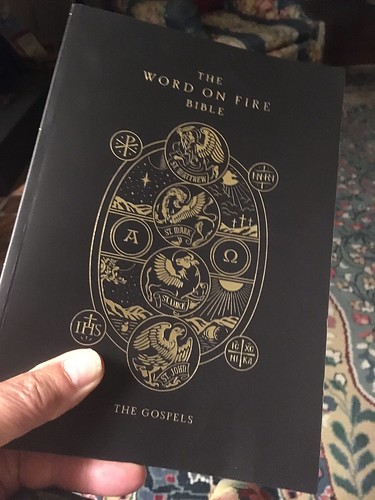
Bishop Robert Barron's Word on Fire Bible offers a beautiful presentation of the Gospels. It is written primarily for the seeker.
Bishop Robert Barronoffers a new printing of the Gospels.
Bishop Robert Barron talks about his introduction to baseball as a young boy. His father took him to a Detroit Tigers game – a night game! Coming out of the tunnel into the stands, he was struck by the beauty of the freshly mowed and limed field, the crisp white home uniforms, the confident throw of the fielders – the BEAUTY of the game! That is what lead him to want to play. He signed up for T-Ball and played through high school. The Greeks knew all about the beauty of athletics. There is a certain wonder that draws a young heart to want to play.
Likewise, the Christian Faith is a Beautiful Thing! The God who redeems us has invaded our sordid history with a work of BEAUTY! Our Redemption! Bishop Barron is moved by the sublime. He also laments our tendency to try to get young people to grasp the TRUTH of our Faith when they are resistant to absolutes in general. It might be best first to show them the great beauty of Faith and Redemption. Then it is easier to grasp the workings of it. Barron uses a great example, the “Infield Fly Rule” to illustrate how we might be too concerned to teach rules before building the beautiful relationship.
Indeed, Robert’s coach got the players to get down on the grass, smell the earth and take in the feel of the turf. They couldn’t be afraid to dive into it later after a difficult catch! And so Bishop Barron states, in the simplest of terms, the reason he compiled the ‘Word on Fire Bible.’ Beginning with the four Gospels, Bishop Barron presents the Gospel in a contextual setting – great commentary – great art – that support the mission of allowing a seeker to experience the BEAUTY of the Gospel.
Too often today art does not seek to elevate our experience. Roger Scruton saw much of the Twentieth Century’s art seeking more to disturb. He used the example of ‘art’pieces that were really more of a protest of Tony Blair’s policies than an attempt to draw the viewer higher. They could have just as easily been the current yellow block letters on the black street – more the work of the poster club than true transcendent art. Fortunately Scruton and Barron see the ability of art to be truly transformative. In Robert Barron’s ‘Word on Fire Bible,’ art leads us to appreciate the Divine.
Barron asserts that there is a true Objective Beauty and that it indeed opens the door for us to experience Objective Truth. This standard of the objective is necessary if we are going to choose wisely between Heaven and Hell. A worldview that relegates all to the realm of the subjective is ill equipped to lead us.
The Story
God's Great Love Affair with Humanity
God goes to great lengths to rescue lost and hurting people. That is what The Story is all about: the story of the Bible, God's great love affair with humanity. Condensed into 31 accessible chapters, The Story sweeps you into the unfolding progression of Bible characters and events from Genesis to Revelation. Using the clear, accessible text of the NIV Bible, it allows the stories, poems, and teachings of the Bible to read like a novel. And like any good story, The Story is filled with intrigue, drama, conflict, romance, and redemption; and this story's true From the foreword by Max Lucado and Randy Frazee: "This book tells the grandest, most compelling story of all time: the story of a true God who loves his children, who established for them a way of salvation and provided a route to eternity. Each story in these 31 chapters reveals the God of grace---the God who speaks; the God who acts; the God who listens; the God whose love for his people culminated in his sacrifice of Jesus, his only Son, to atone for the sins of humanity." Learn more about this whole-church experience at TheStory.com.
Catholicism and Beauty ByBishop Robert Barron
A refreshing perspective on the place of the beautiful in leading to Faith.
Why Beauty Matters
Roger Scruton
A woman smears black paint over the block letters painted on Fifth Avenue chanting “RE-Fund the police.”
In our town there is a frame on the side of a building, framing nothing but a brick wall. Someone wrote “What is Art?” in chalk, inside the frame. It is a great conversation piece. As historical works in sculpture have been vandalized and toppled, the same people who have tried to strip the public square of public art have created what they call their own ‘art.’ Painting large yellow letters on the public street, they proclaim the painting of murals. These are NOT murals, they are signs. They proclaim a message, true, but then so do advertisements. Ironically, not everyone these anarchists purport to represent agrees with their ‘Defund the Police’ message. A woman (above) clearly in disagreement with this sentiment smeared black paint on the… ‘Lettering.’ The news reports that the ‘mural’ is ‘vandalized,’ but who are the vandals really? Haven't we already seen the work of vandals as our city centers have been wrecked and monuments indiscriminately toppled?
Indeed, art may be employed in the making of a statement. Some advertising illustration may indeed be considered art, but when the art in question is simply a neat tagging of the street instead of bubble letters, we need to ask the question “What is Art?” If the Iconoclasts, after trashing the public square, now see THEIR work defaced, there is room for discussion.
Next week THYME will present more discussion on the question “What is Art?” and present our own mural concept. Michelangelo Buonarroti was a painter, sculptor, architect and poet widely considered one of the most brilliant artists of the Italian Renaissance. At 25 he carved the magnificent Pieta as a commission for Cardinal Jean Bilhères de Lagraulas, completing the work in less than a year! This treasure of the Vatican was exhibited at the New York World’s Fair in 1964 at the Vatican Pavilion. Between 1501 and 1504, Michelangelo took over a commission for a statue of David, which two other sculptors had abandoned. We will consider his work as we ponder further the qualities of great art.
What is Art?
Roger Scruton points out that art has in the Modern era largely given up its mission of creating beauty and has become more focused on shock and delivery of a message, much like an advertisement. As historical and representational art have fallen from favor, a more 'in your face' presentation seeks to replace the old forms. When it becomes vandalized, there is a certain irony because such works themselves appear as vandalism...
...compared to Renaissance Masterworks such asSandro Boticelli's Birth of Venus...
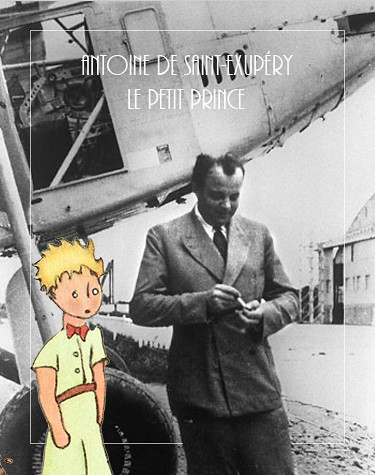
Volume XVIII, Issue XXIV: “L’essentiel est invisible pour les yeux.”
I realize this is a piece I just published, but I am purposefully putting it out here again as it seems very appropriate for the times we are going through. Ugliness rules, Rudeness masquerades as Righteousness, Vileness masquerades as Virtue. How did we get here? More importantly, how do we find the way out. Here are some great thinkers who have great insight. I need to be a part of the movement that builds, not destroys, that learns from history, not just erases it. I need to be part of the movement that sees us as One Race, beautiful in its true variety – that the peoples of the earth are all made in the Image of God – in all the beautiful tones of fine earth! IMAGO DEI! I need to be part of Rebuilding, Worshiping, Finding and Sharing Objective Beauty and Objective Truth. To that end, Let the Journey Begin!
In the Spring of my sophomore year at the University of Pittsburgh, I went to a Presbyterian church for a Good Friday prayer service. All of a sudden, walking straight at me was Fred Rogers—that is, Mister Rogers—who sat down next to me, introduced himself, and asked me what I was studying. I told him I was a French major, and he took out his bulletin and wrote, “L’essentiel est invisible pour les yeux.” It is perhaps the most famous line in Antoine de Saint-Exupéry’s 1943 classic, The Little Prince. It translates, “Anything essential is invisible to the eyes.” I needed that wisdom then, and I need it now. (read more)
Faith and Beauty
Images that Lead to Worship and Relationship with God
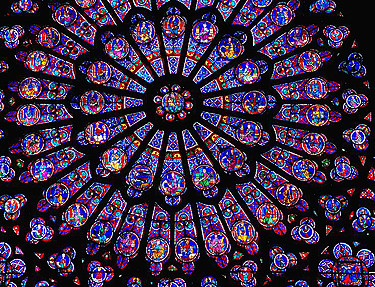
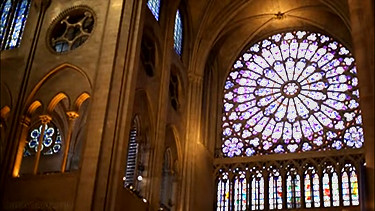
North Rose Window, Notre Dame de Paris.
North Rose Window, Notre Dame de Paris.
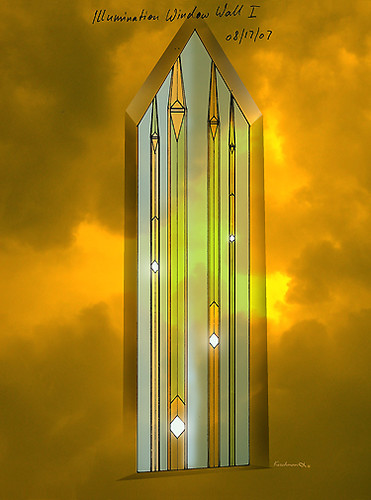
Sound Sculpture, Xaver Wilhelmy's design for functional glass organ pipes in a window combines beautiful visual imagery with beautiful music. Rendering by Bob Kirchman.
Catholicism and Beauty ByBishop Robert Barron
A refreshing perspective on the place of the beautiful in leading to Faith.
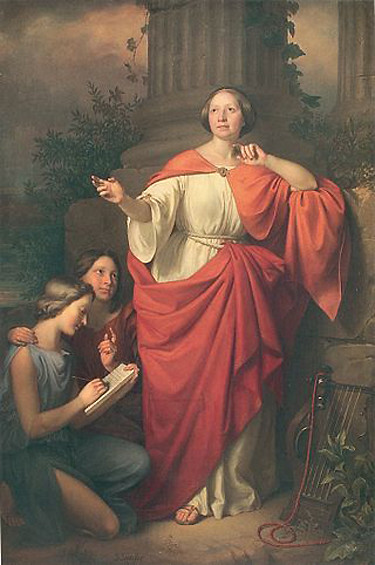
Diotima, painting by Józef Simmler, 1855. In Plato's Symposium the members of a party discuss the meaning of love. Socrates says that in his youth he was taught "the philosophy of love" by Diotima, who was a seer or priestess. Socrates also claims that Diotima successfully postponed the Plague of Athens. In a dialogue that Socrates recounts at the symposium, Diotima gives Socrates a genealogy of Love (Eros), stating that he is the son of "resource and poverty". In her view, love is a means of ascent to contemplation of the Divine. For Diotima, the most correct use of love of other human beings is to direct one's mind to love of Divinity. The beautiful beloved inspires the mind and the soul and directs one's attention to spiritual things. One proceeds from recognition of another's beauty, to appreciation of Beauty as it exists apart from any individual, to consideration of Divinity, the source of Beauty, to love of Divinity.
Concerning the things about which you ask to be informed I believe that I am not ill-prepared with an answer. For the day before yesterday I was coming from my own home at Phalerum to the city, and one of my acquaintance, who had caught a sight of me from behind, hind, out playfully in the distance, said: Apollodorus, O thou Phalerian man, halt! So I did as I was bid; and then he said, I was looking for you, Apollodorus, only just now, that I might ask you about the speeches in praise of love, which were delivered by Socrates, Alcibiades, and others, at Agathon's supper. Phoenix, the son of Philip, told another person who told me of them; his narrative was very indistinct, but he said that you knew, and I wish that you would give me an account of them. Who, if not you, should be the reporter of the words of your friend? And first tell me, he said, were you present at this meeting? (read more)
Love is...
The Ultimate Definition
Love never gives up. Love cares more for others than for self. Love doesn’t want what it doesn’t have. Love doesn’t strut, Doesn’t have a swelled head, Doesn’t force itself on others, Isn’t always “me first,” Doesn’t fly off the handle, Doesn’t keep score of the sins of others, Doesn’t revel when others grovel, Takes pleasure in the flowering of truth, Puts up with anything, Trusts God always, Always looks for the best,
Never looks back, But keeps going to the end.
— 1 Corinthians 13:4-7 (MSG)
In the Spring of my sophomore year at the University of Pittsburgh, I went to a Presbyterian church for a Good Friday prayer service. All of a sudden, walking straight at me was Fred Rogers—that is, Mister Rogers—who sat down next to me, introduced himself, and asked me what I was studying. I told him I was a French major, and he took out his bulletin and wrote, “L’essentiel est invisible pour les yeux.” It is perhaps the most famous line in Antoine de Saint-Exupéry’s 1943 classic, The Little Prince. It translates, “Anything essential is invisible to the eyes.” I needed that wisdom then, and I need it now. (read more)
Faith and Beauty
Images that Lead to Worship and Relationship with God
North Rose Window, Notre Dame de Paris.
North Rose Window, Notre Dame de Paris.
Sound Sculpture, Xaver Wilhelmy's design for functional glass organ pipes in a window combines beautiful visual imagery with beautiful music. Rendering by Bob Kirchman.
Catholicism and Beauty ByBishop Robert Barron
A refreshing perspective on the place of the beautiful in leading to Faith.
Diotima, painting by Józef Simmler, 1855. In Plato's Symposium the members of a party discuss the meaning of love. Socrates says that in his youth he was taught "the philosophy of love" by Diotima, who was a seer or priestess. Socrates also claims that Diotima successfully postponed the Plague of Athens. In a dialogue that Socrates recounts at the symposium, Diotima gives Socrates a genealogy of Love (Eros), stating that he is the son of "resource and poverty". In her view, love is a means of ascent to contemplation of the Divine. For Diotima, the most correct use of love of other human beings is to direct one's mind to love of Divinity. The beautiful beloved inspires the mind and the soul and directs one's attention to spiritual things. One proceeds from recognition of another's beauty, to appreciation of Beauty as it exists apart from any individual, to consideration of Divinity, the source of Beauty, to love of Divinity.
Concerning the things about which you ask to be informed I believe that I am not ill-prepared with an answer. For the day before yesterday I was coming from my own home at Phalerum to the city, and one of my acquaintance, who had caught a sight of me from behind, hind, out playfully in the distance, said: Apollodorus, O thou Phalerian man, halt! So I did as I was bid; and then he said, I was looking for you, Apollodorus, only just now, that I might ask you about the speeches in praise of love, which were delivered by Socrates, Alcibiades, and others, at Agathon's supper. Phoenix, the son of Philip, told another person who told me of them; his narrative was very indistinct, but he said that you knew, and I wish that you would give me an account of them. Who, if not you, should be the reporter of the words of your friend? And first tell me, he said, were you present at this meeting? (read more)
Love is...
The Ultimate Definition
Love never gives up. Love cares more for others than for self. Love doesn’t want what it doesn’t have. Love doesn’t strut, Doesn’t have a swelled head, Doesn’t force itself on others, Isn’t always “me first,” Doesn’t fly off the handle, Doesn’t keep score of the sins of others, Doesn’t revel when others grovel, Takes pleasure in the flowering of truth, Puts up with anything, Trusts God always, Always looks for the best,
Never looks back, But keeps going to the end.
— 1 Corinthians 13:4-7 (MSG)
Lessons from the “World of Already”
ByBob Kirchman
The “World of Already.”
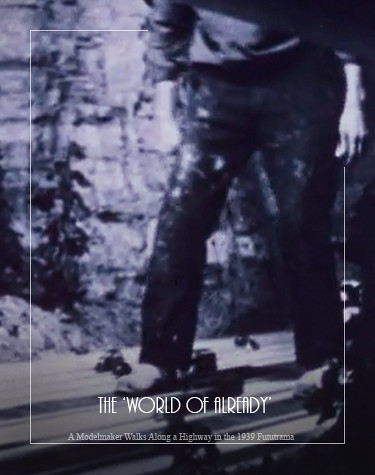
I was thirteen years old when the great New York World’s Fair took place. It was an event I looked forward to – the unveiling of new wonders of innovation and science, the amazing ‘Google’ architecture (the term having nothing to do with the search engine, but rather a ‘space aged’ futuristic style), and the wonderful sensory overload of a world on display! In my excitement I somehow missed the derisory piece TIME Magazine wrote, calling the fair “The World of Already.” TIME’s beef with the fair was that it was a hodgepodge of not so original things we could see springing up along the highway almost anywhere. In their intellectual disdain for public displays of this type, the writers of TIME missed something important. The ‘Future’ is a work in progress. The past and present have a lot to speak into it. Even if it is largely the present restyled, fairs have a lot to teach us.
The argument that the world of the future presented by the fair is straight out of the 1950s cannot be denied, but human history is allowed to spill across decades. A lot of the world our parents built in the 1960s was indeed first sketched out in the preceding decade. Washington DC’s Dulles Airport designed by Eero Saarinen first appears as a “proposed Chantilly Airport” on a 1950s planning document along with alignments for outer belt highways that will eventually be the Fairfax County Parkway. In Queens, Robert Moses pushed the future along by building the Van Wyk Expressway as part of the fair project. Such infrastructure is first presented in the 1939 World’s Fair Futurama which predicts a superhighway system in 1960.
The 1964/65 World’s Fair had a Futurama too. It expanded on the first one and had underwater hotels and colonies on the moon. We’re still waiting for the colony on the moon. But here it must be said that the seeds of vision are often planted in the Crystal Palaces of these great international expositions. I came home from the fair and drew fantastic things of my own in the pile that I hid beneath my bed. The future was inspiring, even if it was mainly redressing things we already knew.
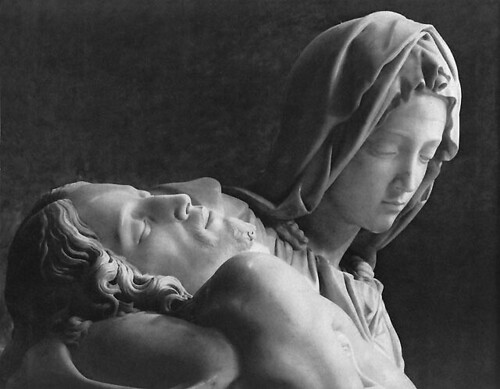
The great ‘White City’ of Chicago had inspired the creation of so many fine classical buildings in America’s growing towns and cities. It clearly looked to the past for inspiration. Isambard Kingdom Brunel borrowed heavily from Egyptian influences as he built bridges and tunnels for Britain’s modern infrastructure. The 1964/65 fair might at first seem to be lacking in lessons from the past, but the Vatican brought Michelangelo’s Pieta to the fair, placing it in futuristic pavilion that remotely evoked Bernini’s great colonnade. Here was marble come to life! Here was timeless beauty. It must be said that the Pieta brought the mystery and wonder of the Renaissance to Flushing Meadow Park. You viewed the sculpture on a series of moving sidewalks which created a sort of solemn procession. The background was blue, with a halo of stars suspended above. Here was a timeless thing that was objectively beautiful, positioned to inform humankind even as they set sail to explore the vastness of space. It was amazing!
Michelangelo's Pieta, a lasting impression.
How the Waynesboro World’s Fair Became Truly International
TonyandBeth Weeder.
It is probably one of my favorite project based activities, combining drawing and actual construction of three dimensional models, the ‘World’s Fair’ project. Here students study some architectural design and drawing and go on to create imaginative pavilions for an imaginary world’s fair. FunDoodle Art Camp created the 2019 Waynesboro World’s Fair and little did I know this would prove in some ways to be a truly international experience. Joining us for the camp was Ines Saiz Serna, visiting from Spain. She skillfully helped students assemble tetrahedrons and proved to be quite talented in a number of areas. The camp’s signature ‘Doodle’ sessions would prove inspirational as well. Hold this thought: I had remarked to myself that some of our doodle designs were quite like the design motifs found in African textiles and decorative arts.
I had been given the task of creating a concept for a girls’ school in Monrovia, Liberia by Tony Weeder and his wife Beth. Education of girls is an important ministry as it gives them a safe and healthy path to a better future. Without education, their future can be pretty bleak. We created a school building and a chapel and I prepared some initial renderings. In a country with high unemployment, security bars are necessary on buildings such as our school and chapel, but they make it look like we’re in a prison too. Then it came together. Ines’s ‘doodles’ could provide a dignified alternative to the ugly bars. We could fabricate some of the lyrical doodles out of bar stock and do the same job in a way that gave dignity to the young women in our school. I hastily threw together the design and it was presented to the group building the project and was well received.
Such is the reason for ‘world’s fairs,’ real or imagined. They are a place where wonder and inspiration may happen. They inspire young people. They bring fresh ideas in a way that people can reach out and touch them. They add dimension and dialogue to the things we think we experience looking at our phones. They make a time of creative imagining fun! Looking forward, a young girl may look out of her school window one day, through Ms. Serna’s lyrical grille and envision a brighter future. Her education will provide an alternative to the bleak realities so many of her sisters face today. She’ll help remake her country and pass the baton of vision to her children! She’ll do so because of people of Faith like Tony and Beth Weeder, who see this outreach as an extension of the Love of Christ!
Design for a Chapel Building.
Many daughters have done virtuously, but thou excellest them all.” – Proverbs 31:29
A Capital Vision
Harry Weese's Metro Design
Harry Weese
Harry Weese
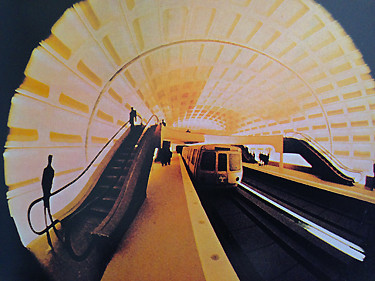
Harry Weese’s original design for Washington’s Metro system did indeed create a ‘crypt’ for the Federal City. It was meant to be somewhat devoid of ornamentation, depending on allusion to Classical vaults to tie it to the design of the city above. But there has always been some argument about the other spaces – the above-ground portions, for example. Did Weese intend them to be some stark brutalist viaduct? I found the above rendering by Weese’s office that shows a raised portion of the Metro at Reagan International Airport.
The Trains float on raised tracks supported by the ubiquitous round columns, but note that in the rendering the columns are integrated with the vegetation of the site – in this case the artist has placed them among the hydrangeas (going by scale and color), admitting that natural colors and forms of landscaping were to have softened the brutalism – especially in the vicinity of the airport and Arlington’s Cemetery.
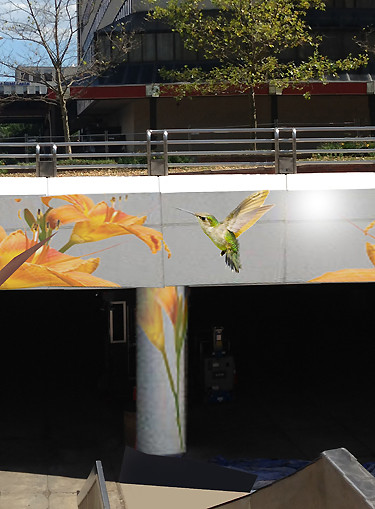
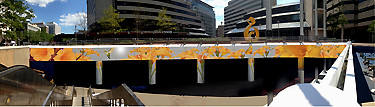
Below are my concepts for a mural that would have been painted in the bus bay of the Bethesda Metro Station. I like to think that Weese himself would be OK with the design.
Concept by Bob Kirchman.
Elysian Lilies, it is a variation on the theme of Heaven’s Hollyhocks seen in last week’s issue. Passing through the asphalt and concrete bus bay descending to the Metro, the large lilies would have perhaps added a ‘touch of Heaven’ to Bethesda’s workaday world.
“Red Line” Bench Mural
The scope of work for the Bethesda Metro Station also included a bench in front of a fountain. My idea was a procession of red ants as this is a Red Line station.
"Religion and the Opening Up of the Mind"
ByBishop Robert Barron
Bishop Robert Barron speaks at Google Headquarters about religion and the opening up of the mind. Bishop Barron is the founder of Word on Fire Catholic Ministries and Auxiliary Bishop of the Archdiocese of Los Angeles. Bishop Barron is a #1 Amazon bestselling author and has published numerous books, essays, and articles on theology and the spiritual life, in addition to his regular YouTube videos (@wordonfirevideo).
Bishop Barron discusses how our minds restlessly seek, and how religion, at its best, never shuts down the mind, but opens it up. He explores the nature of "beatitudo", following the philosophy of Thomas Aquinas to conclude that wealth, power, pleasure, and honor will never satisfy, but only God can satisfy the infinite desires of our hearts.
Jesus said, "whatever you do for the least of these, you do for Me." On this special edition, Dr. Tim Clinton sits down with Secretary of Housing and Urban Development, Dr. Ben Carson. They highlight HUD's many accomplishments, while Secretary Carson shares how churches are sacrificially serving and providing for their communities.(read more)
On this broadcast, you will hear Dr. Ben Carson's speech from the 2019 Western Conservative Summit. He addresses his obligations as Secretary of Housing and Urban Development, and the optimism surrounding America's economy. Dr. Carson also explains the importance of a home as not only a physical structure, but an emotional and spiritual refuge for families. (read more)
The new left urbanists’ fatal mistake is to view cities as collections of buildings, roads, tunnels and bike lanes. Urbanists can demolish and rebuild physical environments, but they can’t pave over the people. Life in a metropolis is simply too complex, too variable and too ephemeral—it will evade even the most careful planning. Making cities better and more beautiful requires bringing neighbors, developers, employers and governments into the conversation. Thriving cities are built through cooperation, not compulsion.”(read more)
The Bishop's Garden, National Cathedral
Sharing a Magical Place in the Rain
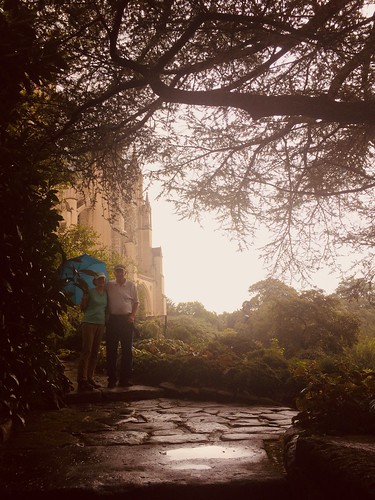
My bride and I share a magical moment in the Bishop's Garden of the National Cathedral in Washington, DC. Photo by S. Kirchman.
Laney’s Palette Art Show
Saturday September 14th, 2019 in Crozet, VA
Works by Kristina Elaine Greer will be on display at the gallery space of Tabor Presbyterian Church, 5804 Tabor Street, Crozet, Virginia 22932. There will be an opening reception on Saturday, September 14th, 2019 from 1:00 to 4:00pm at the church. All are invited. The show will feature Laney’s Acrylic Paintings and Pencil Drawings from 2004 – 2019.
CHAPTER III, EFFECT OF THE PRESIDENT'S COMMUNICATION
It is impossible to describe the effect produced by the last words of the honorable president-- the cries, the shouts, the succession of roars, hurrahs, and all the varied vociferations which the American language is capable of supplying. It was a scene of indescribable confusion and uproar. They shouted, they clapped, they stamped on the floor of the hall. All the weapons in the museum discharged at once could not have more violently set in motion the waves of sound. One need not be surprised at this. There are some cannoneers nearly as noisy as their own guns.
Barbicane remained calm in the midst of this enthusiastic clamor; perhaps he was desirous of addressing a few more words to his colleagues, for by his gestures he demanded silence, and his powerful alarum was worn out by its violent reports. No attention, however, was paid to his request. He was presently torn from his seat and passed from the hands of his faithful colleagues into the arms of a no less excited crowd.
Nothing can astound an American. It has often been asserted that the word "impossible" is not a French one. People have evidently been deceived by the dictionary. In America, all is easy, all is simple; and as for mechanical difficulties, they are overcome before they arise. Between Barbicane's proposition and its realization no true Yankee would have allowed even the semblance of a difficulty to be possible. A thing with them is no sooner said than done.
The triumphal progress of the president continued throughout the evening. It was a regular torchlight procession. Irish, Germans, French, Scotch, all the heterogeneous units which make up the population of Maryland shouted in their respective vernaculars; and the "vivas," "hurrahs," and "bravos" were intermingled in inexpressible enthusiasm.
Just at this crisis, as though she comprehended all this agitation regarding herself, the moon shone forth with serene splendor, eclipsing by her intense illumination all the surrounding lights. The Yankees all turned their gaze toward her resplendent orb, kissed their hands, called her by all kinds of endearing names.
Between eight o'clock and midnight one optician in Jones'-Fall Street made his fortune by the sale of opera-glasses.
Midnight arrived, and the enthusiasm showed no signs of diminution. It spread equally among all classes of citizens-- men of science, shopkeepers, merchants, porters, chair-men, as well as "greenhorns," were stirred in their innermost fibres. A national enterprise was at stake. The whole city, high and low, the quays bordering the Patapsco, the ships lying in the basins, disgorged a crowd drunk with joy, gin, and whisky. Every one chattered, argued, discussed, disputed, applauded, from the gentleman lounging upon the barroom settee with his tumbler of sherry-cobbler before him down to the waterman who got drunk upon his "knock-me-down" in the dingy taverns of Fell Point.
About two A.M., however, the excitement began to subside. President Barbicane reached his house, bruised, crushed, and squeezed almost to a mummy. Hercules could not have resisted a similar outbreak of enthusiasm. The crowd gradually deserted the squares and streets. The four railways from Philadelphia and Washington, Harrisburg and Wheeling, which converge at Baltimore, whirled away the heterogeneous population to the four corners of the United States, and the city subsided into comparative tranquility.
On the following day, thanks to the telegraphic wires, five hundred newspapers and journals, daily, weekly, monthly, or bi-monthly, all took up the question. They examined it under all its different aspects, physical, meteorological, economical, or moral, up to its bearings on politics or civilization. They debated whether the moon was a finished world, or whether it was destined to undergo any further transformation. Did it resemble the earth at the period when the latter was destitute as yet of an atmosphere? What kind of spectacle would its hidden hemisphere present to our terrestrial spheroid? Granting that the question at present was simply that of sending a projectile up to the moon, every one must see that that involved the commencement of a series of experiments. All must hope that some day America would penetrate the deepest secrets of that mysterious orb; and some even seemed to fear lest its conquest should not sensibly derange the equilibrium of Europe.
The project once under discussion, not a single paragraph suggested a doubt of its realization. All the papers, pamphlets, reports-- all the journals published by the scientific, literary, and religious societies enlarged upon its advantages; and the Society of Natural History of Boston, the Society of Science and Art of Albany, the Geographical and Statistical Society of New York, the Philosophical Society of Philadelphia, and the Smithsonian of Washington sent innumerable letters of congratulation to the Gun Club, together with offers of immediate assistance and money.
From that day forward Impey Barbicane became one of the greatest citizens of the United States, a kind of Washington of science. A single trait of feeling, taken from many others, will serve to show the point which this homage of a whole people to a single individual attained.
Some few days after this memorable meeting of the Gun Club, the manager of an English company announced, at the Baltimore theatre, the production of "Much ado about Nothing." But the populace, seeing in that title an allusion damaging to Barbicane's project, broke into the auditorium, smashed the benches, and compelled the unlucky director to alter his playbill. Being a sensible man, he bowed to the public will and replaced the offending comedy by "As you like it"; and for many weeks he realized fabulous profits.
(to be continued)
Faith and Beauty
Images that Lead to Worship and Relationship with God
North Rose Window, Notre Dame de Paris.
North Rose Window, Notre Dame de Paris.
Sound Sculpture, Xaver Wilhelmy's design for functional glass organ pipes in a window combines beautiful visual imagery with beautiful music. Rendering by Bob Kirchman.
Catholicism and Beauty ByBishop Robert Barron
A refreshing perspective on the place of the beautiful in leading to Faith.
Diotima, painting by Józef Simmler, 1855. In Plato's Symposium the members of a party discuss the meaning of love. Socrates says that in his youth he was taught "the philosophy of love" by Diotima, who was a seer or priestess. Socrates also claims that Diotima successfully postponed the Plague of Athens. In a dialogue that Socrates recounts at the symposium, Diotima gives Socrates a genealogy of Love (Eros), stating that he is the son of "resource and poverty". In her view, love is a means of ascent to contemplation of the Divine. For Diotima, the most correct use of love of other human beings is to direct one's mind to love of Divinity. The beautiful beloved inspires the mind and the soul and directs one's attention to spiritual things. One proceeds from recognition of another's beauty, to appreciation of Beauty as it exists apart from any individual, to consideration of Divinity, the source of Beauty, to love of Divinity.
Concerning the things about which you ask to be informed I believe that I am not ill-prepared with an answer. For the day before yesterday I was coming from my own home at Phalerum to the city, and one of my acquaintance, who had caught a sight of me from behind, hind, out playfully in the distance, said: Apollodorus, O thou Phalerian man, halt! So I did as I was bid; and then he said, I was looking for you, Apollodorus, only just now, that I might ask you about the speeches in praise of love, which were delivered by Socrates, Alcibiades, and others, at Agathon's supper. Phoenix, the son of Philip, told another person who told me of them; his narrative was very indistinct, but he said that you knew, and I wish that you would give me an account of them. Who, if not you, should be the reporter of the words of your friend? And first tell me, he said, were you present at this meeting? (read more)
Love is...
The Ultimate Definition
Love never gives up. Love cares more for others than for self. Love doesn’t want what it doesn’t have. Love doesn’t strut, Doesn’t have a swelled head, Doesn’t force itself on others, Isn’t always “me first,” Doesn’t fly off the handle, Doesn’t keep score of the sins of others, Doesn’t revel when others grovel, Takes pleasure in the flowering of truth, Puts up with anything, Trusts God always, Always looks for the best,
Never looks back, But keeps going to the end.
— 1 Corinthians 13:4-7 (MSG)
If you were to ask a random sample of people whether race matters in American society anymore, you would get a variety of answers. Many would say that great strides have been made since the civil rights movement. Looking back at Martin Luther King’s “I Have a Dream Speech,” they would offer that people are now judged by the content of their character rather than the color of their skin. Others would contest that racial identity still strongly influences many aspects of their lives in American society. How do we reconcile such opposing opinions? (read more)
Inventions Ahead of their Time
Innovation is Not Always Immediately Rewarding
It is fair to say that in many cases the principle preceded practicality.
From the Earth to the Moon By Jules Verne
CHAPTER IV, REPLY FROM THE OBSERVATORY OF CAMBRIDGE
Barbicane, however, lost not one moment amid all the enthusiasm of which he had become the object. His first care was to reassemble his colleagues in the board-room of the Gun Club. There, after some discussion, it was agreed to consult the astronomers regarding the astronomical part of the enterprise. Their reply once ascertained, they could then discuss the mechanical means, and nothing should be wanting to ensure the success of this great experiment.
A note couched in precise terms, containing special interrogatories, was then drawn up and addressed to the Observatory of Cambridge in Massachusetts. This city, where the first university of the United States was founded, is justly celebrated for its astronomical staff. There are to be found assembled all the most eminent men of science. Here is to be seen at work that powerful telescope which enabled Bond to resolve the nebula of Andromeda, and Clarke to discover the satellite of Sirius. This celebrated institution fully justified on all points the confidence reposed in it by the Gun Club. So, after two days, the reply so impatiently awaited was placed in the hands of President Barbicane.
It was couched in the following terms:
The Director of the Cambridge Observatory to the President of the Gun Club at Baltimore.
CAMBRIDGE, October 7. On the receipt of your favor of the 6th instant, addressed to the Observatory of Cambridge in the name of the members of the Baltimore Gun Club, our staff was immediately called together, and it was judged expedient to reply as follows: The questions which have been proposed to it are these-- 1. Is it possible to transmit a projectile up to the moon? 2. What is the exact distance which separates the earth from its satellite? 3. What will be the period of transit of the projectile when endowed with sufficient initial velocity? and, consequently, at what moment ought it to be discharged in order that it may touch the moon at a particular point? 4. At what precise moment will the moon present herself in the most favorable position to be reached by the projectile? 5. What point in the heavens ought the cannon to be aimed at which is intended to discharge the projectile? 6. What place will the moon occupy in the heavens at the moment of the projectile's departure?"
Regarding the first question, "Is it possible to transmit a projectile up to the moon?"
Answer.-- Yes; provided it possess an initial velocity of 1,200 yards per second; calculations prove that to be sufficient. In proportion as we recede from the earth the action of gravitation diminishes in the inverse ratio of the square of the distance; that is to say, at three times a given distance the action is nine times less. Consequently, the weight of a shot will decrease, and will become reduced to zero at the instant that the attraction of the moon exactly counterpoises that of the earth; that is to say at 47/52 of its passage. At that instant the projectile will have no weight whatever; and, if it passes that point, it will fall into the moon by the sole effect of the lunar attraction. The theoretical possibility of the experiment is therefore absolutely demonstrated; its success must depend upon the power of the engine employed.
As to the second question,"What is the exact distance which separates the earth from its satellite?"
Answer.-- The moon does not describe a circle round the earth, but rather an ellipse, of which our earth occupies one of the foci; the consequence, therefore, is, that at certain times it approaches nearer to, and at others it recedes farther from, the earth; in astronomical language, it is at one time in apogee, at another in perigee. Now the difference between its greatest and its least distance is too considerable to be left out of consideration. In point of fact, in its apogee the moon is 247,552 miles, and in its perigee, 218,657 miles only distant; a fact which makes a difference of 28,895 miles, or more than one-ninth of the entire distance. The perigee distance, therefore, is that which ought to serve as the basis of all calculations.
To the third question.
Answer.-- If the shot should preserve continuously its initial velocity of 12,000 yards per second, it would require little more than nine hours to reach its destination; but, inasmuch as that initial velocity will be continually decreasing, it will occupy 300,000 seconds, that is 83hrs.
20m. in reaching the point where the attraction of the earth and moon will be in equilibrio. From this point it will fall into the moon in 50,000 seconds, or 13hrs. 53m. 20sec. It will be desirable, therefore, to discharge it 97hrs. 13m. 20sec. before the arrival of the moon at the point aimed at.
Regarding question four, "At what precise moment will the moon present herself in the most favorable position, etc.?"
Answer.-- After what has been said above, it will be necessary, first of all, to choose the period when the moon will be in perigee, and also the moment when she will be crossing the zenith, which latter event will further diminish the entire distance by a length equal to the radius of the earth, i. e. 3,919 miles; the result of which will be that the final passage remaining to be accomplished will be 214,976 miles. But although the moon passes her perigee every month, she does not reach the zenith always at exactly the same moment. She does not appear under these two conditions simultaneously, except at long intervals of time. It will be necessary, therefore, to wait for the moment when her passage in perigee shall coincide with that in the zenith. Now, by a fortunate circumstance, on the 4th of December in the ensuing year the moon will present these two conditions. At midnight she will be in perigee, that is, at her shortest distance from the earth, and at the same moment she will be crossing the zenith.
On the fifth question,"At what point in the heavens ought the cannon to be aimed?"
Answer.-- The preceding remarks being admitted, the cannon ought to be pointed to the zenith of the place. Its fire, therefore, will be perpendicular to the plane of the horizon; and the projectile will soonest pass beyond the range of the terrestrial attraction. But, in order that the moon should reach the zenith of a given place, it is necessary that the place should not exceed in latitude the declination of the luminary; in other words, it must be comprised within the degrees 0@ and 28@ of lat. N. or S. In every other spot the fire must necessarily be oblique, which would seriously militate against the success of the experiment.
As to the sixth question,"What place will the moon occupy in the heavens at the moment of the projectile's departure?"
Answer.-- At the moment when the projectile shall be discharged into space, the moon, which travels daily forward 13@ 10' 35'', will be distant from the zenith point by four times that quantity, i. e. by 52@ 41' 20'', a space which corresponds to the path which she will describe during the entire journey of the projectile. But, inasmuch as it is equally necessary to take into account the deviation which the rotary motion of the earth will impart to the shot, and as the shot cannot reach the moon until after a deviation equal to 16 radii of the earth, which, calculated upon the moon's orbit, are equal to about eleven degrees, it becomes necessary to add these eleven degrees to those which express the retardation of the moon just mentioned: that is to say, in round numbers, about sixty-four degrees. Consequently, at the moment of firing the visual radius applied to the moon will describe, with the vertical line of the place, an angle of sixty-four degrees.
These are our answers to the questions proposed to the Observatory of Cambridge by the members of the Gun Club:
To sum up--
1st. The cannon ought to be planted in a country situated between 0@ and 28@ of N. or S. lat.
2nd. It ought to be pointed directly toward the zenith of the place.
3rd. The projectile ought to be propelled with an initial velocity of 12,000 yards per second.
4th. It ought to be discharged at 10hrs. 46m. 40sec. of the 1st of December of the ensuing year.
5th. It will meet the moon four days after its discharge, precisely at midnight on the 4th of December, at the moment of its transit across the zenith.
The members of the Gun Club ought, therefore, without delay, to commence the works necessary for such an experiment, and to be prepared to set to work at the moment determined upon; for, if they should suffer this 4th of December to go by, they will not find the moon again under the same conditions of perigee and of zenith until eighteen years and eleven days afterward.
The staff of the Cambridge Observatory place themselves entirely at their disposal in respect of all questions of theoretical astronomy; and herewith add their congratulations to those of all the rest of America. For the Astronomical Staff, J. M. BELFAST, Director of the Observatory of Cambridge. (to be continued)