Showing posts with label Ralph Northam. Show all posts

Wednesday, January 22, 2020

Defending Basic Rights in Richmond, Virginia

Richmond1202020
Volume XVIII, Issue 1776: Special Report

Pre-Born Lives Matter
[click to read]

Dr. William Lile

On this day 47 years ago, the U.S. Supreme Court legalized abortion through the infamous Roe v. Wade decision. This broadcast features Dr. Dobson's conversation with pro-life OB/GYN, Dr. William Lile. Dr. Lile makes strong arguments for the precious life inside a mother's womb and highlights the egregious effects abortion has on our culture. (read more)

Defending Basic Rights in Richmond, Virginia
[click to read]

It was an unseasonably cold morning in Richmond,Virginia as thousands came together to protest the Governor’s proposed legislation limiting Amendment II protected rights. As the legislature was turned over to the Democrats in the last election a number of troubling attacks on the rights of Life, Liberty and the Pursuit of Happiness have appeared in proposed bills in the legislature. Friends of mine outside the state have asked “what happened in Virginia?” It is a good question and one I shall briefly attempt to answer.

The Democrats in years past used redistricting to create advantage for some of the suburbs of places like Washington, DC. As those suburbs grew and voter apathy in the Virginia heartland led to lower turnout, the Northern Virginia suburbs elected a more Leftist government. Bloomberg money from New York backed candidates like Ralph Northam, who was elected Governor. Thus a primarily Conservative state has lost her Conservative voice – for the present. But on January 20, 2020 the people spoke.

The media and the government in Richmond attempted to paint the Amendment II Rally as a “gathering of white supremists.” The white supremists were conspicuously unseen and a number of African American protesters were making themselves quite visible. Reports were circulated that Antifa would show up and this would be “Charlottesville all over again.” Antifa demonstrators were seen, but they were kept to the fringe. Capital Square, where the rally was to occur was fenced off into a ‘gun free zone’ amounting to about half the area usually available for demonstrations.

The organizers of the Rally responded by largely assembling crowds in the surrounding streets that had been closed off as the Governor declared a ‘state of emergency.’ People did fill the fenced-off ‘official’ Rally site, but thousands more simply stayed in the closed off streets, many engaging in totally legal (for now) open carry of their preferred weapons. Capital Police estimated the crowd at 22,000 but neglected the large number of people backed up on other streets out of view. A more inclusive estimate places the crowd closer to 50,000.

Delegate Nick Freitas spoke to the crowds out in the street. He praised the State Police for their professionalism in managing the entire area. Several of our Virginia Sheriffs actually participated in the Rally. If you remember, Charlottesville became an ugly scene as law enforcement officers were ordered to stand down and hostile groups came together. The Amendment II Rally people clearly owned the area surrounding the Capital vicinity. And now we must report on the fallout from such a massive group occupying so large a space.

There were zero arrests. There were no injuries. There were no ugly incidents save a few taunts from Antifa types on the sidelines. The Citizen Patriots behaved as gentlemen and gentlewomen. They were polite even as they made clear demands. There was even one “Appeal to Heaven” flag out on the street. The people cleaned up their trash. The people of Virginia made a solid demonstration of their RESPONSIBILITY. That was the best response they could possibly present in the face of an overreaching government. (read more)

IMG_6225
James Renwick Manship portrays Patriot George Washington and protests usurpation. Photo courtesy of James Renwick Manship.

Eugenics Then and Now Northam/DeJarnett
Baby

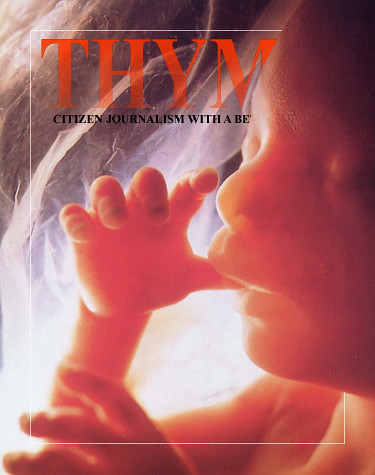
Eugenics Then and Now

Once in the history of our Commonwealth our health system promoted a public policy that promised to deliver advancements in the betterment of the human race. In Staunton, Virginia it was promoted by the director of Western State Hospital, Joseph Spencer DeJarnette (September 29, 1866 – September 3, 1957). As the director of the mental hospital located in Staunton, Virginia from 1905 to November 15, 1943 he was a vocal proponent of racial segregation and eugenics, specifically, the compulsory sterilization of the mentally ill. He was considered a pillar of the community and Adolph Hitler (מַּח שְׁמוֹ) greatly admired his work. Today we shudder at the thought of the forced sterilizations that took place under Dr. DeJarnett’s directorship. The practice only ended in the 1970s.

Today that aspect of eugenics is unthinkable to us, but consider for a moment the recent push in the state legislature to remove restrictions on late-term abortions. Kathy Tran introduced a bill clearly allowing for abortion right up to the point the mother was dilating. The frightening aspect of this bill was that it appeared to push the decision point over the line – allowing for the ‘abortion’ of an already born child. Appearing on WTOP’s Ask The Governor, Virginia Governor Ralph Northam, a former pediatric neurologist, was asked whether he supported a Virginia legislator’s statement that Virginia Democrats’ proposed legislation would permit abortion for a woman in labor.

He stated: “This is why decisions such as this should be made by providers, physicians, and the mothers and fathers that are involved. When we talk about third-trimester abortions, these are done with the consent of the mother, with the consent of physicians, more than one physician by the way, and it’s done in cases where there may be severe deformities, there may be a fetus which is non-viable. So in this particular example, if the mother is in labor, I can tell you exactly what would happen, the infant would be delivered, the infant would be kept comfortable, the infant would be resuscitated if this is what the mother and the family desired, and then a discussion would ensue between the physician and the mother.”

Beyond the obvious possibility being allowed for infanticide is the argument for eugenic murder (see his comments about deformities). Ben Shapiro says: “Northam is specifically talking about delivering an infant alive and then asking the mother whether the infant should live or not. This is not an argument about the morning-after pill. It’s not an argument over whether a fetus feels pain. This is a statement that a fully-formed infant, born alive, ought to be murdered if the mother says the infant ought to be murdered.” A call to Northam’s office had a staffer saying that “The Governor is clearly not for infanticide,” and that “he is very protective of children, being a pediatrician.” Still, the news conference remarks do not rule out the possibility of eugenic killing – and eugenics was brought to us by Doctor DeJarnett not so long ago.


I call heaven and earth to record this day against you, [that] I have set before you life and death, blessing and cursing: therefore choose life, that both thou and thy seed may live:”
– Deuteronomy 30:19

IMG_6748
Sunset seen from the ferry from Bali to Lombok Island. 
Photo by S. Kirchman.

The True Champions of Women's Rights
By M. K. Hand

Today’s women's rights champions are too self-centered and busy appropriating titles they don’t understand to even realize that the real Suffragettes in white were pro-life.

The public statements of many early champions of women’s rights in the U.S. make clear their opposition to abortion. Elizabeth Cady Stanton referred to abortion as “infanticide” and wrote that “when we consider that women are treated as property, it is degrading to women that we should treat our children as property to be disposed of as we see fit.” Victoria Woodhull, the first female candidate for president, wrote: “Every woman knows that if she were free, she would never bear an unwished-for child, nor think of murdering one before its birth.” And Elizabeth Blackwell, the first woman to receive a medical degree in the U.S., wrote: “The gross perversion and destruction of motherhood by the abortionist filled me with indignation, and awakened active antagonism.”

Susan B. Anthony (the same woman on the American silver dollar) along with Cady Stanton, founded The Revolution newspaper, which served as a mouthpiece for the American women’s suffrage movement. Anthony funded the paper herself, refusing the capital that would have resulted from allowing advertisements for “restellism,” as abortion was then called. The Revolution published a piece, attributable to Anthony, that said abortion was a choice that would burden both a woman’s “conscience in life and soul in death” and also was ultimately an exploitation of women.

The first memorial to Anthony was established by African Americans. A stained-glass window was installed at the African Methodist Episcopal Zion church in Rochester that featured her portrait and the words "Failure is Impossible" (her mantra) on it. It was installed through the efforts of Hester C. Jeffrey, the president of the Susan B. Anthony Club, an organization of African American women in Rochester. Speaking at the window's dedication, Jeffrey said, "Miss Anthony had stood by the Negroes when it meant almost death to be a friend of the colored people.”

Yes, these modern women in white are so out of touch with their own American heritage that it would be laughable if it were not so evil. Eugenics and infanticide are their wicked games, and they do not deserve to even hint that they are, or ever could be, a Suffragette. Sources: Time Magazine and Wikipedia

If my people, which are called by my name, shall humble themselves, and pray, and seek my face, and turn from their wicked ways; then will I hear from heaven, and will forgive their sin, and will heal their land.”
– 2 Chronicles 7:14

Modern Day Pioneer Woman
Amendment II Rights and an Amazing Woman's Story

Boxwood
The Boxwood House in Culpeper, Virginia in its heyday.

Today the Boxwood House Complex in Culpeper sits by the side of US 29 as a rehabilitation facility. Few know its remarkable history as the fulfillment of a dream.

Ruby Beck was an African American woman who worked for other people most of her life. In the mid-1960's she dreamed of opening her own restaurant using old family recipies. When most people would have been planning retirement she was out looking for financing.

The local banks wouldn't touch her project. They'd listen politely and then politely brush her off. Mrs. Beck was not the kind of person to give up easily. Eventually she found her way to the offices of Burke and Herbert [click to read], a locally owned Alexandria bank. They listened politely to her business plan and gave her the initial financing to go ahead.

Mrs. Beck built a building that was described in this manner: "what Howard Johnson's would build if they had less money and more taste." She used E. A. Clore chairs [click to read], custom designed with low backs for ease of movement for the servers. It was configured just like a Howard Johnson's but guests always lingered at the tables and Mrs. Beck's glassware collection soon took over the counter. Her meals always featured homemade bread, her own preserves and pickels, and fine Southern recipies. To dine at Boxwood House was to partake of Southern cuisine as high art.

Her sister Lizzie joined her in the business and was probably the head chef for most of the establishment's existence. Lizzie had been my Aunt Molly's live-in caregiver prior to coming to Boxwood House. A vivacious woman who taught us how to catch tadpoles and smallmouth bass, Lizzie was also the best marksman we knew. Her good eye became a family legend after we witnessed her shoot a snake out of a tree in the darkening evening. We never feared for her or Aunt Molly's safety living alone in rural Madison County. We did fear for anyone foolish enough to sneak around their house at night.

In those difficult days of the mid-sixties, Ruby and Lizzie established themselves as people you had better not mess with. I think their dad taught them the fine points of marksmanship and endowed his daughters with the gift of confidence. They were great ladies!

This Blog began with the story of Dr. June McCarroll [click to read], the inventor of pavement markings. Her story is one of overcoming opposition and skepticism... and her amazing perserverance in doing so.

Back to Ruby Beck [click to read]. She was remarkable enough in that she concieved the idea of owning her own restaurant. OK, there was a problem. She was living in the mid-Twentieth Century and Massive Resistance was in full force. No banks would loan her the money but she persisted until she found lenders at Burke and herbert willing to take a risk along with her.

She built her Boxwood House Restaurant around family recipies and her sister Lizzie Harrison joined her in the business as chef. Lizzie's cooking was famous. She cared for my Aunt Molly in her later years as a live-in caregiver. When Aunt Molly threw a family dinner it was an experience! Homemade bread! Homemade Preserves! Cornbread! You get the picture. Lizzie took these fine recipes to the Boxwood House and, with her sister, made history! In 1971 Ruby Beck won the “Virginia Small Businessman of the Year Award.” Ruby was the first woman in Virginia, the 2nd woman nationally and the first minority business owner in the South to receive the prestigious award. Pretty impressive!

Lizzie was pretty impressive in her own right. She was a lady who found joy in taking us down to the little pond to catch tadpoles. She was kind and tough -- one of the best marksmen we ever knew. Once she shot a snake out of a tree and became the family's own version of Alvin York.

We never feared for the safety of Aunt Molly and Lizzie, though they lived along busy U.S. 29. Lizzie's rifle skills were such legend that no locals would have messed with her. Our standing family joke was that out of town troublemakers would have been met by the following sound: "BLAM!!!, Who WAS that?"

CS_Lewis_Banner

Monday, February 11, 2019

Apollonius, Mission to Mars, Phantasies, Verne

Buzz
Volume XVI, Issue VI

Apollonius
By Bob Kirchman
Copyright © 2019, The Kirchman Studio, all rights reserved

Chapter 6: The Mad Monk Squadron

Abiyah Ben Gurion seemed most at home in the cockpit of an F17, at least that is how it seemed to Sarah Cohen as she first tried to understand the man who commanded her squadron. He said little. He gave few clues. Most of the men and women in his command knew that he had studied engineering at MIT, but returned home to Israel determined to make as much difference as he could to his tiny country. As a boy, he’d had a fascination with flying and had his pilot’s license as a teenager. He must have had some wild adventures, but he never spoke of any. Outside of command, he rarely spoke unless spoken to. If you met him on the street, his short stature made you miss the fact that he was lean and muscular. He avoided showing that off too. Though there were rumors that he could drink bigger men under the table, he was only actually known to enjoy a polite drink at beer-call with his colleagues and go home early. Serving under him, as a strong pilot in her own right, Cohen began to see inside the man.

Once they were on leave in Jerusalem and as they walked in the old city, a suicide bomber/active shooter situation developed around them. After the initial blast, a sniper was attempting to inflict more casualties on the first-responders. There was a little Arab boy standing dazed in the street and before Sarah could articulate it in a sentence, Ben-Gurion had pushed her into a doorway, rushed out to grab the kid and ducking erratically, managed to return with the frightened child to the safety of the doorway. One of Ben-Gurion’s fellow flyers saw where the shooter was and ended the terror with a well-placed shot from her sidearm. Abiyah was concentrating on comforting the boy and it seemed like he was oblivious to the greater events playing out around him… until he congratulated his colleague: “Nice shot, Rachel.” “He must have some incredible peripheral vision!” Cohen thought to herself. The fact is they both scored exceptionally in that area at about the same level.

His only recreations seemed to be reading and nature photography. That was something he and Sarah shared. Gradually the two pilots found themselves sharing their hobby. Abiyah loved to photograph flowers and often visited the commercial nurseries where thousands grew. His stunning macros actually became quite sought after as he marketed them under a pseudonym. He had just recently become more serious in reading and studying Torah, his mind opened to the possibility of worlds unseen. Sarah was the product of a good Liberal home and initially listened politely as Abiyah shared his personal journey. The fact is the two were drawn to each other and it would be only a matter of time before Sarah thought feelings might be expressed. Abiyah seemed to have one great dream… he wanted to see the desert “blossom like a rose.” Then there came an unprecedented rain and the opportunity for leave. “Sarah,” he said, “I have wanted to see this. I’ve secured a pass for both of us. Would you come with me to see the blooms in the desert?”

Yes, Abiyah!” Sarah spoke before thinking.

They drove to a little hotel by the Sea of Galilee and checked in. From there it was a short drive to the desert where the recent rain had unleashed a vibrant display of wildflowers.

If the truth be known, the two had become quite good friends. They were probably already considered a ‘couple’ by their colleagues but the taciturn Abiyah seemed to take their friendship for granted. “Did he have family?” Sarah wondered. Sarah had learned, however, that there was substance behind the silence. She trusted that as she gave herself to him in her mind.

The two set into photographing desert flowers but Abiyah seemed to have something on his mind. Pilots learn to read cues from one another and Sarah said “Penny for your thoughts?” absently.

Oh, Sarah, I was just thinking…” an exceptionally vivid desert rose seemed to distract him for a moment, “…about you… and, er… us!

Abiyah Ben-Gurion obviously was pretty lame when it came to pick-up lines. “What about us?” Sarah returned.

I don’t want to live without you.” Abiyah blurted out. “I was just wondering how you felt about me?”

Well, most of our colleagues think we’re already pretty intimate.”

Do they?” Ben-Gurion asked, not so incredulously. “Is it that obvious in my eyes?”

Sarah said nothing.

Even though I am an uncommunicative old goat, you can still see the love that I have for you Sarah?”

I can.”

“…and what do you think of that, dear Sarah? I see your affection for me, but is it love of the same fervor as mine for you?”

I love you, I love you, I love you; Abiyah Ben Gurion.” She replied through tears. “There, does three times make it clear?”

Quite!” he said, as they lost themselves in embrace.

I want you in the worst way,” Ben-Gurion continued after they had walked blissfully through the desert wonderland for some time.

I am yours.” the woman responded, kissing him passionately. “Have me!”

I mean..” the man stammered, “I want you before God! Under a chupah! …and I do want you! Body, Soul and Spirit!" Sarah blushed. In the complex and convoluted world of modern ‘romance,’ such directness caught her off her guard, but in truth, she desired the same and nodded her approval.

The Chupah, and a few friends hastily gathered by the Sea of Galilee witnessed the marriage of Sarah and Abiyah. “We’ll make it public when we can,” Ben Gurion said, “But today we’ve made it forever.”

Someday I want to live in a place that’s called ’Shalom’ and make mad love to you until we fill our house with children.” Abiyah said as they slipped off to consummate their marriage.

Aliyah Ben Gurion would only lay claim to one virtue, that being gratitude. In the time that followed their whirlwind marriage, Sarah would learn that her husband began life as an orphan in London. His early years were wretched ones. His kind adoptive parents gave him a name that would command respect by its mere mention in their home country… and a name that carried with it a great hope and a future!

They indulged his passion for aviation, taught him Hebrew and encouraged his nobler dreams. The boy was filled with wonder at the new world that opened up to him when his parents immigrated to Israel and sent him to university in America. While many young people take their good fortune for granted and often treat their parents and home country with distain, Ben Gurion never got over the wonder.

He was a wild, tough youth of course. But he ultimately channeled that wildness to give something back to everyone who had blessed him… and that is what led him to love Torah. He read the history of his new adopted country. “Was this the work simply of a great people,” he wondered, “or is my land’s miraculous history truly from the hand of the Divine?”

His gratitude found a new focus as he read the Holy Texts. Like most young people he suffered through a series of awkward attempts at romance. When young and beautiful Sarah became part of his life, his gentleness toward her sprang from the most fervent gratitude to the Lord almighty!
(to be continued)

GreatNorthern_web

Jules Verne and Walt Disney
Journeys into the Imagination


Reportage sur l'importance de Jules Verne dans le monde créatif de Disney.

Voyage to the Moon


The news footage we watched as fifty years ago astronauts set out for the moon.

Untitled-design-20
Astronaut Buzz Aldrin at the State of the Union Address.

We're Going to Mars by 2024


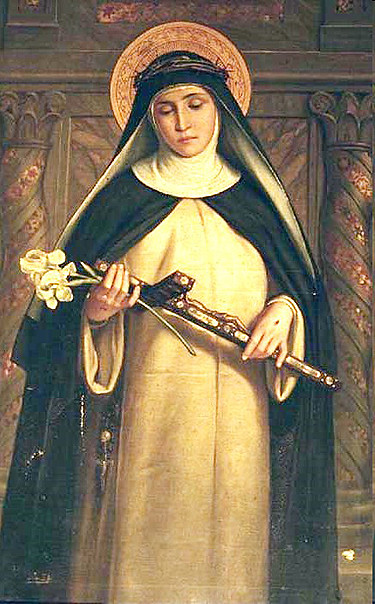
Saint Catherine of Siena

St-Catherine-1
Icon of St. Catherine of Siena.

Be who you were created to be, and you will set the world on fire.”
― St. Catherine of Siena

Phantasies15
Volume XVI, Issue VIa

Phantasies
By George MacDonald, Chapter 15

Alexander: "When will you finish Campaspe?"
Apelles: "Never finish: for always in absolute
beauty there is somewhat above art."
~ from John Lyly's play, "Campaspe".

And now, what song should I sing to unveil my Isis, if indeed she was present unseen? I hurried away to the white hall of Phantasy, heedless of the innumerable forms of beauty that crowded my way: these might cross my eyes, but the unseen filled my brain. I wandered long, up and down the silent space: no songs came. My soul was not still enough for songs. Only in the silence and darkness of the soul's night, do those stars of the inward firmament sink to its lower surface from the singing realms beyond, and shine upon the conscious spirit. Here all effort was unavailing. If they came not, they could not be found.

Next night, it was just the same. I walked through the red glimmer of the silent hall; but lonely as there I walked, as lonely trod my soul up and down the halls of the brain. At last I entered one of the statue-halls. The dance had just commenced, and I was delighted to find that I was free of their assembly. I walked on till I came to the sacred corner. There I found the pedestal just as I had left it, with the faint glimmer as of white feet still resting on the dead black. As soon as I saw it, I seemed to feel a presence which longed to become visible; and, as it were, called to me to gift it with self-manifestation, that it might shine on me. The power of song came to me. But the moment my voice, though I sang low and soft, stirred the air of the hall, the dancers started; the quick interweaving crowd shook, lost its form, divided; each figure sprang to its pedestal, and stood, a self-evolving life no more, but a rigid, life-like, marble shape, with the whole form composed into the expression of a single state or act. Silence rolled like a spiritual thunder through the grand space. My song had ceased, scared at its own influences. But I saw in the hand of one of the statues close by me, a harp whose chords yet quivered. I remembered that as she bounded past me, her harp had brushed against my arm; so the spell of the marble had not infolded it. I sprang to her, and with a gesture of entreaty, laid my hand on the harp. The marble hand, probably from its contact with the uncharmed harp, had strength enough to relax its hold, and yield the harp to me. No other motion indicated life. Instinctively I struck the chords and sang. And not to break upon the record of my song, I mention here, that as I sang the first four lines, the loveliest feet became clear upon the black pedestal; and ever as I sang, it was as if a veil were being lifted up from before the form, but an invisible veil, so that the statue appeared to grow before me, not so much by evolution, as by infinitesimal degrees of added height. And, while I sang, I did not feel that I stood by a statue, as indeed it appeared to be, but that a real woman-soul was revealing itself by successive stages of imbodiment, and consequent manifestation and expression.

Feet of beauty, firmly planting
Arches white on rosy heel!
Whence the life-spring, throbbing, panting,
Pulses upward to reveal!
Fairest things know least despising;
Foot and earth meet tenderly:
'Tis the woman, resting, rising
Upward to sublimity,
Rise the limbs, sedately sloping,
Strong and gentle, full and free;
Soft and slow, like certain hoping,
Drawing nigh the broad firm knee.
Up to speech! As up to roses
Pants the life from leaf to flower,
So each blending change discloses,
Nearer still, expression's power.

Lo! fair sweeps, white surges, twining
Up and outward fearlessly!
Temple columns, close combining,
Lift a holy mystery.
Heart of mine! what strange surprises
Mount aloft on such a stair!
Some great vision upward rises,
Curving, bending, floating fair.

Bands and sweeps, and hill and hollow
Lead my fascinated eye;
Some apocalypse will follow,
Some new world of deity.
Zoned unseen, and outward swelling,
With new thoughts and wonders rife,
Queenly majesty foretelling,
See the expanding house of life!

Sudden heaving, unforbidden
Sighs eternal, still the same--
Mounts of snow have summits hidden
In the mists of uttered flame.
But the spirit, dawning nearly
Finds no speech for earnest pain;
Finds a soundless sighing merely--
Builds its stairs, and mounts again.

Heart, the queen, with secret hoping,
Sendeth out her waiting pair;
Hands, blind hands, half blindly groping,
Half inclasping visions rare;
And the great arms, heartways bending;
Might of Beauty, drawing home
There returning, and re-blending,
Where from roots of love they roam.

Build thy slopes of radiance beamy
Spirit, fair with womanhood!
Tower thy precipice, white-gleamy,
Climb unto the hour of good.
Dumb space will be rent asunder,
Now the shining column stands
Ready to be crowned with wonder
By the builder's joyous hands.

All the lines abroad are spreading,
Like a fountain's falling race.
Lo, the chin, first feature, treading,
Airy foot to rest the face!
Speech is nigh; oh, see the blushing,
Sweet approach of lip and breath!
Round the mouth dim silence, hushing,
Waits to die ecstatic death.

Span across in treble curving,
Bow of promise, upper lip!
Set them free, with gracious swerving;
Let the wing-words float and dip.
Dumb art Thou? O Love immortal,
More than words thy speech must be;
Childless yet the tender portal
Of the home of melody.

Now the nostrils open fearless,
Proud in calm unconsciousness,
Sure it must be something peerless
That the great Pan would express!
Deepens, crowds some meaning tender,
In the pure, dear lady-face.
Lo, a blinding burst of splendour!--
'Tis the free soul's issuing grace.

Two calm lakes of molten glory
Circling round unfathomed deeps!
Lightning-flashes, transitory,
Cross the gulfs where darkness sleeps.
This the gate, at last, of gladness,
To the outward striving me:
In a rain of light and sadness,
Out its loves and longings flee!

With a presence I am smitten
Dumb, with a foreknown surprise;
Presence greater yet than written
Even in the glorious eyes.
Through the gulfs, with inward gazes,
I may look till I am lost;
Wandering deep in spirit-mazes,
In a sea without a coast.

Windows open to the glorious!
Time and space, oh, far beyond!
Woman, ah! thou art victorious,
And I perish, overfond.
Springs aloft the yet Unspoken
In the forehead's endless grace,
Full of silences unbroken;
Infinite, unfeatured face.

Domes above, the mount of wonder;
Height and hollow wrapt in night;
Hiding in its caverns under
Woman-nations in their might.
Passing forms, the highest Human
Faints away to the Divine
Features none, of man or woman,
Can unveil the holiest shine.

Sideways, grooved porches only
Visible to passing eye,
Stand the silent, doorless, lonely
Entrance-gates of melody.
But all sounds fly in as boldly,
Groan and song, and kiss and cry
At their galleries, lifted coldly,
Darkly, 'twixt the earth and sky.

Beauty, thou art spent, thou knowest
So, in faint, half-glad despair,
From the summit thou o'erflowest
In a fall of torrent hair;
Hiding what thou hast created
In a half-transparent shroud:
Thus, with glory soft-abated,
Shines the moon through vapoury cloud.
(to be continued)

Unipege
Unipege. Photo by bob Kirchman

Eugenics Then and Now Northam/DeJarnett

Baby

Eugenics Then and Now

Once in the history of our Commonwealth our health system promoted a public policy that promised to deliver advancements in the betterment of the human race. In Staunton, Virginia it was promoted by the director of Western State Hospital, Joseph Spencer DeJarnette (September 29, 1866 – September 3, 1957). As the director of the mental hospital located in Staunton, Virginia from 1905 to November 15, 1943 he was a vocal proponent of racial segregation and eugenics, specifically, the compulsory sterilization of the mentally ill. He was considered a pillar of the community and Adolph Hitler (מַּח שְׁמוֹ) greatly admired his work. Today we shudder at the thought of the forced sterilizations that took place under Dr. DeJarnett’s directorship. The practice only ended in the 1970s.

Today that aspect of eugenics is unthinkable to us, but consider for a moment the recent push in the state legislature to remove restrictions on late-term abortions. Kathy Tran introduced a bill clearly allowing for abortion right up to the point the mother was dilating. The frightening aspect of this bill was that it appeared to push the decision point over the line – allowing for the ‘abortion’ of an already born child. Appearing on WTOP’s Ask The Governor, Virginia Governor Ralph Northam, a former pediatric neurologist, was asked whether he supported a Virginia legislator’s statement that Virginia Democrats’ proposed legislation would permit abortion for a woman in labor.

He stated: “This is why decisions such as this should be made by providers, physicians, and the mothers and fathers that are involved. When we talk about third-trimester abortions, these are done with the consent of the mother, with the consent of physicians, more than one physician by the way, and it’s done in cases where there may be severe deformities, there may be a fetus which is non-viable. So in this particular example, if the mother is in labor, I can tell you exactly what would happen, the infant would be delivered, the infant would be kept comfortable, the infant would be resuscitated if this is what the mother and the family desired, and then a discussion would ensue between the physician and the mother.”

Beyond the obvious possibility being allowed for infanticide is the argument for eugenic murder (see his comments about deformities). Ben Shapiro says: “Northam is specifically talking about delivering an infant alive and then asking the mother whether the infant should live or not. This is not an argument about the morning-after pill. It’s not an argument over whether a fetus feels pain. This is a statement that a fully-formed infant, born alive, ought to be murdered if the mother says the infant ought to be murdered.” A call to Northam’s office had a staffer saying that “The Governor is clearly not for infanticide,” and that “he is very protective of children, being a pediatrician.” Still, the news conference remarks do not rule out the possibility of eugenic killing – and eugenics was brought to us by Doctor DeJarnett not so long ago.


I call heaven and earth to record this day against you, [that] I have set before you life and death, blessing and cursing: therefore choose life, that both thou and thy seed may live:”
– Deuteronomy 30:19

IMG_6748
Sunset seen from the ferry from Bali to Lombok Island. 
Photo by S. Kirchman.

The True Champions of Women's Rights
By M. K. Hand

Today’s women's rights champions are too self-centered and busy appropriating titles they don’t understand to even realize that the real Suffragettes in white were pro-life.

The public statements of many early champions of women’s rights in the U.S. make clear their opposition to abortion. Elizabeth Cady Stanton referred to abortion as “infanticide” and wrote that “when we consider that women are treated as property, it is degrading to women that we should treat our children as property to be disposed of as we see fit.” Victoria Woodhull, the first female candidate for president, wrote: “Every woman knows that if she were free, she would never bear an unwished-for child, nor think of murdering one before its birth.” And Elizabeth Blackwell, the first woman to receive a medical degree in the U.S., wrote: “The gross perversion and destruction of motherhood by the abortionist filled me with indignation, and awakened active antagonism.”

Susan B. Anthony (the same woman on the American silver dollar) along with Cady Stanton, founded The Revolution newspaper, which served as a mouthpiece for the American women’s suffrage movement. Anthony funded the paper herself, refusing the capital that would have resulted from allowing advertisements for “restellism,” as abortion was then called. The Revolution published a piece, attributable to Anthony, that said abortion was a choice that would burden both a woman’s “conscience in life and soul in death” and also was ultimately an exploitation of women.

The first memorial to Anthony was established by African Americans. A stained-glass window was installed at the African Methodist Episcopal Zion church in Rochester that featured her portrait and the words "Failure is Impossible" (her mantra) on it. It was installed through the efforts of Hester C. Jeffrey, the president of the Susan B. Anthony Club, an organization of African American women in Rochester. Speaking at the window's dedication, Jeffrey said, "Miss Anthony had stood by the Negroes when it meant almost death to be a friend of the colored people.”

Yes, these modern women in white are so out of touch with their own American heritage that it would be laughable if it were not so evil. Eugenics and infanticide are their wicked games, and they do not deserve to even hint that they are, or ever could be, a Suffragette. Sources: Time Magazine and Wikipedia

If my people, which are called by my name, shall humble themselves, and pray, and seek my face, and turn from their wicked ways; then will I hear from heaven, and will forgive their sin, and will heal their land.”
– 2 Chronicles 7:14

PontifusBANNER